Apostille for Spain: How to Prepare UK Documents
By Jeremy Arhab, Founder · Published 3 November 2026 · Updated 3 November 2026
How to get an apostille for Spain from the UK: which documents qualify, what needs notarising first, e-Apostille or paper, translation and what to confirm.
If a Spanish authority asks for your UK document, it will usually need an apostille. This is a Hague Convention certificate that confirms the signature, stamp or seal on the document. Many UK documents must first be notarised or certified before the apostille can be added. This guide explains the order of steps, the paper and electronic routes, translation, and what to confirm with the Spanish office before you start.
TL;DR
- Since the UK left the EU, UK documents for Spanish authorities generally need a Hague apostille, according to Spain's Foreign Ministry.
- Public documents can often be apostilled directly. Private documents, copies and powers of attorney usually need a commissioned notary first.
- An apostille confirms a signature, seal or stamp. It does not confirm that the content of the document is correct.
- Ask the Spanish office whether it wants an original, a certified copy, an e-Apostille or a paper apostille, and whether it needs a Spanish translation.
- We can notarise your document online by video call on the same day, so it is ready for the apostille step.
Table of Contents
- When a UK document needs an apostille for Spain
- What the apostille does and does not cover
- Which documents can be apostilled directly, and which need a notary first
- The route in order
- Paper apostille or e-Apostille
- Translation into Spanish
- Travel consent for a child going to Spain
- Perspective
- Prepare your document online
- What to confirm with the Spanish office
- Common mistakes
- FAQ
- Sources
When a UK document needs an apostille for Spain
As a general rule, Spain asks for foreign public documents to be legalised or apostilled before they have effect there. Spain's Foreign Ministry sets out this rule and notes that specific exemptions exist. Until the UK left the EU, many UK public documents were exempt. The Ministry now states that the EU exemption no longer applies to UK documents, so a Hague apostille is generally the requirement. You can read the same position on the Spanish consular page for the UK.
Typical reasons people need one include:
- buying or selling property in Spain
- inheritance and probate matters
- marriage or residence applications
- recognition of UK degrees or professional qualifications
- company filings and bank account opening
- powers of attorney used before a Spanish notary
The apostille must come from the country that issued the document. The Spanish Consulate in London explains that a UK apostille is issued only by the UK authority. Once a document carries it, you can present the document in Spain without any further consular processing.
British consulates in Spain do not add apostilles to UK documents. GOV.UK guidance for Spain says UK public documents must be legalised through the Legalisation Office in the UK. If you are already abroad, our guide to preparing an apostille from abroad by video covers the practical side.
What the apostille does and does not cover
An apostille is narrower than many people expect. GOV.UK guidance states that it confirms a signature, seal or stamp. It does not vouch for what the document says.
Two practical points follow.
- The underlying document must be right. A wrong date, a missing signature or an unsuitable copy cannot be repaired by the apostille.
- Validity depends on the document. The Spanish Consulate says the apostille has no expiry date of its own. Its practical validity is limited where the underlying document is time limited, so a certificate that Spanish offices only accept if recently issued should be ordered close to the date you need it. Details are on the Consulate's apostille page.
The same page adds a rule on copies. Only the original apostilled document, or a true copy issued by the body that issued the original, is admissible. An apostilled photocopy cannot replace it. If you are unsure which of these Spain wants, ask before ordering anything.
Which documents can be apostilled directly, and which need a notary first
The Legalisation Office can only apostille a document if it recognises the signature, stamp or seal on it. That splits documents into two groups.
Documents that are usually apostilled directly
These carry an official signature or seal that is already on record:
- court documents with a wet ink seal
- certificates from public registers, such as birth, marriage and death certificates
- Companies House documents
- government documents signed by an official
- medical certificates signed by a registered doctor
The government legalisation guidance also reminds applicants to check whether the recipient wants an original or a certified copy. Some documents, such as certain criminal record and disclosure certificates, cannot use the electronic route. Check the document type before you choose how to apply.
Documents that need a commissioned notary first
Private documents have no official seal, so a commissioned notary must certify them first. The notary confirms your identity, witnesses your signature or checks the copy against the original. The notary then adds their signature and seal. The Legalisation Office recognises that seal and adds the apostille.
This group includes:
- powers of attorney
- affidavits, statutory declarations and marital status affidavits
- contracts and company resolutions
- certified copies of passports, bank statements and police certificates
- degree certificates and diplomas
- translations that have been notarised
Spain's Foreign Ministry states that only public documents, and private documents that are notarised or publicly registered, can be legalised. A plain signed letter will not do. See the Ministry's page on diplomatic legalisation.
For qualifications, GOV.UK guidance for Spain says UK educational or professional documents needing recognition in Spain have needed certification followed by legalisation since 31 October 2021. Our degree and diploma certification service covers the certification step. If your documents belong to a company, read our guide on apostilles for UK company documents.
The route in order
The order matters. Doing the steps out of sequence is the most common reason for delay.
- Ask the Spanish office what it needs. Confirm the document type, original or certified copy, paper or electronic apostille, and translation.
- Prepare the document. Check names, dates and signatures. Do not sign anything that needs witnessing until the notary asks you to.
- Notarise if required. You join a video call with a commissioned notary, show your passport and sign. The session is recorded. The notary seals the document.
- Apply for the apostille. Use the paper or electronic route described below.
- Translate if required. See the translation section for the right moment.
- Send or carry the document to Spain. Keep the original apostilled document safe.
Our step by step guide to getting an apostille and our overview of the apostille process go into each stage in more detail.
Paper apostille or e-Apostille
You apply online through the government Legalisation Office service. There are two routes.
| Paper apostille | e-Apostille | |
|---|---|---|
| What you send | The original document, by post or courier | An eligible PDF, electronically signed by a commissioned notary |
| What you receive | A paper apostille attached to the document | A digital apostille on the PDF |
| Typical processing | Up to 25 working days plus delivery | Up to 2 working days |
| Best when | Spain wants a paper original | The Spanish office accepts electronic documents |
The processing times are the ones we describe in our guides on skipping the long paper wait and on the e-Apostille. They can be longer where the Legalisation Office needs extra time to verify a signature, so treat them as a guide and not a promise.
The key question is whether the Spanish recipient accepts an electronic document. Spain's Foreign Ministry states that it does not accept electronic signatures for its own diplomatic legalisation. That rule belongs to a different procedure from a Hague apostille, but it shows that Spanish offices can be cautious about electronic formats. Ask your Spanish notary, registry, university or employer in writing whether an e-Apostille is acceptable. If they want paper, choose the paper route. Our guide on apostille costs in the UK sets out how fees and timing differ between the two.
Route choice also affects how notarisation is done. Anyone comparing routes should read how notarisation and apostille coordination works for EU transactions, because the same principle applies: the notarial step comes first and the apostille follows it.
Translation into Spanish
Spanish authorities often ask for a Spanish version of a foreign document. GOV.UK guidance says British consulates in Spain do not translate documents. It directs readers to Spain's list of sworn translators. Spain's Foreign Ministry also says documents in a foreign language need an official translation for diplomatic legalisation.
The practical questions are who translates and when.
- Who. Ask the Spanish office whether it requires a sworn translator in Spain or accepts a translation made in the UK.
- When. If the translation is attached to the UK document and notarised, it goes through notarisation and apostille together. If the Spanish office wants its own sworn translation, that is usually done after the apostille, because the translator needs the apostilled original in front of them.
We offer notarised translation for cases where a translation needs to be certified alongside the document. For a single plan covering translation, notary and apostille, see our guide to handling all three online.
Travel consent for a child going to Spain
Parents, separated parents and grandparents often ask whether a child travel consent letter needs an apostille. We have no official source that says it always does, so the safe approach is to ask the people who will read it.
Check these points before you prepare the letter:
- The receiving party. Ask the airline, the Spanish school or the Spanish authority what they want to see.
- The wording. Name the child, the adult travelling, the dates and the destination. Both parents or all persons with parental authority should be named where relevant.
- Language. If the document will be shown to a Spanish official, ask whether a Spanish translation is expected.
- Identity evidence. Have passport details ready for each signatory.
If you decide to notarise the letter, our child travel consent service covers it by video call. If an apostille is also requested, the notarised document can go on to the Legalisation Office.
Perspective
We built the notarisation step around the problem we see most often: people leave it until the last week and then find that their private document cannot go straight to the Legalisation Office. In our experience, the delay is rarely the apostille itself. It is the wait for a notary appointment, the trip to an office, and the discovery that the signature should have been witnessed. A video session removes those obstacles. You upload the document, we verify your identity with your passport, you sign in front of a commissioned notary, and the session is recorded. We also think the choice between paper and electronic should be made by the Spanish recipient, not by convenience. That is why we tell customers to ask first and notarise second. Our process is designed to give you a sealed document and a certified digital copy on the same day, so the next step is ready when you are. Jérémy
Prepare your document online
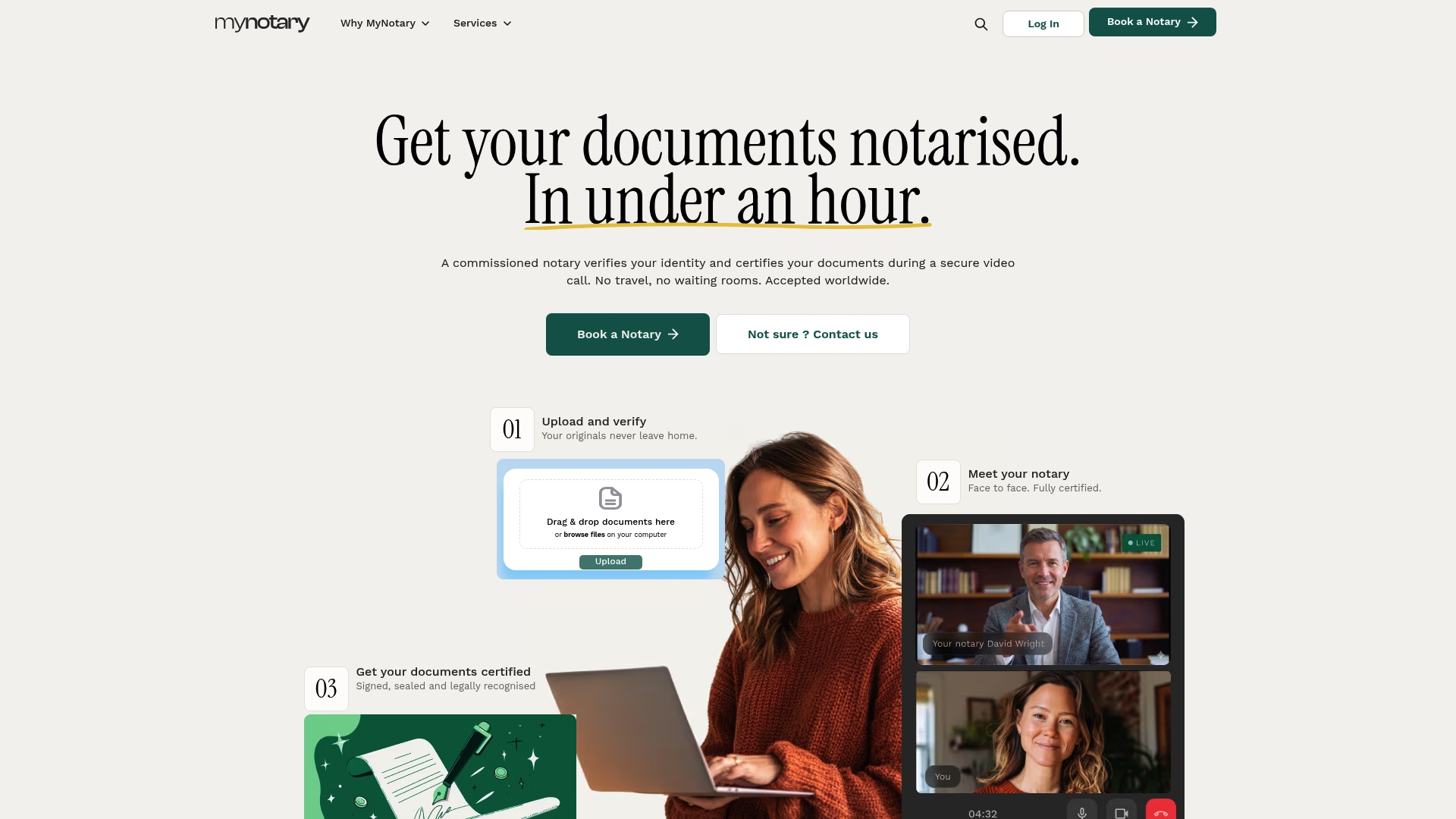
If your document needs a commissioned notary before the apostille, we can handle that step by video call. You upload the unsigned document, verify your identity with your passport, and sign during a recorded session. The notary adds their seal, and we deliver the certified document the same day.
We do not decide whether a Spanish office will accept your document, so confirm its requirements first. When you are ready, choose your document on our services page. Powers of attorney, affidavits and certified copies are all available there. You can also start from our online power of attorney page if the document is for a Spanish property or bank matter.
What to confirm with the Spanish office
GOV.UK guidance tells customers to find out the precise requirements of the person asking for the document. Send a short written question before you order anything. Ask:
- Do you need the original document or a certified copy?
- Do you accept an e-Apostille, or do you need a paper apostille?
- Does the document need a Spanish translation, and from whom?
- Is there a maximum age for the document?
- Do you need the apostille on the document itself, or on a notarised copy?
Keep the reply. If the office changes its mind, you will have the original instruction to refer to.
Common mistakes
- Apostilling a photocopy. Spain's guidance says an apostilled photocopy cannot replace the original or an official true copy.
- Signing before the notary session. A document signed in advance may need to be signed again.
- Choosing e-Apostille without asking. The recipient may want paper.
- Ordering a time limited document too early. The apostille does not extend how long the underlying document stays valid.
- Translating too soon. A translation made before the apostille may not match what the Spanish office wants.
FAQ
Does a UK document always need an apostille for Spain?
Not always, but it generally does for public use. Spain's Foreign Ministry says foreign public documents must be legalised or apostilled unless a specific exemption applies. Ask the Spanish office that will receive your document, since the exemption position can differ by document type.
Can I get an apostille on a copy of my document?
Only if the copy has been properly certified first. A commissioned notary can certify a copy against the original. Spain's consular guidance says an apostilled photocopy cannot replace the original, so check whether the Spanish office wants the original or a certified copy.
Can the apostille be added to a document signed online?
Yes, in some cases. An eligible PDF that is electronically signed by a commissioned notary can go through the e-Apostille route. Not every Spanish office accepts electronic documents, so confirm this before you apply.
Do I translate the document before or after the apostille?
It depends on what the Spanish office asks for. A translation that is attached to the UK document can be notarised and apostilled with it. A sworn translation made in Spain is normally done afterwards, from the apostilled original.
Sources
- Spain: notarial and document services, GOV.UK
- Documents for British people abroad, GOV.UK
- Apostilla de la Haya, Spanish Consulate in London
- Hague Apostille and Legalisation, Spanish Consulate in London
- Diplomatic Legalization, Spanish Ministry of Foreign Affairs
- Coordinate Notarisation and Apostille for EU M&A Deals
Recommended
Got questions? We’re on it.
Most questions are answered here, drawn from what people actually ask before booking. If yours isn’t, our team is in chat.
Not always, but it generally does for public use. Spain's Foreign Ministry says foreign public documents must be legalised or apostilled unless a specific exemption applies. Ask the Spanish office that will receive your document, since the exemption position can differ by document type.
Last updated: