Accepted Abroad: Divorce Decree Apostille UK, e-Apostille in 2 Days
By Jeremy Arhab, Founder · Published 5 September 2026 · Updated 5 September 2026
Step-by-step UK guidance to apostille a divorce decree and get it accepted overseas. Check seals, choose paper or e‑Apostille, and avoid common rejections.
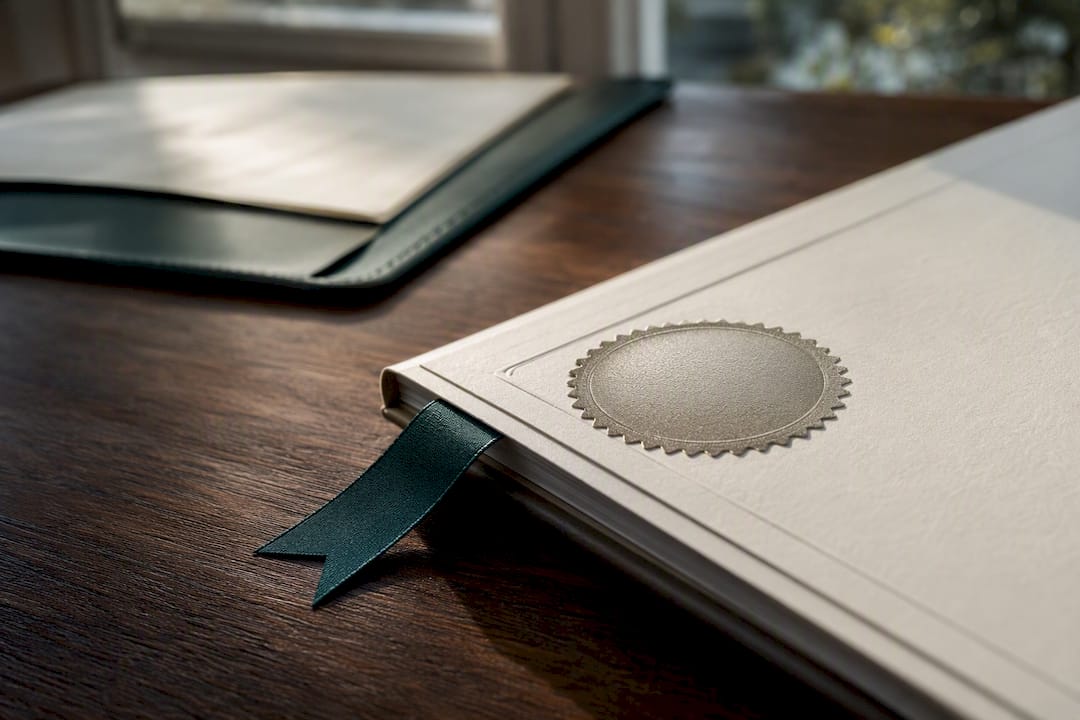
Yes, a UK decree absolute or final order can be apostilled, provided it carries an original court seal or an authorised signature that the Legalisation Office can verify against its records. If your document is a digital printout or photocopy without that wet-ink mark, you will usually need certification from a commissioned notary or solicitor first. Before anything else, contact the receiving authority abroad to confirm whether they accept an e-Apostille or insist on the paper version.
***
TL;DR: - Digital court PDFs usually require notarized certification since they lack a visible wet-ink seal, whereas physical documents with original seals can be apostilled directly. - If the original decree is lost or damaged, obtaining an official certified copy from the court takes several weeks and is necessary before applying for an apostille. - The choice between paper and electronic apostille depends on the document's format, recipient acceptance, and whether the document can be converted into an electronically signed PDF. - Processing times vary from as little as two days for e-Apostilles to several weeks for paper certificates, with costs increasing if court certification or courier return methods are chosen. - Ensuring the document's format and condition meet requirements, verifying recipient preferences, and confirming the destination country's legalisation rules are critical to avoiding rejection.
***
Table of Contents
- Which divorce documents qualify for a UK apostille?
- Do I need a commissioned notary or solicitor before applying?
- How to apply for an apostille: paper and e-Apostille routes
- Paper apostille versus e-Apostille: which one fits your document?
- Costs and timelines you should plan for
- Why apostille applications get rejected, and how to avoid it
- What if the destination country isn't a Hague Convention member?
- Getting a certified copy if your original decree is lost
- How My Notary helps you prepare a divorce decree for legalisation
- Three routes, three real situations
- If you need your document certified before you apply
- Sources
- FAQ
Which divorce documents qualify for a UK apostille?
The Legalisation Office deals with two main documents from divorce proceedings: the decree absolute (the older terminology, still issued for many cases finalised before April 2022) and the final order (the current term used in no-fault divorce proceedings). Both serve the same purpose abroad. What matters far more than the label is the physical form of the document you send.
The Legalisation Office checks the signature, stamp, or seal on your paperwork against records it already holds for UK courts, and it will only apply an apostille when that mark is genuine and visible. A scanned PDF straight from an online court portal often will not carry that wet-ink seal, which means it cannot go straight into the apostille queue.
If your original decree has been lost, damaged, or was never issued with a physical seal, you will need an official certified copy before you go any further:
- Contact the family court that granted your decree absolute or final order and request a certified copy.
- Provide your case number, full names of both parties, and the date the order was made.
- Allow several weeks for the court to process and post the certified copy, since courts do not expedite this as standard.
Do I need a commissioned notary or solicitor before applying?
Not always. If your decree absolute or final order is an original document bearing the court's wet-ink seal, you can usually send it straight to the Legalisation Office without any prior certification. The complication arises with digital court PDFs, photocopies, or any document where the seal is not clearly visible on the page itself, since these typically need a solicitor or notary to certify them as true copies before an apostille can be attached.
A simple three-point check tells you which camp you're in:
- Source: Was the document posted to you by the court, or downloaded from an online portal?
- Seal: Can you see a raised or inked court stamp, or is it a digital watermark only?
- Signature: Does an identifiable court officer's signature appear on the page, separate from any typed name?
If any answer points to "digital only", book a certification appointment. The notary or solicitor confirms your identity, examines the document, and signs a statement declaring it a true copy of the original, which is the piece of paper (or e-file) the Legalisation Office will actually stamp.
Pro Tip: Ask your notary to confirm in writing that their certification wording matches what the Legalisation Office expects. A mismatched certification phrase is one of the quieter reasons applications bounce back.
How to apply for an apostille: paper and e-Apostille routes
Before you touch an application form, confirm two things with the recipient: do they need the original document or will a certified copy do, and will they accept an electronic apostille or insist on paper? That single conversation saves more time than anything else in this process.
Paper apostille route:
- Apply online through the official legalisation service and pay the fee by card.
- Wait for the confirmation email with posting instructions; do not send your document before this arrives.
- Post your original decree absolute or certified copy to the address given, using a tracked service.
- Choose your return method, standard post or a paid courier, at the point of application.
e-Apostille route:
- Get your decree absolute or final order turned into an electronically signed PDF by a commissioned notary or solicitor.
- Upload the signed PDF through the e-Apostille portal.
- Download the completed e-file once processed and forward it to the recipient, or print it if they require a hard copy.
Whichever route you choose, include your full contact details, a return address if posting, and any reference number the recipient gave you. Once you have your apostille, you can verify it through the official checking tool, which confirms the certificate number matches what was issued.
Paper apostille versus e-Apostille: which one fits your document?
E-Apostilles are generally quicker and cheaper to obtain than paper certificates, since there's no printing, posting, or courier return involved. But eligibility is the deciding factor, not preference. GOV.UK excludes certain document categories from the e-Apostille service, often because the underlying document has no electronically verifiable signature or because the issuing body sits outside the scheme.
Before assuming you can go digital, check the following:
- Does your decree absolute or final order already exist as, or can it be converted into, an electronically signed PDF from a solicitor or notary?
- Does the recipient's institution explicitly say it accepts electronic apostille certificates, rather than just "an apostille"?
- Is your document type listed among those excluded from e-Apostille processing?
If any of those checks fail, the paper route remains your default. Many family courts and receiving embassies abroad still expect a physically stamped, ink-signed certificate attached to your decree, particularly for older divorce cases.
Costs and timelines you should plan for
Fees for the standard paper apostille service are paid online by card at the point of application, with courier return adding to that base cost depending on the speed you choose. Industry reporting on the FCDO apostille process suggests e-Apostille requests can be turned around in as little as two working days when the document qualifies, while standard paper applications can take several weeks once postal transit and processing are factored in.
Typical planning figures: e-Apostille turnaround can run to around two working days for eligible documents. Standard paper service turnaround stretches to several weeks, largely because of postal handling on both ends.
If your decree needs solicitor or notary certification first, add that appointment time on top. A video notarisation appointment adds far less delay than posting a document to a solicitor's office and waiting for it to come back before you can even start the apostille application. Budget for apostille costs that include certification, the application fee, and your chosen return method.
Why apostille applications get rejected, and how to avoid it
Most rejections trace back to a handful of avoidable mistakes. Digital-only court seals top the list, closely followed by plain photocopies sent without any certification, and documents where age or damage has made the original seal illegible. Submitting the wrong document type, a draft order instead of the final decree, for instance, also causes delays, as does forgetting a required translation for the destination country.
Run through this before you post or upload anything:
- Confirm the recipient's exact document and format requirements, in writing if possible.
- Check the original seal or signature is visible and undamaged.
- Obtain a certified copy from the court if the original is lost, damaged, or digital-only.
- Arrange any required translation of the decree before submission, not after.
- Decide paper versus e-Apostille based on eligibility, not convenience.
Pro Tip: Photograph your document under good light before sending it anywhere. If it comes back rejected, you'll know exactly what condition it was in when it left your hands.
What if the destination country isn't a Hague Convention member?
An apostille only works for countries that have signed the Hague Convention. If your destination hasn't, your decree absolute or final order will typically need consular legalisation instead, which means additional steps after, or sometimes instead of, the apostille stage.
- Check the destination country's own government or embassy guidance to confirm whether it requires consular legalisation on top of, or in place of, an apostille.
- Expect to book an appointment for embassy attestation in London once your document has been through the domestic legalisation stage.
- Ask the embassy directly what further steps their own country requires once the document arrives, since processes vary significantly between countries.
Build in extra weeks and additional fees for this stage. Embassies rarely move quickly, and confirming their exact requirements before you start avoids a second round trip with your paperwork.
Getting a certified copy if your original decree is lost
If your decree absolute or final order has gone missing, or the paper copy is too damaged to read the seal, you cannot apostille a photocopy. Unofficial copies are rejected outright.
- Contact the family court that issued your original decree and request an official certified copy, quoting your case reference and both parties' full names.
- Pay the court's fee for the certified copy and expect a processing wait of several weeks before it arrives by post.
- Confirm the certified copy carries the court's own stamp or seal, since this is what makes it eligible for apostille legalisation once it arrives.
A properly issued certified copy goes into the apostille process exactly as an original would, with no extra certification step required beforehand.
How My Notary helps you prepare a divorce decree for legalisation
We provide notarisation via secure video call, enabling your decree absolute or final order to be checked, verified, and certified without a trip to an office. Identity verification and electronic signatures reduce the chance of a rejected electronic apostille submission caused by an unverifiable signature, since the certification itself is built to be electronically checkable.
Where the original court seal is missing, damaged, or the document only exists as a digital court PDF, a notary session can produce the certified copy or electronically signed PDF the Legalisation Office needs to proceed. What My Notary does not do is issue the apostille itself. That step still runs through the official legalisation channel; My Notary's role is getting your document into a state where that step can succeed on the first attempt.
Three routes, three real situations
An expat remarrying abroad usually needs speed and an original document in hand, so the paper apostille with a courier return tends to make more sense than waiting on postal transit both ways.
Someone applying for an immigration or family visa should check with the visa authority directly on e-Apostille acceptance; if the court only issued a PDF, solicitor or notary certification comes first.
For court proceedings overseas, check the destination's Hague status early. Non-Hague countries mean budgeting for embassy attestation after your apostille, not instead of preparing for it.
— Jérémy
If you need your document certified before you apply
There are other ways to get a decree absolute certified, a local solicitor's office, a walk-in notary, or waiting on a court-stamped reissue. We offer a faster path when you're working against a deadline: book a video call, verify your identity, and get your document certified or turned into an electronically signed PDF without leaving home. Turnaround typically runs to around an hour once your session is booked.
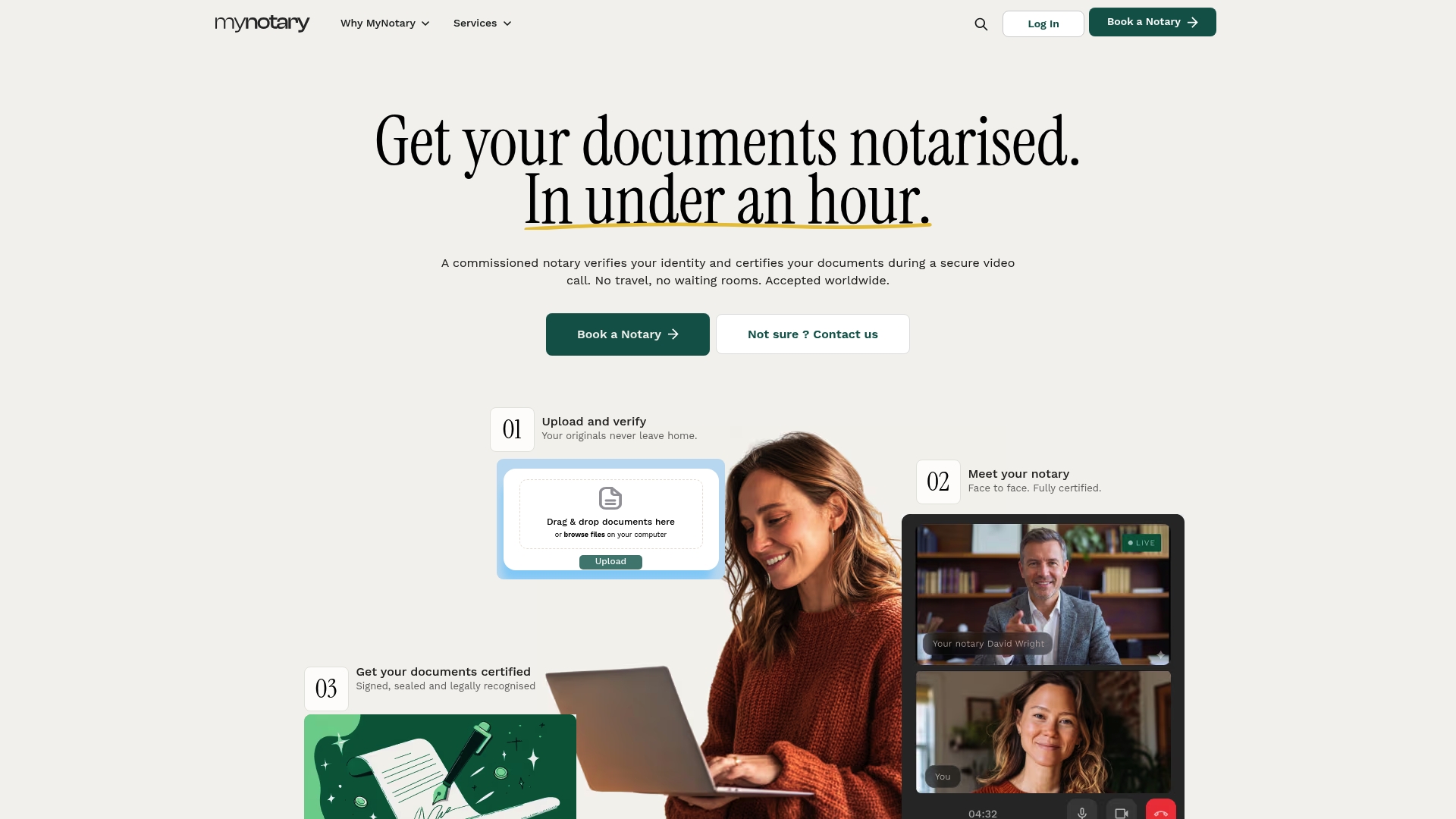
Before booking, have your decree absolute or final order scanned, your case reference to hand, and valid photo ID ready for the identity check. If your document needs to become an e-Apostille-ready PDF, start with online signature certification and take the signed file straight into the official e-Apostille upload once your session is complete.
This article is general information, not a substitute for advice from a qualified lawyer. Consult a qualified legal professional about your own circumstances before acting on anything here.
Sources
FAQ
How can I obtain an apostille for my UK divorce decree?
Send your original decree absolute or final order, or an official certified copy, to the Legalisation Office, either by post for a paper apostille or as an electronically signed PDF for an e-Apostille.
How do I get an apostille on a document in the United Kingdom?
Apply online through the official legalisation service, pay the fee by card, then post your document once you receive submission instructions, or upload a signed PDF if using the e-Apostille route.
Can any solicitor do an apostille?
No solicitor issues the apostille itself, since that comes only from the Legalisation Office. A solicitor or commissioned notary, including services like My Notary, can certify a document beforehand so it meets the requirements for apostille processing.
Where can I get documents apostilled in the UK?
Apostilles are issued only through the official government legalisation service, applied for online and processed by post or through the e-Apostille portal, not through any solicitor or private provider directly.
What if my decree absolute doesn't have a wet-ink seal?
You will typically need certification from a commissioned notary or solicitor first, or you should request an official certified copy from the issuing family court before applying for an apostille.
Recommended
Got questions? We’re on it.
Most questions are answered here, drawn from what people actually ask before booking. If yours isn’t, our team is in chat.
Send your original decree absolute or final order, or an official certified copy, to the Legalisation Office, either by post for a paper apostille or as an electronically signed PDF for an e-Apostille.
Last updated: