Apostille UK company documents in 1–2 days: Companies House vs notary
By Jeremy Arhab, Founder · Published 10 September 2026 · Updated 10 September 2026
Map UK company documents to Companies House or a notary, avoid delays, and use online notarisation to get an e-Apostille in 1–2 days.
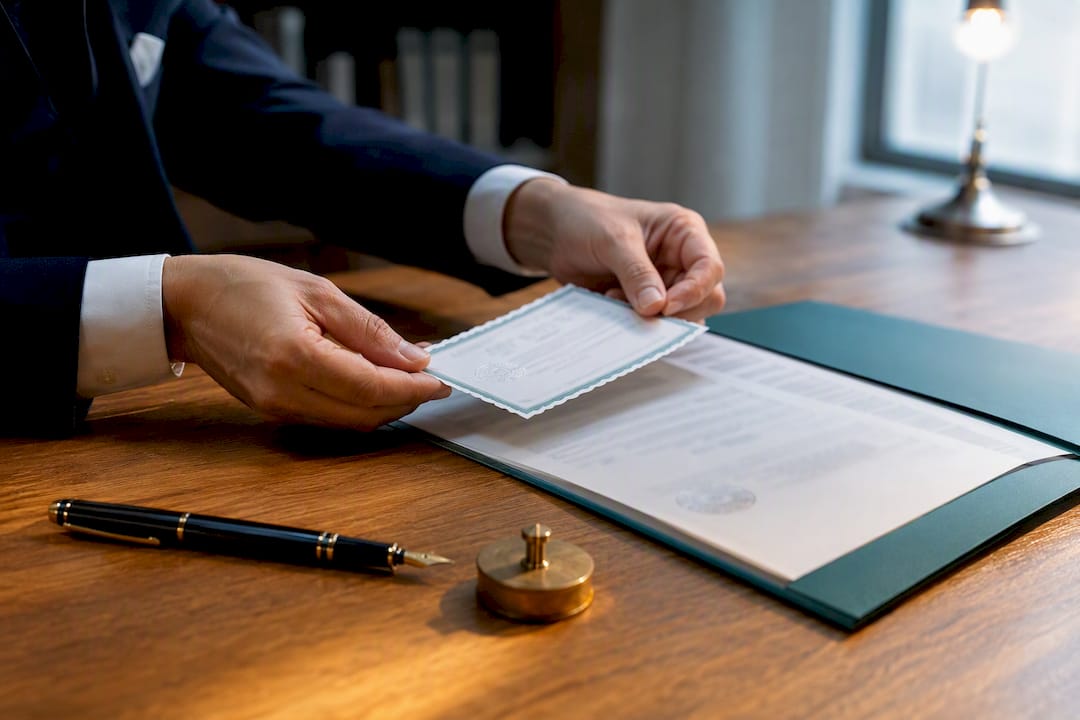
Yes, you can apostille UK company documents for use overseas. You choose between a paper apostille or an e-Apostille, and the correct route depends on what the receiving authority actually wants. Start by confirming their exact format and document list before you touch a certification step. Companies House records and internally drafted documents follow different preparation paths, so knowing which category each document sits in saves time later.
***
TL;DR: - Most UK company documents, including certificates of incorporation and good standing, can be apostilled either as certified copies from Companies House or through notarisation for internal paperwork. - An e-Apostille is legally equivalent to a paper apostille, but some recipients still only accept the physical certificate, and certain documents like birth certificates must go through the paper route. - Processing times for apostille orders are typically 1 to 2 working days, with e-Apostilles moving faster due to the online process, provided the recipient accepts digital formats. - Confirm exactly whether the destination country is a Hague Convention member to determine if an apostille suffices or if additional embassy legalisation is required, which can delay the process. - Always verify the recipient’s specific document format and translation requirements before applying, to avoid delays caused by incorrect or incomplete submissions.
***
Table of Contents
- What is an apostille, and what's the difference between paper and e-Apostille?
- Which company documents need an apostille, and how does preparation differ?
- How to prepare your company documents before you apply
- How to apply for an apostille: steps, costs and turnaround
- Does the destination country change what you need?
- Common mistakes that cause delays
- How do you verify an apostille once it's issued?
- Publisher perspective: where online notarisation fits this workflow
- How My Notary supports your apostille preparation
- Sources
- FAQ
What is an apostille, and what's the difference between paper and e-Apostille?
An apostille is a certificate that confirms a public document is genuine, under the Hague Apostille Convention. It replaced the older system of consular legalisation between member countries, so a single stamp does the job that once needed multiple embassy visits.
There are two formats:
- Paper apostille: a physical certificate attached to your printed document, posted to and from the issuing authority.
- e-Apostille: a digital certificate applied to an electronically signed PDF, issued through the HCCH's e-APP programme.
The HCCH states that an e-Apostille carries the same legal weight as a paper one and should not be rejected purely for being electronic. In practice, though, not every recipient has caught up with that principle, and not every document type qualifies for e-Apostille. Some records, including birth, death and marriage certificates and certain police certificates, must still go through the paper route.
Which company documents need an apostille, and how does preparation differ?
Businesses most commonly apostille:
- Certificate of incorporation
- Certificate of good standing
- Articles of association
- Statutory registers (directors, members, PSC)
- Board resolutions
- Powers of attorney granted by the company
The preparation route splits along one line: was the document issued by Companies House, or drafted internally? Certificates of incorporation and good standing are official Companies House records, so they can usually be ordered as certified copies directly, or certified by a solicitor from a printed copy, depending on what the recipient specifies. Board resolutions and powers of attorney, by contrast, are internal paperwork with no government register behind them, so they typically need notarisation before an apostille can be attached, a point practitioner guidance consistently makes when advising on solicitor versus notary certification.
If you need several documents apostilled for the same transaction, ask whether the receiving authority accepts a bundled submission under one cover sheet. Some do, which cuts cost, though board resolutions and personal documents are usually excluded from that approach.
How to prepare your company documents before you apply
Getting this stage right is the difference between a same-week turnaround and a rejected application sent back for correction.
- Confirm the exact requirement first. Ask the receiving authority whether they need a paper apostille or e-Apostille, whether they require a certified translation, and whether each document needs its own apostille or can be bundled.
- Order Companies House records properly. You can order certified copies directly, with standard and express dispatch options, including same-day dispatch when ordered before 11:00. This is often quicker than arranging third-party certification for documents that already exist on an official register.
- Arrange notarisation for internally drafted documents. Board resolutions, powers of attorney, and similar company paperwork usually need a commissioned notary or solicitor to certify the signature and the signatory's authority before the document is apostille-ready.
- Check the electronic signature format for e-Apostille. An e-Apostille needs a PDF electronically signed by a UK notary or solicitor, with the digital signature traceable back to that professional.
Pro Tip: Get the recipient's requirement in writing before you order anything. A verbal confirmation that "an apostille should be fine" has a habit of becoming "actually, we needed the e-Apostille" once the physical envelope arrives.
How to apply for an apostille: steps, costs and turnaround
You apply online for either format. For a paper apostille, you print the certified document, complete the online application, and post it with a return envelope, since the physical documents have to be sent and returned by mail. For an e-Apostille, you upload the electronically signed PDF and receive the certified file back digitally, which removes the postal step entirely.
Costs are driven by a few factors:
- The apostille application fee itself
- Any Companies House certified copy or express dispatch fee
- Courier costs if you use tracked or same-day postal services
- Optional certified translation fees if the destination requires them
Turnaround for apostille-only orders is often quoted at 1 to 2 working days once the document is correctly prepared, though postal transit adds time to paper applications. e-Apostille submissions tend to move faster precisely because there's no printing or posting involved, but that speed only helps if the recipient actually accepts the digital format.
Does the destination country change what you need?
An apostille alone is usually sufficient when both the UK and the destination country are parties to the Hague Convention. Membership means the receiving authority has agreed, by treaty, to accept the apostille certificate in place of consular legalisation.
Countries outside that framework are a different matter entirely. For non-Hague destinations, experts note that an apostille alone is often not enough, and businesses need additional embassy or consular attestation after the apostille is attached. That extra step can add days or weeks, depending on the embassy's own processing queue, and it usually carries its own fee.
- Check whether your destination country is a Hague Convention member before choosing your route.
- If it isn't, factor embassy processing time into your project timeline from the outset.
- Ask the receiving authority whether they require a certified translation, and in which language, before you submit anything.
One point worth flagging: even within Hague member states, some authorities still ask for a translation alongside the apostilled original, particularly for documents like board resolutions where the exact wording matters legally. Confirming this upfront avoids a second round trip.
Common mistakes that cause delays
Most rejected apostille applications trace back to a handful of avoidable errors:
- Sending an uncertified printout instead of a properly certified or notarised original
- Choosing e-Apostille when the recipient only accepts paper
- Missing signatory details, such as the signer's capacity or company role, on internally drafted documents
- Assuming e-Apostille acceptance without checking first
Pro Tip: Ask the recipient directly: "Do you accept an e-Apostille, or must it be a paper certificate?" That single question resolves more delays than any other step in this process.
How do you verify an apostille once it's issued?
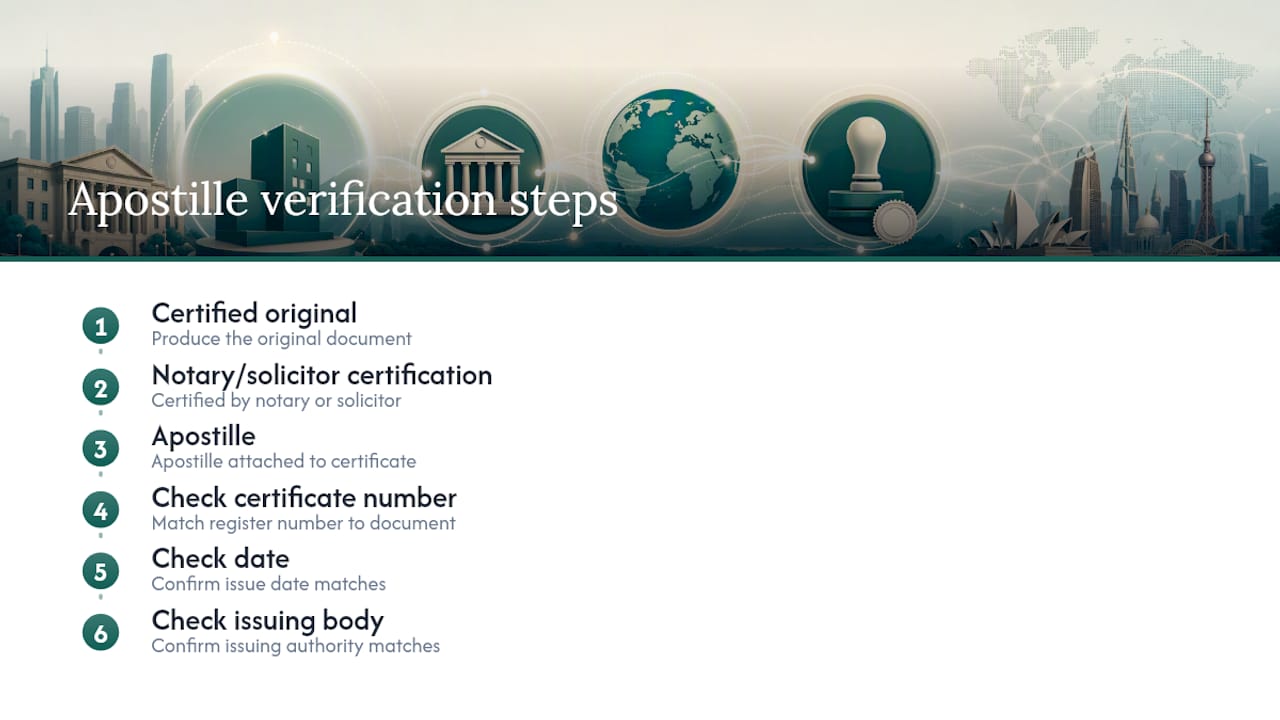
Recipients can usually verify an apostille's authenticity through the issuing authority's own register or verification service, which will confirm the certificate number, date, and issuing body match the document presented. If a recipient still questions it, gather the certified original, the full chain of certification (notary or solicitor certification, then apostille), and contact the certifying professional for a written verification statement.
Publisher perspective: where online notarisation fits this workflow
Preparing a board resolution or power of attorney for apostille almost always starts with getting it properly witnessed. The notarisation stage can be handled through a recorded video session with biometric passport identity checks, producing a document with a commissioned notary's seal, typically within one hour. That output, an electronically signed PDF, is exactly the format an e-Apostille application needs, and optional certified translation covers the language step where recipients demand it.
— Jérémy
How My Notary supports your apostille preparation
Once you know whether your destination wants a paper apostille or an e-Apostille, the notarisation stage becomes the practical bottleneck, and it's the one part of this process you can genuinely speed up. The certification step can be handled by video call: a commissioned notary verifies identity against a passport, the session is recorded, and the document leaves signed with the notary's seal, usually the same day.
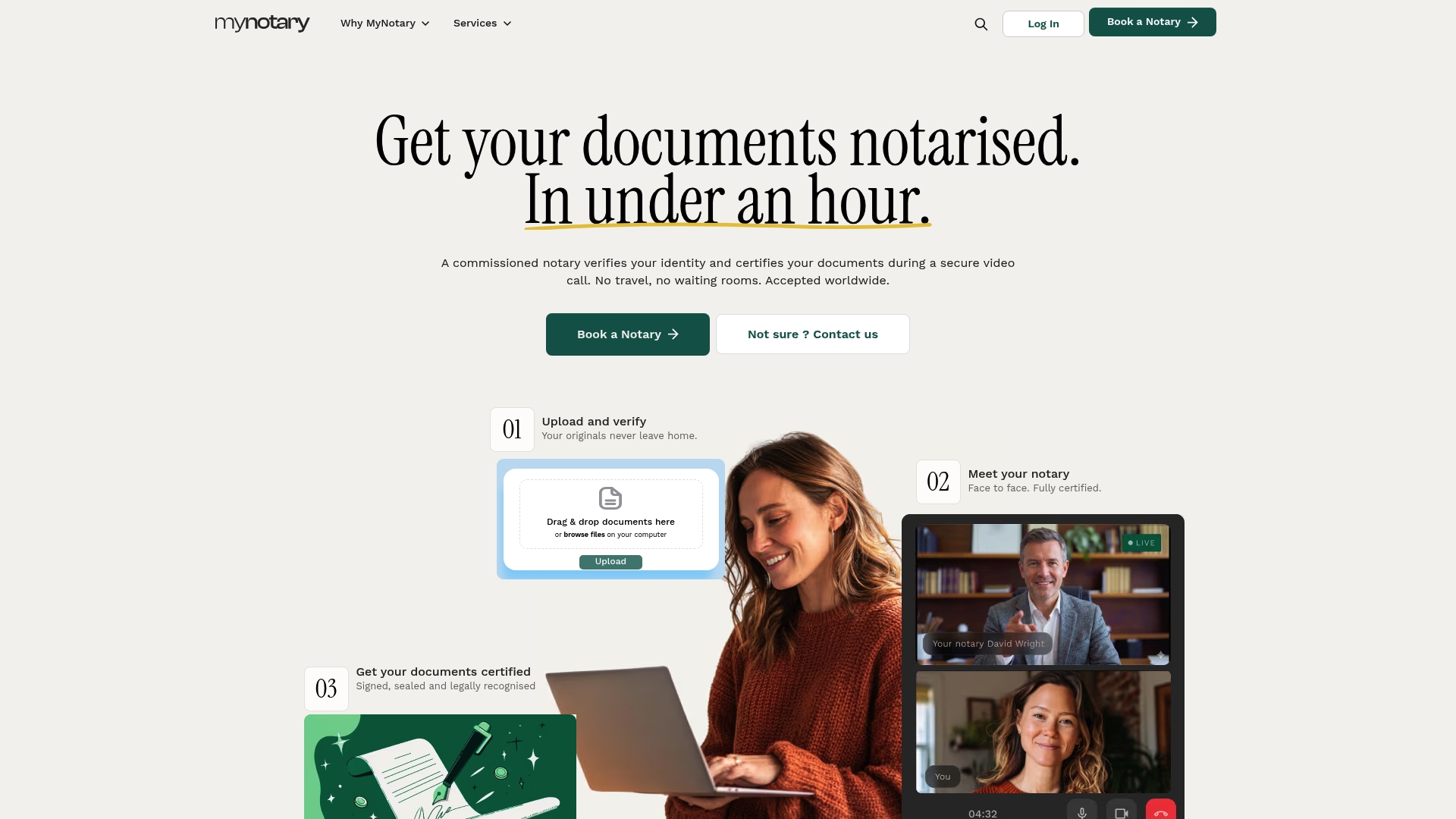
For board resolutions, powers of attorney, and other internally drafted company paperwork, that means you get a properly witnessed document ready for the apostille stage without booking an in-person appointment. Because the output is an electronically signed PDF, it's built for e-Apostille submission from the start, and Certified translations can be arranged where the receiving authority asks for one. If your next step is getting a company document notarised before you apply for an apostille, start with corporate document notarisation online and have the certified PDF in hand within the hour.
Sources
For the treaty text and e-Apostille programme details, consult the HCCH's Apostille Convention pages. To order certified copies of company records, see Companies House's guidance on certified documents. For destination-specific rules, Law Cappital's guidance on cross-border moves explains why checking the receiving country's exact requirements matters before you submit anything.
- HCCH — Apostille Convention and e-APP information
- Order certified documents and certificates from Companies House
- Notaries, notarisation and legalisation — LexisNexis
FAQ
Who can apostille a document in the UK?
Apostilles are issued by the UK's apostille service once your document has been properly certified, either through Companies House for official records or through notarisation for internally drafted documents like board resolutions.
Can I get an apostille online in the UK?
Yes. You can apply online for both formats: a paper apostille, which still requires posting the physical document, or an e-Apostille, which uses an electronically signed PDF submitted entirely online.
Can I get an apostille in one day?
Apostille-only processing is often completed within 1 to 2 working days once the document is correctly certified, though paper applications add postal transit time and non-Hague destinations may require further embassy legalisation afterwards.
How much does it cost to get documents apostilled in the UK?
Cost depends on the apostille application fee, any Companies House certified copy or express dispatch charge, courier costs for paper applications, and optional translation fees, so the total varies by document type and destination requirement.
Do UK company documents need translation before apostille?
Only if the receiving authority requires it. Confirm their language and certification preference before you apply, since some accept an English original with the apostille attached while others need a certified translation submitted alongside it.
Recommended
Got questions? We’re on it.
Most questions are answered here, drawn from what people actually ask before booking. If yours isn’t, our team is in chat.
Apostilles are issued by the UK's apostille service once your document has been properly certified, either through Companies House for official records or through notarisation for internally drafted documents like board resolutions.
Last updated: