Legalisation for China from the UK: the apostille route
By Jeremy Arhab, Founder · Published 2 November 2026 · Updated 2 November 2026
Since 7 November 2023, UK documents for mainland China need an apostille, not Chinese Embassy legalisation. See the steps, timings, and what to check first.
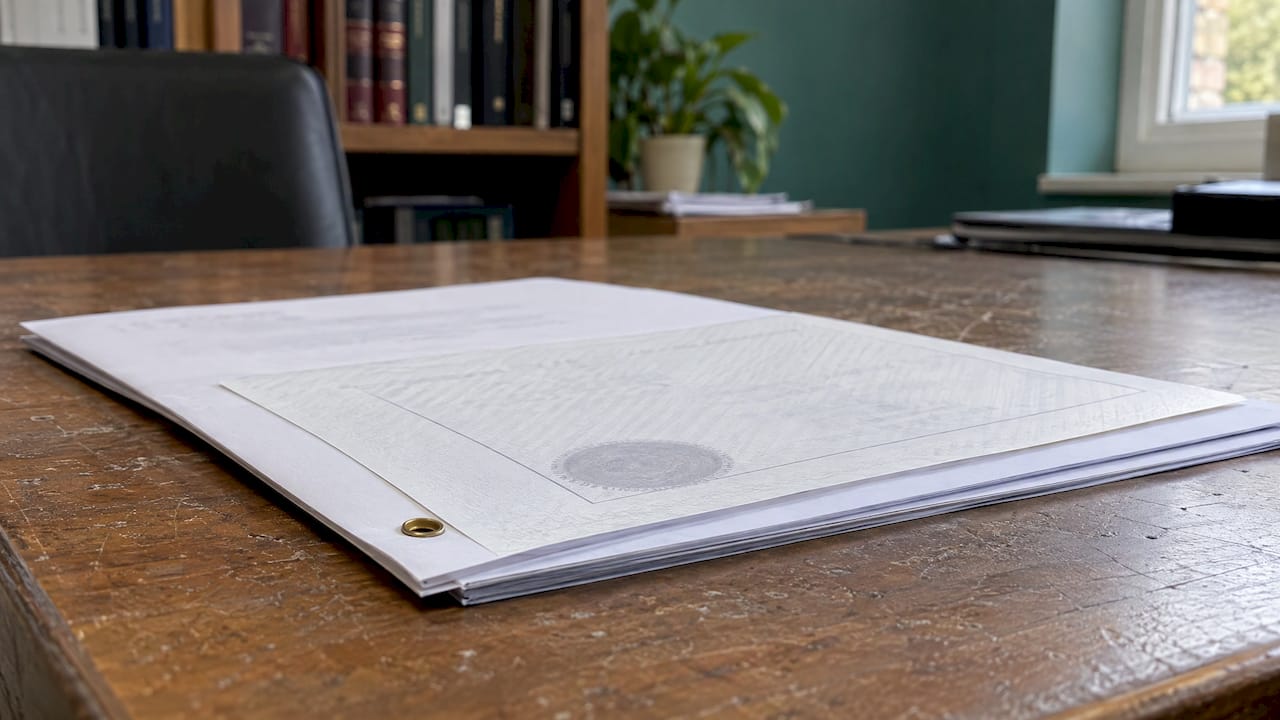
If you need a UK document to be accepted in mainland China, the route is now shorter than it used to be. Since 7 November 2023, a UK public document that carries an apostille can be used in mainland China without a further stamp from the Chinese Embassy. The usual order is: notarise the document if it is private or a copy, obtain the apostille, then check what the Chinese recipient wants in terms of translation, format and validity.
This guide explains each step in plain terms, shows where online notarisation fits, and lists the checks that stop a document being sent back.
TL;DR
- From 7 November 2023, China no longer requires consular legalisation for UK public documents that have an apostille. The Chinese Embassy and Consulates no longer add a second stamp.
- Private documents, such as a power of attorney, a contract, a consent letter or a copy, are normally certified by a notary before an apostille can be applied for.
- An e-Apostille is issued electronically and is far quicker than the paper service. Our guide to skipping up to 25 working days with an e-Apostille and online notarisation covers the detail.
- Ask the Chinese organisation first about translation, format and time limits. An apostille confirms a signature or seal. It does not decide how the receiving body reads your document.
Table of Contents
- What changed on 7 November 2023
- The process step by step
- Which documents need notarising first
- How online notarisation works
- Paper apostille or e-Apostille
- Cost and timing
- Translation and other checks on the Chinese side
- Parents, businesses and multi-signatory documents
- Our perspective
- Start your notarisation online
- FAQ
- Sources
What changed on 7 November 2023
For many years, the route for a UK document going to China had three stages. The document was certified in the UK, then authenticated by the UK authorities, then legalised by the Chinese Embassy in London. Each stage meant postage, fees and waiting time.
China has since joined the Hague Apostille Convention. The Chinese Embassy in the UK states that, from 7 November 2023, public documents from the UK that carry an apostille do not need consular legalisation by the Chinese Embassy or Consulates for use in mainland China. The apostille is the single certificate issued under the Hague Convention. It confirms that the signature, the capacity of the signer and the seal on a document are genuine.
Two points follow from this.
- Much of the advice still online describes the old three stage route. Pages that mention an embassy appointment, postal journeys to London or agent fees for the embassy stage describe the process as it was before the change.
- The apostille does not vouch for the content of your document. It only authenticates the official who signed or sealed it.
The notice applies to mainland China. Hong Kong and Macao have their own arrangements, so if your document is going there, confirm the route separately.
The process step by step
The steps below suit most individuals and small businesses. The order matters, because an apostille can only be placed on a document that is already in an acceptable form.
- Ask the Chinese recipient what it needs. This may be a university, an employer, a bank, a court, a local bureau or a family member's lawyer. Ask about the document type, whether a translation is needed, whether a copy or an original is required and how recent the document must be.
- Decide whether the document is a public document or a private one. A birth certificate issued by a registry or a court order is already an official document. A power of attorney, an affidavit, a company resolution, a consent letter or a copy of your degree is not, and it needs certification first.
- Notarise where needed. A commissioned notary checks your identity, witnesses your signature or certifies the copy, and applies a seal. You can read how this works for China specifically in our guide to preparing UK documents for China, with paper or e-Apostille and online notarisation.
- Apply for the apostille. You choose between a paper apostille and an e-Apostille, explained below.
- Arrange a translation if the recipient asks for one. Do this after the document is notarised, so the translation can refer to the final version.
- Send or upload the document to China. If an e-Apostille is used, confirm in advance that the Chinese recipient can accept an electronic document.
Our step by step guide to getting an apostille in the UK walks through the application stage in more detail.
Which documents need notarising first
The dividing line is who signed the document. If it was issued and signed by a public official, it may be eligible for an apostille directly. If you signed it, or it is a photocopy, a notary usually has to certify it first, so that the apostille authenticates the notary's signature and seal.
Typical documents sent from the UK to China that need this extra step include:
- Powers of attorney, for property, banking or family matters
- Affidavits and statutory declarations
- Certified true copies of passports, degrees and transcripts
- Marital status affidavits and certificates of no impediment, often requested for marriage registration
- Child travel consent and parental authority documents
- Company documents such as resolutions, certificates of incorporation and beneficial owner declarations
- Proof of life and proof of residency documents
- Police clearance copies and bank statement copies
If you are unsure whether your document counts as a public document, ask the issuing office. A school, for instance, may issue a letter that looks official but is not a public document in the sense the Convention uses.
A useful habit is to keep the original safe and to certify a copy where the recipient only needs proof. Our pages on certified true copies, certified academic transcripts and signature notarisation describe those document types.
How online notarisation works
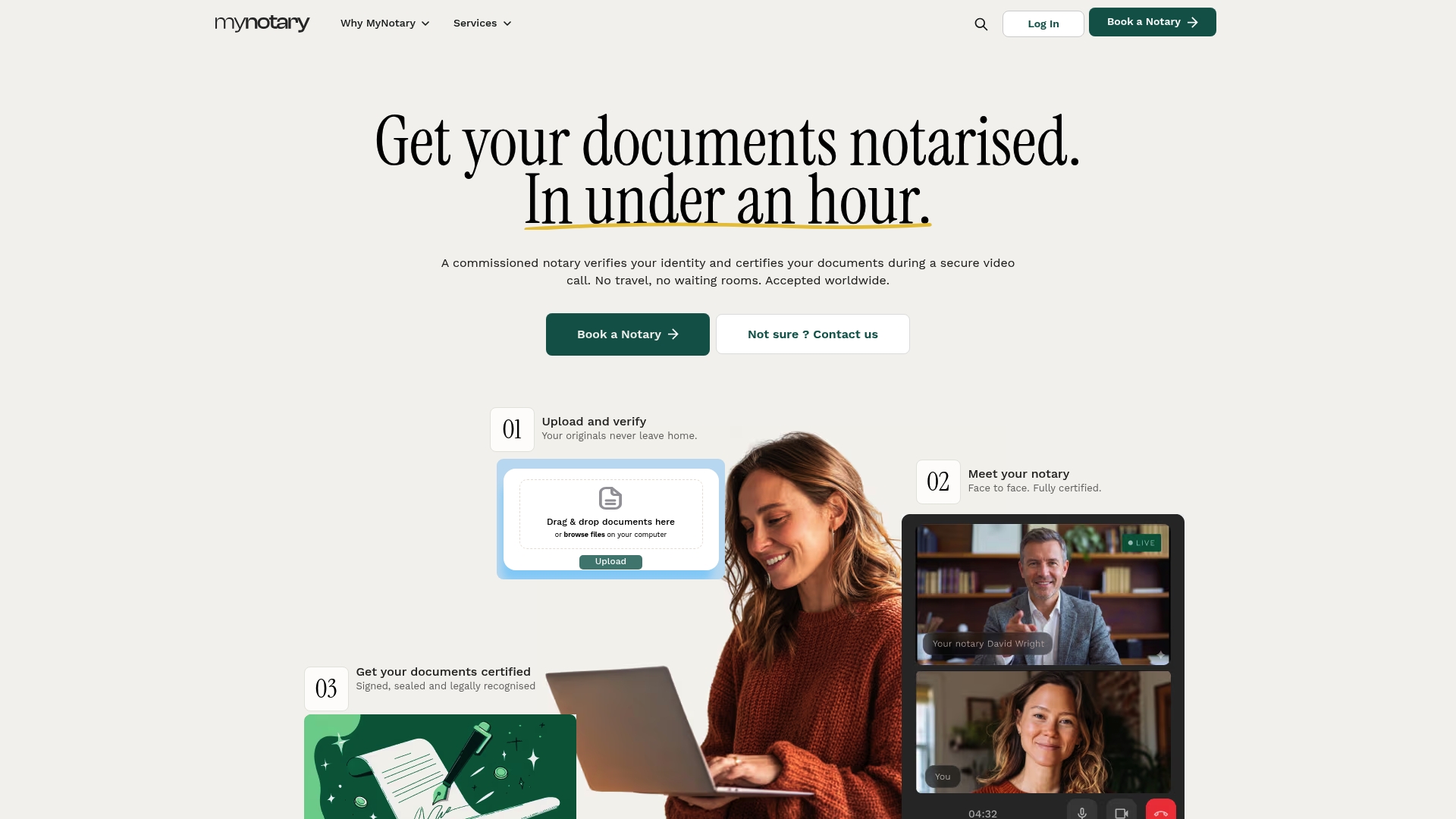
Online notarisation is a way of completing the notarial step without travelling. With MyNotary, the process runs like this:
- You upload the document, which stays unsigned until the session.
- You verify your identity with your passport.
- You join a video call with a commissioned notary. The session is recorded.
- You sign in front of the notary, who checks the document and applies their seal.
- The notarised document is delivered, normally the same day. Our average turnaround is about one hour.
This suits people who live outside the UK, parents coordinating across two households, and businesses with directors in different cities. When several people need to sign the same document, each signer joins the session from their own location.
MyNotary is an online platform. We are not a law firm. The notary who joins your call is a commissioned notary, and we provide the platform that connects you.
Whether a particular Chinese body will accept an electronically signed PDF, or insists on a paper original, is for that body to say. Ask before you choose the format.
Paper apostille or e-Apostille
There are two formats of apostille from the UK authority that issues them.
| Feature | Paper apostille | e-Apostille |
|---|---|---|
| Format | Printed certificate attached to your document | PDF issued electronically |
| Submission | Paper documents sent by post | Electronically signed PDF uploaded online |
| Typical timing | Longer, plus postage each way | Shorter, with no postage |
| Best when | The recipient insists on paper | The recipient accepts digital documents |
The e-Apostille is designed for documents that exist as electronically signed PDFs. This is why online notarisation and e-Apostille work well together: the notary's seal and signature are applied to a digital file that can go straight into the application. Our guide to e-Apostilles in the UK explains how to prepare the file and avoid common errors.
The Hague Conference on Private International Law has been promoting electronic apostilles. At its 2026 international forum on the e-Apostille, it stated that refusing a validly issued e-Apostille violates the Apostille Convention and encouraged holders to tell the issuing authority if one is refused. That is a helpful position to know about. In practice, though, a receiving office in China may still have its own handling procedures, so confirm in advance.
Registered businesses can also look at expedited paper apostille options when a paper original is required quickly. For other speed options, see our overview of same day apostille in the UK.
Cost and timing
The cost has two parts: the notarisation, where needed, and the apostille itself.
On the government side, new fees for legalising UK public documents, including a standard service fee of £45, were introduced from 1 January 2024. Postage or courier costs for paper documents are extra. The e-Apostille is priced lower than the paper service, and its processing is much faster than the paper route, which can run to several weeks. Check the current fee and timing on the official application page before you apply, because fees and service levels can change. Our apostille cost guide for the UK keeps the comparison up to date.
A rough planning table for a document that needs notarisation first:
| Stage | What happens | Usual time |
|---|---|---|
| Recipient check | You confirm requirements with the Chinese body | A few days, depending on replies |
| Online notarisation | Video session, passport check, notary seal | About one hour, delivery the same day |
| Apostille | Paper or electronic application | Varies by format, see the official page |
| Translation, if requested | Certified translation of the final document | Depends on length |
| Delivery to China | Upload or courier | Depends on format |
Allow extra time for the recipient check. It is the step people skip, and it is the one that most often causes a second round of paperwork.
Translation and other checks on the Chinese side
The apostille tells the recipient that the signature and seal are genuine. It says nothing about language. The Chinese Embassy notice points out that receiving bodies in China may still have specific requirements about content, format, translation and the validity period of a document, and it recommends checking with the recipient before applying.
Before you apply, ask the Chinese recipient these questions:
- Do you need a Chinese translation, and must it be certified?
- Should the translation be attached to the apostilled document, or can it be supplied separately?
- Do you accept a copy of the apostille, or do you need the original?
- Is there a maximum age for the document, for example three or six months from issue?
- Do you accept electronic documents and e-Apostilles?
- Does the document need to be in a particular form, such as a specific template for consent or a power of attorney?
If a translation is needed, our notarised translation service can be added to the same workflow. Our article on using one provider for translation, notary and apostille explains the order of the steps.
One more practical point: names. If the name on your passport is spelled differently from the name on a certificate, tell the notary at the start and explain the difference. A mismatch is a common reason for a Chinese office to query a document.
Parents, businesses and multi-signatory documents
Parents and grandparents. A child travel consent or parental authority document is only useful if the Chinese recipient, such as an airline, school or immigration contact, can read it and trusts it. Separated or divorced parents often need each parent to sign. They can join separate sessions or the same session from different places. Grandparents travelling with grandchildren should ask the receiving body whether a signed consent from both parents is required and how recent it must be.

Freelancers and expats. A freelancer signing a contract with a Chinese client, or an expat applying for a visa or work permit, may need copies of degrees, a marital status affidavit or a police clearance copy. Each of these is a separate document, and each needs its own certification and apostille. Group them in one request so that they are handled together.
Businesses. Company documents such as resolutions, a certificate of incorporation or a beneficial owner declaration are often needed to open an account, register a branch or sign a joint venture. Our corporate document notarisation page lists what we handle. Where directors are in different places, each signs from their own location in one coordinated process.
Anyone verifying a document. Recipients can check that an apostille was issued by the UK authority through an official verification route. Our guide on how to verify a UK apostille certificate shows how.
Our perspective
We see the same pattern in most enquiries about China. People arrive expecting three stages and an embassy appointment, because that was the process for years. Since 2023 the work has moved to the front: getting the document into the right form, and asking the Chinese recipient what it expects. That is where an online process helps. A passport check, a recorded video session with a commissioned notary, an unsigned document that is signed in front of the notary, a seal, and delivery the same day. These are facts of how the session runs, and they remove the need to travel or wait for an appointment. We would also say this plainly: do the recipient check first, whatever route you take. A document that is correctly notarised and apostilled can still need a translation or a fresher issue date. We help you prepare the document properly. The decision to accept it stays with the Chinese body. For documents with several signers, such as family consents or company resolutions, our platform lets each person sign from their own location, with an audit trail of the session. Jérémy
Start your notarisation online
If your document is a private one, or a copy, the first task is notarisation. MyNotary lets you upload the document, verify your identity with your passport and meet a commissioned notary by video, with delivery the same day. We also offer optional certified translation and apostille services alongside the notarisation.
You can see the full list of documents, from powers of attorney to child travel consent, on our services page, or begin at uk.mynotary.io.
FAQ
Does the Chinese Embassy still legalise UK documents?
Not for mainland China use of UK public documents that carry an apostille. The embassy has stated that consular legalisation is no longer required from 7 November 2023. You should still ask the receiving body in China whether it has other requirements.
Can I use the apostille route for a power of attorney?
Yes, but a power of attorney is a private document, so it is normally notarised first. The apostille then authenticates the notary's signature and seal. Ask the Chinese recipient about wording, translation and how recent the document must be.
Do I need a Chinese translation?
That depends on the organisation using the document. The apostille does not translate anything, and Chinese bodies may have their own translation rules. Ask the recipient whether a certified translation is needed and, if so, in what form.
Can I do the notarisation without leaving home?
Yes. With online notarisation you upload the document, verify your identity with your passport and sign during a recorded video call with a commissioned notary. The notarised document is delivered the same day. Confirm with the Chinese recipient that it accepts documents notarised this way.
How do I know the apostille is genuine?
A recipient can verify whether an apostille was issued by the UK authority. Our guide to verifying a UK apostille explains the steps for you and for the recipient.
Sources
- Notice on the Cessation of Consular Legalization, Chinese Embassy in the UK
- Changes to fees for legalising UK public documents, GOV.UK
- 14th International Forum on the electronic Apostille, HCCH
- Expedited paper apostille options, China desk
Recommended
Got questions? We’re on it.
Most questions are answered here, drawn from what people actually ask before booking. If yours isn’t, our team is in chat.
Not for mainland China use of UK public documents that carry an apostille. The embassy has stated that consular legalisation is no longer required from 7 November 2023. You should still ask the receiving body in China whether it has other requirements.
Last updated: