Apostille for death certificate: UK guide
By Jeremy Arhab, Founder · Published 3 August 2026 · Updated 3 August 2026
Learn how to obtain an apostille for death certificate in the UK. Ensure your document is ready for use abroad with our essential guide.

***
TL;DR: - A UK death certificate can be apostilled if it is an original or certified copy from a recognized registry. The apostille verifies the authenticity of the signature or seal but does not confirm the certificate's factual content. The process requires submitting the physical document by post and verifying destination country requirements beforehand.
***
Yes, a UK death certificate can be apostilled for use abroad. The apostille confirms that the issuing authority's signature or seal is genuine — it says nothing about the factual content of the certificate itself. That distinction matters practically: an apostille is a technical validation under the Hague Apostille Convention, not a statement that the details recorded are accurate.
Before you do anything else, take two steps:
- Confirm the destination country's requirement. Countries that are signatories to the Hague Convention accept an apostille; non-signatory states may require additional embassy legalisation or a ministry attestation instead.
- Check your certificate. You need an original or an official certified copy issued by a recognised UK registry. A photocopy or a laminated certificate will be rejected.
Common reasons for needing a death certificate apostille include overseas probate, inheritance claims, pension applications, property transactions, and foreign legal proceedings.
Pro Tip: Contact the receiving authority abroad before you apply. A five-minute call or email can confirm whether an apostille alone is sufficient or whether you also need a certified translation or embassy attestation — saving you time and fees.
***
Table of Contents
- Which versions of a death certificate are accepted for apostille?
- How to get an apostille on a UK death certificate, step by step
- What are the typical processing times and costs?
- Do you need a solicitor or notary for a death certificate apostille?
- When an apostille is not enough: embassy legalisation and translations
- How My Notary simplifies the apostille process for death certificates
- Key takeaways
- A practitioner's note on getting this right
- How My Notary can help you apostille a death certificate
- Useful sources and further reading
- FAQ
Which versions of a death certificate are accepted for apostille?
The Legalisation Office accepts only documents that carry a wet ink signature or an official seal from a recognised issuing authority. For death certificates, that means:
Accepted documents:
- An original death certificate issued by a local register office in England or Wales
- An official certified copy issued by the General Register Office (GRO)
- An official certified copy from National Records of Scotland (NRS)
- An official certified copy from General Register Office Northern Ireland (GRONI)
Not accepted:
- Plain photocopies or scans
- Screenshots or digital images printed at home
- Draft or uncertified documents
- Laminated certificates (the lamination conceals the seal)
- Damaged or altered certificates
The reason is straightforward: the Legalisation Office verifies the physical signature or seal. If that mark is obscured, missing, or not from a recognised authority, the document cannot be apostilled.
One further point: death certificates cannot be processed via the e-Apostille service. The physical document must be submitted by post. This applies to all birth, death, marriage, civil partnership, and adoption certificates issued by the General Register Office.
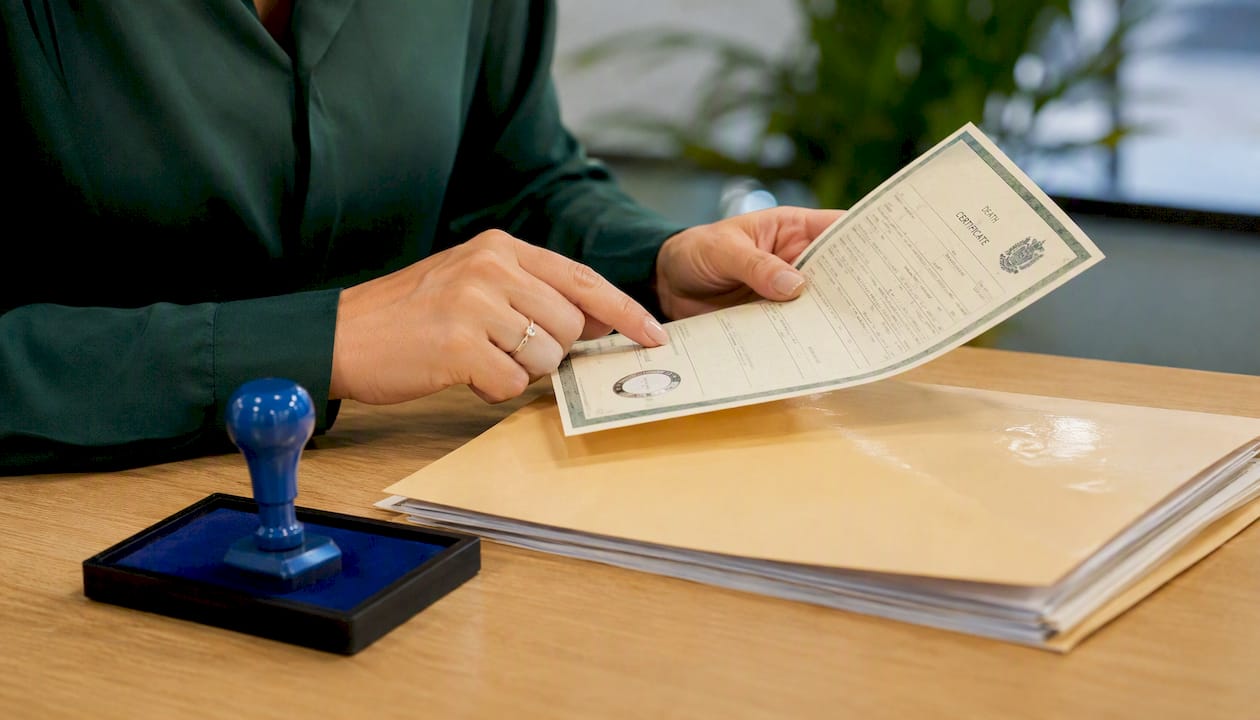
If your certificate is laminated, damaged, or a photocopy, order a replacement before proceeding. You can order an official certified copy from the GRO, your local register office, NRS, or GRONI.
Pro Tip: Order at least two certified copies when you replace a certificate. Some overseas processes require more than one apostilled document, and ordering a second copy now costs far less than repeating the entire process later.
***
How to get an apostille on a UK death certificate, step by step
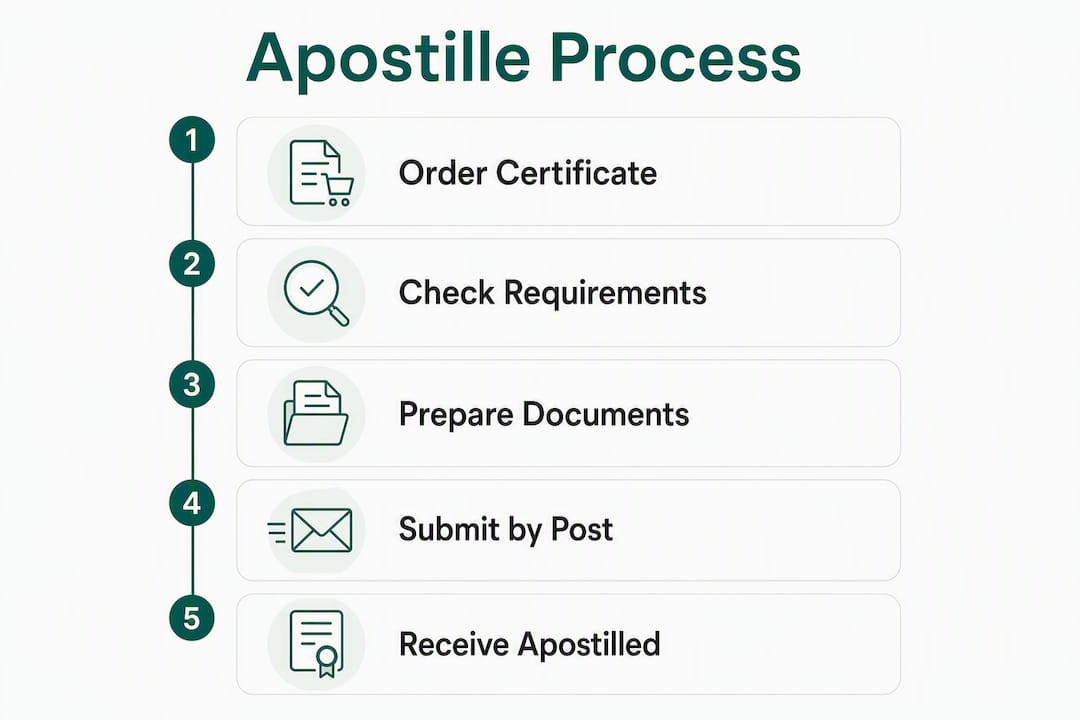
Follow this sequence to avoid common rejections and delays.
- Obtain the correct certificate. Confirm you have an original or an official certified copy from GRO, a local register office, NRS, or GRONI. Check it is undamaged, unlaminated, and clearly legible.
- Confirm the destination country's requirements. Contact the receiving authority (court, notary, pension provider, or estate administrator) to verify whether an apostille alone is sufficient, or whether you also need embassy legalisation or a certified translation.
- Choose your submission method. You can apply directly to the Legalisation Office by post, or use a registered submission service such as My Notary, which pre-checks documents and handles postage on your behalf.
- Complete the application. If applying directly, follow the Legalisation Office's online application process to register your order. You will need a credit or debit card to pay the fee and a printer to produce the submission label.
- Prepare your parcel. Include the certificate, your order reference, your contact details, and a return address. Add a covering letter with a contact telephone number in case the Legalisation Office has queries.
- Arrange return postage. Use an insured, tracked service for both outbound and return delivery. Special Delivery (Royal Mail) or a courier with tracking and insurance is strongly recommended.
- Wait and receive. Once processed, the apostilled document is returned to the address you provided.
What to include in your parcel:
- The original or official certified copy of the death certificate
- Your order reference number (printed from the online application)
- A covering letter with your name, address, and contact telephone number
- A prepaid, tracked return envelope or courier label
Pro Tip: Place a copy of the recipient's contact details inside the parcel, not just on the outside. If the outer label is damaged in transit, the Legalisation Office can still reach you.
***
What are the typical processing times and costs?
Processing times vary depending on how you submit.
- Government Legalisation Office (postal, direct): Timings are not fixed and can vary with demand. Check the current turnaround on the GOV.UK guidance page before you post.
- Private submission services: Many services, including My Notary, aim for next-day or 1–2 working-day turnarounds once the document is received and verified.
Additional costs to budget for:
- Legalisation Office fee (check the current fee on GOV.UK)
- Replacement certified copy fee (if your original is unsuitable)
- Outbound and return courier or Special Delivery postage, including insurance
- Certified translation costs, if the destination country requires the certificate in another language
- Embassy or consular attestation fees, if the destination is a non-Hague country (consular charges are listed on the consular services fees page)
- Private submission service fee
Remember: an apostille confirms the authenticity of the issuing authority's signature or seal only. It does not verify the factual content of the death certificate, and it is a separate step from any translation or embassy attestation the destination country may also require.
***
Do you need a solicitor or notary for a death certificate apostille?
For most people, the answer is no. If you have an original death certificate or an official certified copy issued by GRO, a local register office, NRS, or GRONI, the registry's wet ink signature or seal is itself sufficient for the Legalisation Office to attach an apostille. No solicitor or notary certification is needed at that stage.
When you may need solicitor or notary certification:
- You only have a photocopy and cannot obtain an official certified copy in time
- The receiving authority abroad specifically requests a solicitor-certified or notary-certified copy in addition to the apostille
- You are submitting supporting documents (such as a grant of probate or a statutory declaration) alongside the death certificate, and those documents require separate certification
- A foreign authority requires a certified true copy of the death certificate rather than the original, prepared by a commissioned notary
In practice, the most common scenario where a notary becomes relevant is when you need a certified true copy of a death certificate prepared for submission — particularly when you cannot or do not wish to send the original document abroad.
Pro Tip: Always ask the overseas authority in writing what form of document they will accept. "Certified copy" means different things in different jurisdictions. Getting the specification in writing protects you if the document is later queried.
***
When an apostille is not enough: embassy legalisation and translations
An apostille is accepted in countries that are signatories to the 1961 Hague Convention. For those countries, the apostille is the final authentication step. For countries that are not Hague signatories, an apostille alone is generally not sufficient.
Hague vs non-Hague countries:
- Hague signatory states: accept the apostille as the sole form of legalisation. No further embassy step is required.
- Non-Hague states: typically require the document to be legalised by the relevant embassy or consulate after the apostille has been attached, or sometimes instead of one. This adds time and cost.
Translation requirements:
Some countries require a certified or sworn translation of the death certificate, regardless of whether it is a Hague or non-Hague state. The sequence can vary: some authorities want the apostille attached first, then a certified translation of the apostilled document; others require the translation to be legalised separately. Always verify the exact sequence with the receiving body before you begin.
Practical steps:
- Check whether the destination country is a Hague signatory (the Hague Conference on Private International Law maintains a current list)
- Contact the relevant embassy or consulate in the UK to confirm their specific requirements
- Ask whether a certified translation is needed and, if so, whether it must be sworn or simply certified
Pro Tip: Do not assume that because a country is broadly familiar with apostilles it will accept yours without further steps. Requirements can differ by document type, by the authority receiving it, and even by the purpose of the submission.
***
How My Notary simplifies the apostille process for death certificates
My Notary is a LegalTech platform that handles the end-to-end process remotely, reducing the risk of rejection and cutting the time you spend coordinating paperwork.
What the service covers:
- Remote notarisation via secure video call with a commissioned notary
- Biometric identity verification to confirm your identity before any document is certified
- Preparation of a certified true copy of a death certificate where the original cannot be sent abroad
- Secure document upload and review before submission
- Optional apostille submission to the Legalisation Office with tracked return delivery
- Optional certified translation, where the destination country requires it
What My Notary checks before posting to the Legalisation Office:
- That the certificate is an original or an official certified copy from GRO, a local register office, NRS, or GRONI
- That the document is undamaged, unlaminated, and clearly legible
- That the correct application has been completed and payment confirmed
- That the return address and contact details are included in the parcel
My Notary provides fast and secure notarisation services via video call, enabling you to upload documents, verify your identity through biometric checks, and connect with a commissioned notary remotely — without travelling to an office or waiting for an appointment. Electronic signatures produced through the platform are recognised across many jurisdictions.
Pro Tip: Using a pre-check service before posting to the Legalisation Office is the single most effective way to avoid a rejected parcel. A rejection means your document is returned unprocessed, adding days or weeks to the timeline.
***

Key takeaways
A UK death certificate can be apostilled for overseas use, provided it is an original or official certified copy from a recognised registry, submitted by post to the Legalisation Office with the correct application and return postage.
| Point | Details |
|---|---|
| Apostille scope | An apostille confirms the issuing authority's signature or seal only, not the factual content of the certificate. |
| Accepted documents | Only originals or official certified copies from GRO, a local register office, NRS, or GRONI are accepted; photocopies and laminated certificates are rejected. |
| No e-Apostille available | Death certificates must be submitted by post; the e-Apostille service does not apply to GRO-issued documents. |
| Check destination first | Hague signatory states accept an apostille; non-Hague states may require additional embassy legalisation or a certified translation. |
| My Notary | My Notary handles certified true copies, pre-submission document checks, apostille submission, and tracked return in a single remote booking. |
***
A practitioner's note on getting this right
The apostille process for a death certificate is procedurally straightforward, but the errors that cause delays are almost always made before the document reaches the Legalisation Office. The certificate is laminated. The photocopy was sent instead of the certified copy. The destination country needed embassy legalisation and nobody checked. These are not obscure edge cases; they are the most common reasons a family dealing with an overseas estate or a pension claim ends up waiting weeks longer than necessary.
The single most reliable habit is to verify requirements in writing with the receiving authority before ordering anything. That one step collapses most of the uncertainty. After that, the physical condition of the document and the choice of a secure, tracked submission method are what determine whether the process runs smoothly.
***
How My Notary can help you apostille a death certificate
Dealing with a death certificate for overseas use is rarely straightforward, and the administrative burden often falls on families at an already difficult time. My Notary offers a single remote booking that covers the steps most likely to cause problems: preparing a certified true copy, verifying your identity through biometric checks, pre-checking the document against Legalisation Office requirements, and submitting it with tracked return delivery.
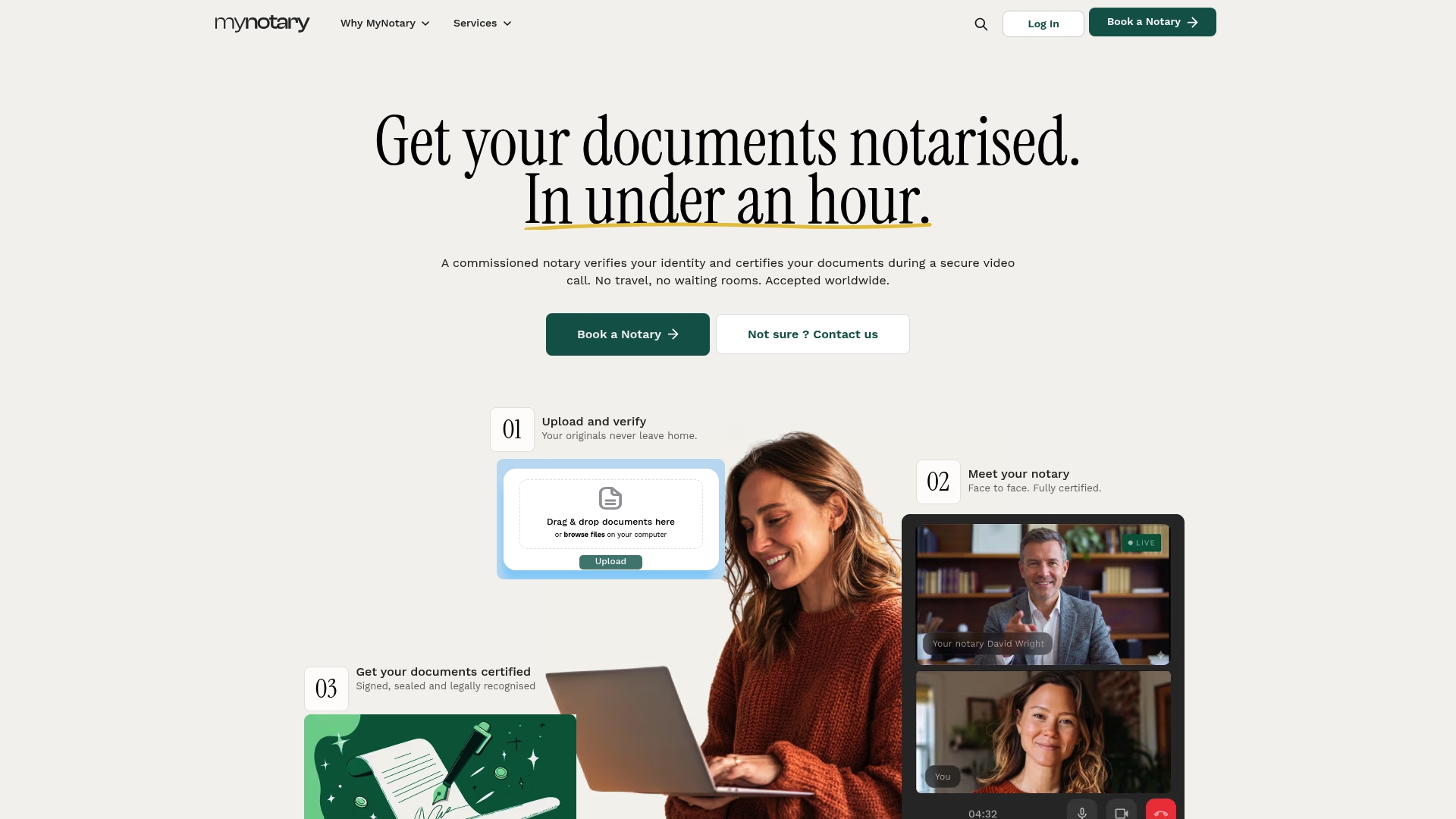
There is no need to travel to an office or coordinate multiple providers. You upload your document, complete a secure video call with a commissioned notary, and My Notary handles the rest, including optional certified translation if your destination country requires it. The platform's electronic signatures are recognised across many jurisdictions, and the average turnaround for notarised documents is one hour.
To get started with a certified true copy of a death certificate or to book a full apostille submission service, visit uk.mynotary.io.
***
Useful sources and further reading
The sources below are the authoritative references for UK death certificate apostille requirements. Checking them directly before you apply confirms that you are working from current guidance, as fees and processing details can change.
| Source | What it covers |
|---|---|
| Get your document legalised: GOV.UK | Official Legalisation Office guidance: accepted documents, application process, and the distinction between paper-based and e-Apostille services |
| Apply for legalisation: GOV.UK | Step-by-step application instructions, payment, and how to submit documents by post |
| Documents for British people abroad: GOV.UK | Hague vs non-Hague country guidance and when further embassy legalisation is required |
| Order a certified copy: GOV.UK | How to order an official certified copy from GRO if your original is unsuitable |
| Consular services fees: GOV.UK | Consular charges relevant when an embassy or consulate is involved in the legalisation chain |
| Certified true copy of death certificate: My Notary | My Notary's specific service for preparing and submitting certified copies for apostille |
***
FAQ
How do I get an apostille on a UK death certificate?
Apply through the Legalisation Office by post, submitting an original or official certified copy from GRO, a local register office, NRS, or GRONI, along with your order reference and a tracked return label. Alternatively, use a submission service such as My Notary, which pre-checks the document and handles postage on your behalf.
Can a solicitor attach an apostille to a death certificate?
No. Only the Legalisation Office can attach an apostille. A solicitor or notary may certify a copy of the document beforehand if the receiving authority requires it, but the apostille itself is issued solely by the government Legalisation Office.
How much does an apostille cost in the UK?
The Legalisation Office charges a government fee; check the current amount on the GOV.UK legalisation page as fees are subject to change. Additional costs include return postage, any replacement certified copy fee, and the fee charged by a private submission service if you use one.
Does a death certificate apostille confirm the information on the certificate is correct?
No. An apostille confirms only that the issuing authority's signature or seal is genuine. It does not verify the factual content of the certificate, such as the cause of death or the personal details recorded.
Do I need a translation as well as an apostille?
It depends on the destination country. Some countries require a certified or sworn translation of the death certificate in addition to the apostille. Contact the receiving authority abroad to confirm their exact requirements before you begin.
***
This article provides general information about the apostille process for UK death certificates and does not constitute legal advice. Requirements vary by destination country and individual circumstances; confirm current rules with the Legalisation Office or a qualified professional before proceeding.
Recommended
Got questions? We’re on it.
Most questions are answered here, drawn from what people actually ask before booking. If yours isn’t, our team is in chat.
Apply through the Legalisation Office by post, submitting an original or official certified copy from GRO, a local register office, NRS, or GRONI, along with your order reference and a tracked return label. Alternatively, use a submission service such as My Notary, which pre-checks the document and handles postage on your behalf.
Last updated: