Apostille for power of attorney: UK step-by-step guide
By Jeremy Arhab, Founder · Published 2 August 2026 · Updated 2 August 2026
Learn how to obtain an apostille for power of attorney in the UK. Follow this step-by-step guide to ensure your document is valid and accepted.

A UK power of attorney can be apostilled, provided it has been correctly executed and notarised before submission. The apostille certifies the authenticity of the notary's signature or seal on the document — it does not validate the legal content of the power of attorney or guarantee that the receiving country will accept its wording. Your immediate next step is to confirm the document is fully signed in the presence of a commissioned notary who will verify your identity and witness the signature. Once that is done, you can submit for an apostille through a standard or commercial service.
Two practical routes exist. You can arrange an in-person notarisation appointment and submit the document by post, or you can use an online platform such as My Notary, which offers remote notarisation by video call with biometric identity verification and onward apostille handling. Standard apostille processing typically takes 3–5 working days, though specialist commercial services often complete apostille-only orders within 1–2 working days for already notarised documents.
Table of Contents
- Which UK documents are eligible for an apostille?
- How to prepare, notarise, and submit a power of attorney for an apostille
- Who can notarise or certify a power of attorney for apostille purposes?
- Paper apostille versus e-Apostille: which should you choose?
- Common reasons apostille applications are rejected
- How long does an apostille take, and what does it cost?
- What an apostille actually certifies, and why this matters
- My Notary makes online notarisation and apostille handling straightforward
- Key takeaways
- When does an online end-to-end service make sense?
- Where to check official requirements and further reading
- FAQ
Which UK documents are eligible for an apostille?
Most executed powers of attorney are eligible for an apostille, as are certified copies of registered Lasting Powers of Attorney (LPAs), general powers of attorney, contracts, and various official certificates. The key requirement is that the document bears a recognisable notarial act or authorised official's signature before it reaches the apostille stage.
Eligible document types typically include:
- Executed general powers of attorney (witnessed and notarised)
- Certified copies of registered LPAs bearing visible Office of the Public Guardian (OPG) registration marks
- Company or corporate powers of attorney with appropriate director or officer signatures
- Certified copies of other notarised documents where the original must be retained
Originals versus certified copies. Sending an original is straightforward but carries risk. If the document is lost in transit or damaged, re-execution is costly and time-consuming. A certified copy, properly certified by a notary or solicitor, is widely accepted and keeps the original safe. For registered LPAs specifically, OPG registration marks must be visible on every page of the original for it to be eligible; a certified copy is the recommended alternative.
Special cases to note:
- Registered LPAs: The OPG stamp must appear on every page. If any page lacks the mark, the document will be returned.
- Company POAs: Corporate signatures may require additional evidence of authority, such as a board resolution or certificate of incumbency.
- Non-standard formats: Unusual wording or jurisdiction-specific clauses may require review by local counsel in the destination country before notarisation.
Pro Tip: Before finalising execution, contact the receiving authority in the destination country to confirm whether they require an original or certified copy, and whether a certified translation is also needed. Discovering this after notarisation means rework.
How to prepare, notarise, and submit a power of attorney for an apostille
The process follows a clear sequence. Skipping or reversing any step is the most common cause of rejection and delay.
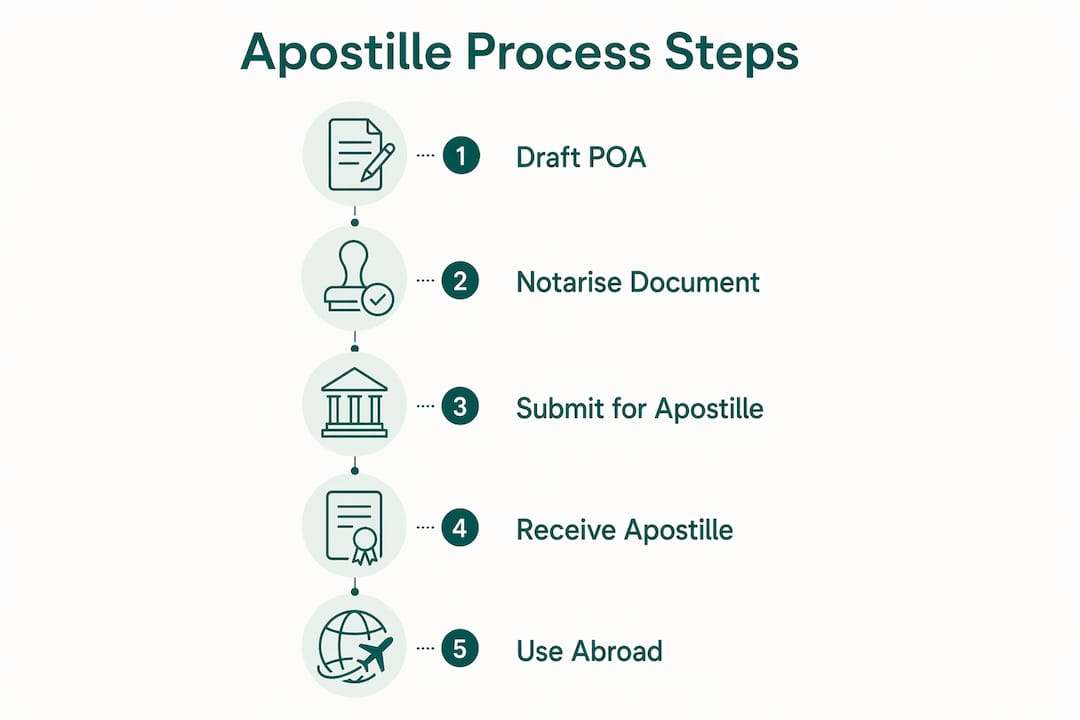
- Draft and confirm wording. Verify the required wording and scope of authority with the receiving authority or local counsel in the destination jurisdiction. Some countries require specific language or clauses that a standard UK template will not include.
- Execute in front of a commissioned notary. Sign the power of attorney in the physical or verified remote presence of a commissioned notary, who will verify your identity, witness the signature, and apply their seal. This notarial act is what the apostille will later authenticate.
- Decide: original or certified copy. For most powers of attorney, either is acceptable. For registered LPAs, a certified copy is strongly recommended to protect the original. The certified copy must be made and certified by a notary or solicitor before submission.
- Submit for an apostille. Documents can be submitted by post or through a commercial apostille service. Include any required covering paperwork and your return address or courier instructions. The UK government legalisation service supports both paper apostilles and an electronic e-Apostille route for eligible electronically signed PDFs.
- Receive and check the returned document. Confirm the apostille certificate is correctly attached and that all details match the underlying document. Use a tracked or courier return option to protect the document in transit.
Timing tip: If a certified translation is required by the receiving authority, commission it while the apostille application is in progress. For countries outside the Hague Apostille Convention, embassy attestation is also required in addition to the apostille, which adds further time. Plan for this in parallel where possible.
Who can notarise or certify a power of attorney for apostille purposes?
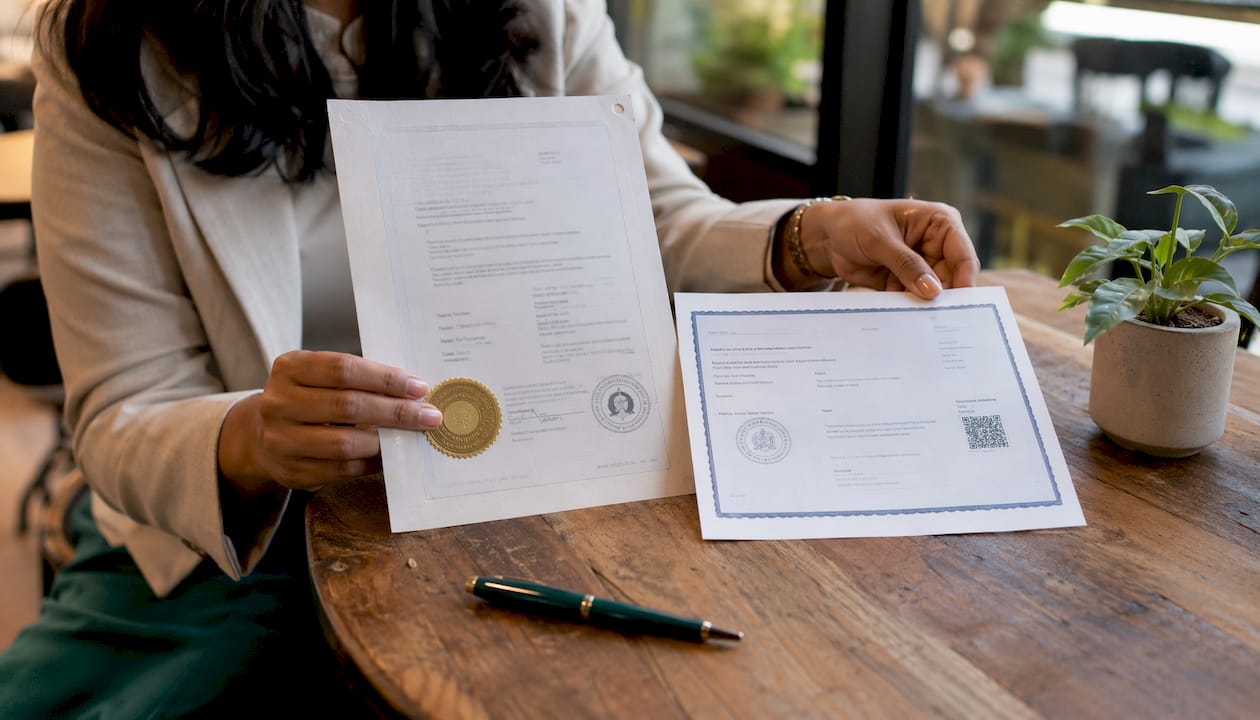
A commissioned notary is the most widely accepted professional for notarising a power of attorney intended for international use. Notarisation is typically preferred for international acceptance because the notary verifies identity, witnesses the signature, and applies a formal seal that apostille authorities recognise. Some receiving authorities will accept a solicitor's certification, but this is not universal and varies by country and institution.

Can any solicitor do it? Not for all purposes. A solicitor can certify a copy of a document, but for a power of attorney intended for international use, a commissioned notary's act carries broader recognition. If the receiving authority specifically requires notarisation, a solicitor's certification alone will not suffice.
Does the notary need to be in the same country as the receiving authority? No. The notary must be authorised to act in the jurisdiction where the document is being executed, which for a UK power of attorney means a commissioned notary operating in the UK. The destination country's requirements govern what they will accept, not where the notary is based.
Pro Tip: When in doubt, arrange notarisation by a commissioned notary rather than relying solely on a solicitor's certification. The additional step is minor; the risk of rejection abroad is not.
For remote signers or those with tight schedules, My Notary's online notarisation service connects you with a commissioned notary by video call, with biometric identity verification built into the process.
Paper apostille versus e-Apostille: which should you choose?
The UK government legalisation service offers two formats: a paper apostille attached to a physical document, and an electronic e-Apostille issued for eligible electronically signed PDF documents. Both are valid under the Hague Apostille Convention, but eligibility and acceptance differ.
| Attribute | Paper apostille | e-Apostille |
|---|---|---|
| Document format | Physical original or certified copy | Electronically signed PDF |
| Evidence required | Original or certified paper document | Valid electronic signature on PDF |
| Typical turnaround | 3–5 working days (standard) | Comparable; depends on service route |
| Receiving authority acceptance | Universally accepted | Accepted in many countries; not all |
| Best for | Most international use cases | Digital workflows where recipient confirms acceptance |
The e-Apostille is a practical option when the receiving authority operates a digital workflow and has confirmed they will accept it. Some jurisdictions and institutions, particularly those with older administrative systems, still require a physical stamp on a paper document. Choosing the wrong format means starting over.
Pro Tip: Always confirm with the receiving authority whether they accept an e-Apostille before choosing the electronic route. A quick email or call to the relevant embassy, registry, or institution can save days of rework.
Common reasons apostille applications are rejected
Rejections almost always come down to a small number of avoidable errors. Understanding them before submission is the most efficient use of your time.
Top causes of rejection:
- Document arrives unsigned or unwitnessed
- Notary seal or signature is absent or illegible
- OPG registration marks missing from one or more pages of a registered LPA
- Document was notarised outside the UK (the apostille authority cannot authenticate a foreign notarial act)
- Incorrect document type submitted (e.g. an uncertified photocopy rather than a certified copy)
- Missing certified translation where the receiving authority requires one
When a document is returned, the applicant must correct the defect and resubmit, which resets the processing clock entirely. For a document that requires re-execution, the cost and time consequences are significant.
Pre-submission checklist:
| Check | What to verify |
|---|---|
| Signatures and witnesses | Every required signature is present and the notary's details are complete |
| Notary seal | Seal is clear, legible, and on the correct page |
| OPG marks (LPAs only) | Registration stamp visible on every page of the document |
| Document type | Original or properly certified copy, not a photocopy |
| Translation | Certified translation included if required by the receiving authority |
| Correct jurisdiction | Document was notarised in the UK by a commissioned notary |
Using a certified copy rather than the original is a practical safeguard. If the copy is rejected for a correctable reason, the original remains intact and a new certified copy can be made without re-executing the entire document.
How long does an apostille take, and what does it cost?
Processing times and fees depend on the route you choose and whether the document is already notarised when you submit.
| Service route | Typical processing time | Notes |
|---|---|---|
| Standard apostille (already notarised document) | 3–5 working days | Government and most commercial services |
| Commercial apostille-only service | 1–2 working days | For already notarised documents via specialist providers |
| Premium or express commercial service | Often faster | Subject to availability and additional fee |
| Embassy attestation (non-Hague countries) | Variable; allow additional weeks | Required on top of apostille for non-Hague jurisdictions |
Fees to budget for:
- Notarisation fee (commissioned notary appointment, in-person or remote)
- Apostille processing fee
- Courier or tracked return postage
- Certified copy fee (if applicable)
- Certified translation fee (if required by the receiving authority)
- Embassy attestation fee (for non-Hague countries)
Translation is a frequently overlooked cost. Even a correctly notarised and apostilled power of attorney may be refused without a certified translation into the destination language. Commission the translation early, ideally while the apostille application is being processed, to avoid adding unnecessary time to the overall timeline.
What an apostille actually certifies, and why this matters
An apostille authenticates the signature or seal of the notary or authorised official on the document. It does not validate the legal content of the power of attorney, confirm the grantor's capacity, or guarantee that the receiving country will accept the document's wording or scope of authority.
This distinction matters in practice. A power of attorney can carry a valid apostille and still be refused by a foreign bank, registry, or court if the document's wording does not meet local requirements. Destination countries apply their own rules on what a power of attorney must say, how it must be structured, and whether it must be in the local language.
Legal practitioners recommend having local counsel in the destination jurisdiction review the UK power of attorney wording before notarisation. Discovering a drafting problem after the document has been notarised and apostilled means the entire process must restart. For company powers of attorney, the risk is compounded because corporate authority requirements vary significantly between jurisdictions.
Pro Tip: If you are using a UK power of attorney for property, banking, or legal proceedings abroad, ask the receiving institution for their specific requirements in writing before you draft the document. This single step prevents the majority of post-apostille rejections.
My Notary's remote notarisation service handles the identity verification and notarial act by video call, with an average turnaround of one hour for the notarised document itself, giving you time to address any destination-country requirements before the apostille stage.
My Notary makes online notarisation and apostille handling straightforward
Getting a power of attorney notarised and apostilled no longer requires multiple in-person appointments or days of waiting. My Notary offers remote notarisation by secure video call, with biometric identity verification and electronically signed documents recognised in over 180 countries.
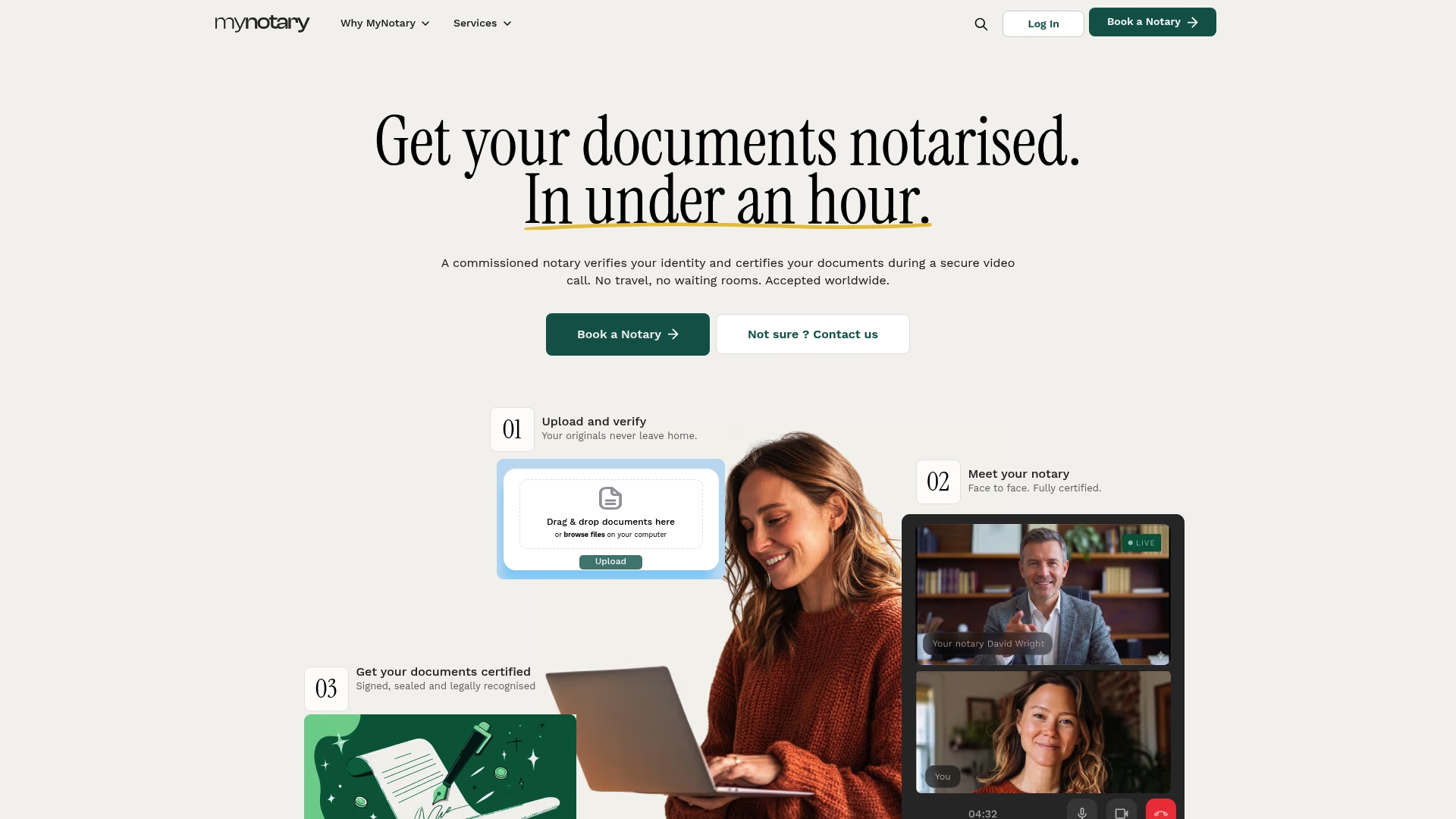
The process is designed for individuals and legal professionals who need certified documents quickly. You upload your document, verify your identity using biometric checks, and connect with a commissioned notary by video call. The notarised document is ready within an average of one hour. From there, My Notary's optional apostille handling and certified translation add-ons mean you can manage the entire chain in one place, with secure courier return for physical documents.
Whether you need a power of attorney for banking, a company POA, or a general power of attorney for overseas use, My Notary's platform covers the notarisation step and connects it directly to apostille processing. Book your online notarisation appointment at uk.mynotary.io and have your document certified today.
Key takeaways
A UK power of attorney must be fully executed and notarised before it can be apostilled, and the apostille certifies the notary's signature only, not the legal validity of the document abroad.
| Point | Details |
|---|---|
| Notarisation comes first | The document must be signed before a commissioned notary before any apostille application can proceed. |
| Originals vs certified copies | Certified copies are recommended, especially for registered LPAs where OPG marks must be visible on every page. |
| Paper or e-Apostille | Confirm with the receiving authority which format they accept before choosing; not all jurisdictions accept e-Apostilles. |
| Budget realistically | Allow for notarisation, apostille fees, courier, and possible translation or embassy attestation for non-Hague countries. |
| My Notary | Offers remote notarisation by video call with biometric ID, with optional apostille handling and certified translation, averaging one hour for the notarised document. |
When does an online end-to-end service make sense?
The decision between self-managing each step and using an integrated online service comes down to three factors: speed, control, and complexity.
An online end-to-end service is the right choice when the signer is based remotely or abroad, when deadlines are tight, when multiple documents need notarising at once, or when the receiving authority accepts certified digital workflows. In these situations, the time saved on travel and scheduling alone justifies the approach. My Notary's one-hour average turnaround for notarised documents is a concrete advantage when a transaction or legal deadline is pressing.
In-person notarisation with local counsel remains preferable when the document involves unusual wording that requires jurisdiction-specific advice before execution, when the receiving authority has strict local formalities that are difficult to confirm remotely, or when the destination country's rules are genuinely ambiguous. A property transaction in a jurisdiction with complex local requirements, for instance, may benefit from a local attorney reviewing the draft before the UK notarisation takes place.
For most standard cases — a general power of attorney for banking, investment, or legal proceedings abroad — the online route is faster, equally valid, and considerably less disruptive. The practical question is not whether online notarisation is legitimate, but whether the specific document and destination require anything that cannot be handled remotely. In the majority of cases, they do not.
Where to check official requirements and further reading
Before submitting any document, verify requirements directly with the authoritative sources below.
- UK government legalisation service: gov.uk/get-document-legalised — confirm apostille eligibility, paper vs e-Apostille options, and current processing information.
- Hague Conference country list: Check whether the destination country is a party to the Hague Apostille Convention; if not, embassy attestation is required in addition to the apostille.
- Receiving authority in the destination country: The ultimate source of truth on document format, translation requirements, and whether an e-Apostille is accepted.
- My Notary service pages: Online power of attorney notarisation and company POA certification for practical starting points on remote notarisation and apostille handling.
- Office of the Public Guardian: For registered LPA queries, including confirmation of OPG registration marks and certified copy requirements.
FAQ
How do you apostille a power of attorney in the UK?
Draft and execute the power of attorney before a commissioned notary, who will verify your identity and apply their seal. Once notarised, submit the document for an apostille through the UK government legalisation service or a commercial apostille provider; standard processing takes 3–5 working days. Commercial apostille-only services may complete this within 1–2 working days for already notarised documents.
Can any solicitor notarise a power of attorney for international use?
A solicitor can certify a copy of a document, but for international use a commissioned notary's act is more widely recognised. Some receiving authorities will not accept a solicitor's certification in place of formal notarisation, so a commissioned notary is the safer choice.
How do I get my documents apostilled in the UK?
Submit the notarised document to the UK government legalisation service, either by post or through a commercial apostille service. The government legalisation service handles both paper apostilles and e-Apostilles for eligible electronically signed PDFs.
How much does an apostille cost in the UK?
The apostille processing fee varies by service route. You should also budget for notarisation, courier return, certified copy preparation, and any certified translation or embassy attestation fees if the destination country requires them. Costs are not publicly listed as a single fixed figure and vary by provider and document type.
Does an apostille make a power of attorney legally valid abroad?
An apostille authenticates the notary's signature or seal only. Whether the power of attorney is legally effective in the destination country depends on that country's own rules on document wording, format, and language requirements.
Recommended
Got questions? We’re on it.
Most questions are answered here, drawn from what people actually ask before booking. If yours isn’t, our team is in chat.
Draft and execute the power of attorney before a commissioned notary, who will verify your identity and apply their seal. Once notarised, submit the document for an apostille through the UK government legalisation service or a commercial apostille provider; standard processing takes 3–5 working days. Commercial apostille-only services may complete this within 1–2 working days for already notarised documents.
Last updated: