Stop Rejection: UK Apostilles Accepted in Saudi Arabia, £35–£100
By Jeremy Arhab, Founder · Published 4 October 2026 · Updated 4 October 2026
Ensure your UK apostille is accepted in Saudi Arabia. Check e Apostille vs paper, budget £35–£100, arrange Arabic translation, and notarise online by video.
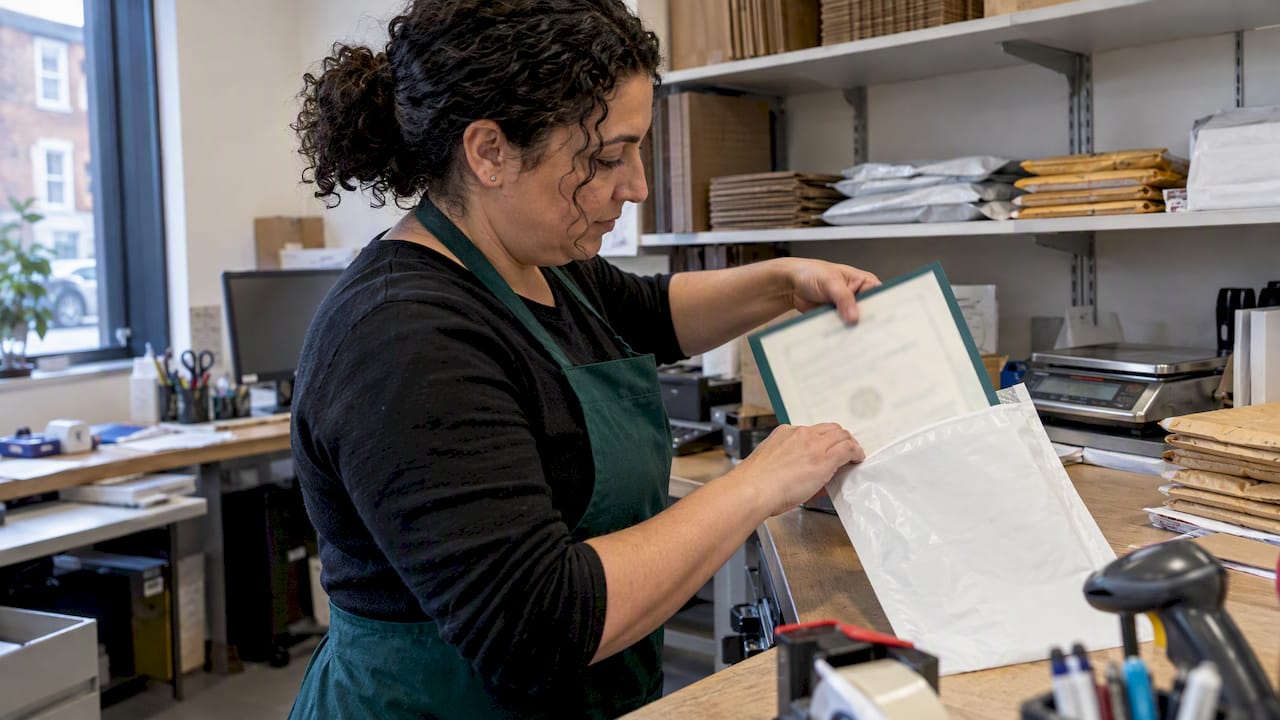
An apostille issued in the UK will generally be accepted in Saudi Arabia, since Saudi Arabia is a contracting party to the Apostille Convention. Before you apply, confirm with the Saudi recipient or authority whether they will accept an e-Apostille or whether they need a paper apostille, an Arabic translation and further local attestation.
***
TL;DR: - Most UK documents like certificates, powers of attorney, and court papers can be apostilled, but sensitive documents may require translation and local Saudi attestation. - Digital e-Apostilles are suitable for eligible documents, but civil certificates and police checks still need the traditional paper route to avoid delays. - Always confirm in writing whether the Saudi recipient accepts an e-Apostille or requires a paper certificate before applying. - Notarisation through online services like MyNotary can streamline document preparation, especially for multi-signatory or time-sensitive cases. - Fees range from 35 to 100 pounds depending on the service speed and format, with courier costs adding to the overall budget.
***
Table of Contents
- What an apostille does and Saudi Arabia's Apostille Convention status
- Does Saudi Arabia always accept an apostille, or are extra Saudi steps needed?
- Which UK documents can be apostilled and which cannot use e-Apostille
- Step by step: prepare and apply for an apostille for Saudi Arabia
- Fees and turnaround: what to budget and expect in the UK
- Common pitfalls and final checks before you submit documents
- How online notarisation helps prepare documents for apostille
- Editor's practical view: when to choose e-Apostille and when to play safe with paper
- How MyNotary can help you prepare documents for apostille
- FAQ
- Sources
What an apostille does and Saudi Arabia's Apostille Convention status
An apostille is a certificate that confirms the origin of a public document: it verifies the signature, seal or stamp on the document and the capacity of the person who signed it. It does not translate the document, check its contents, or guarantee that a foreign authority will accept it.
Saudi Arabia joined the Hague Apostille Convention, with the apostille entering into force there on 7 December 2022. In practice, this means a UK apostille can replace the older, slower chain of consular legalisation for documents going to Saudi Arabia, in most cases.
A few points worth separating out:
- An apostille confirms authenticity of signature and seal, not accuracy of content.
- It does not replace a certified translation where one is needed.
- For countries outside the Convention, documents still need full consular legalisation rather than an apostille.
- British consular missions no longer provide notarial or document legalisation services inside Saudi Arabia itself, and direct people to private-sector alternatives for any in-country steps.
Does Saudi Arabia always accept an apostille, or are extra Saudi steps needed?
An apostille is often enough on its own for administrative paperwork, such as corporate filings, commercial contracts or straightforward certificates. Saudi authorities handling family law matters, wills, probate or court judgments tend to ask for more.
Typical extra steps for these sensitive categories include a certified Arabic translation and attestation by a Saudi ministry or local authority once the document arrives. Guidance on family law matters in Saudi Arabia notes that documents such as marriage certificates often need translation and further stamping before they are recognised locally.
Because requirements vary by document type and by the receiving authority, it pays to check before you apply rather than after:
- Ask the Saudi recipient directly whether an apostille alone will be accepted.
- Request written confirmation of any translation or attestation requirements.
- Check whether the receiving authority wants separate apostilles if you are submitting several documents.
Which UK documents can be apostilled and which cannot use e-Apostille
Most documents sent to Saudi Arabia from the UK fall into a handful of categories: birth, marriage and death certificates, powers of attorney, corporate documents such as certificates of incorporation, academic degrees and transcripts, and court documents including judgments or affidavits.
The UK offers two apostille formats. A paper apostille is a physical certificate attached to your document and posted back to you. An e-Apostille is a digital certificate applied to an electronically signed PDF, downloaded rather than posted.
Not every document qualifies for the digital route. GOV.UK guidance lists categories that must go through the paper process rather than e-Apostille, including:
- Civil registry certificates such as birth, marriage and death certificates issued by the General Register Office.
- ACRO police certificates.
- Disclosure and Barring Service (DBS) certificates.
- Documents that have not been digitally signed in a format the Legalisation Office accepts.
If your Saudi recipient specifically asks for a wet-ink paper apostille, or your document falls into one of the ineligible categories above, plan for the paper route from the outset. Trying to force an ineligible document through the e-Apostille system only causes delay and resubmission.
Step by step: prepare and apply for an apostille for Saudi Arabia
Getting a UK apostille accepted in Saudi Arabia comes down to sequencing: check requirements first, notarise where needed, choose the right apostille format, translate where required, and ship securely.
- Check recipient requirements first. Ask the Saudi authority, employer, bank or family member who will receive the document whether an apostille alone is sufficient, and whether they need a paper apostille or will accept an e-Apostille.
- Arrange notarisation if the document needs it. Many documents, including powers of attorney, affidavits and statutory declarations, need notarisation before they can be apostilled. An online service such as MyNotary can connect you with a commissioned notary by video call rather than requiring an office visit. Keep the document unsigned beforehand if the notary needs to witness your signature.
- Choose paper or e-Apostille and apply. For e-Apostille, you upload an electronically signed PDF through the relevant online service. For a paper apostille, you post the original signed document for processing. Our step-by-step apostille guide sets out the submission process in more detail.
- Arrange certified Arabic translation where it is required. Some Saudi authorities need the apostilled document translated into Arabic by a certified translator, and may then apply a further attestation stamp once it reaches Saudi Arabia.
- Choose secure return shipping and keep certified copies. Use a tracked, insured courier for the original apostilled document, and retain a certified copy for your own records in case the original is delayed or lost in transit.
Pro Tip: Photograph or scan every document immediately after apostille and before posting it, so you have proof of the certificate's content if the original goes astray in transit.
Fees and turnaround: what to budget and expect in the UK
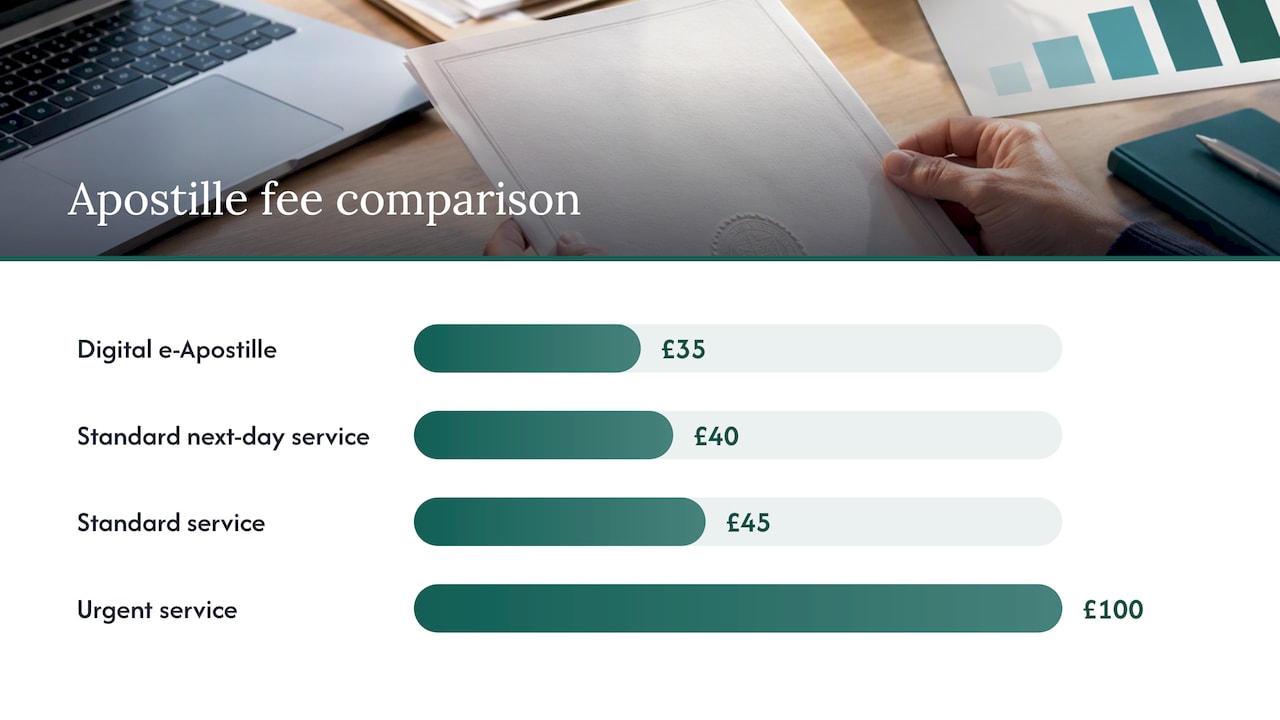
The UK government sets the official fee bands for legalisation, and these apply whatever country your document is heading to. Under the Consular Fees (Amendment) Order 2023, the standard apostille service costs £45, a standard next-day service costs £40, the digital e-Apostille costs £35, and an urgent service costs £100.
These figures cover the apostille certificate itself, not notarisation, translation or courier costs, which are charged separately by the relevant provider.
- Standard service: £45, typically processed within several working days.
- Standard next-day service: £40, for documents that need faster turnaround.
- Digital e-Apostille: £35, usually the quickest option where your document is eligible.
- Urgent service: £100, for same-day or near-same-day processing.
The official fee bands under the Consular Fees (Amendment) Order 2023 run from £35 for e-Apostille to £100 for the urgent paper service, which gives you a clear budget range before you factor in notarisation or translation costs.
Courier costs for returning paper apostilles add to the total, so it's worth choosing a tracked, insured service rather than standard post, particularly for original certificates and corporate documents you cannot easily replace.
Common pitfalls and final checks before you submit documents
Most rejections and delays trace back to a handful of avoidable mistakes rather than anything complicated about the apostille process itself.
- Submitting a document that is already signed when the notary needs to witness the signature.
- Missing a required witness signature on affidavits or statutory declarations.
- Using an outdated template or form that the receiving Saudi authority no longer accepts.
- Spelling names inconsistently across the document, the passport used for identity verification, and any accompanying translation.
- Assuming an e-Apostille will be accepted without checking first, when the recipient specifically wanted a paper certificate.
Before you submit anything, run through a short final check: confirm whether e-Apostille is acceptable to the recipient, confirm whether a translation needs to be certified in Arabic, and confirm whether each document in a batch needs its own separate apostille rather than one combined certificate.
Pro Tip: Keep a certified copy of every apostilled document in a separate, secure location from the original, so a lost or damaged original in transit doesn't leave you starting the whole process again.
How online notarisation helps prepare documents for apostille
Many documents heading for apostille, such as powers of attorney, affidavits and statutory declarations, need notarisation first. MyNotary provides this step through a video call with a commissioned notary, with biometric identity verification and an electronically signed PDF that is legally recognised in over 180 countries, according to MyNotary.
This setup tends to help most in a few specific situations:
- Documents with several signatories in different locations who cannot easily meet in one office.
- Applicants based outside the UK who still need a UK notary to witness a signature before apostille.
- Time-sensitive cases where waiting for an in-person appointment would delay the wider apostille application.
The session itself is recorded, and your identity is verified using your passport before the notary signs and seals the document, which must remain unsigned until that point. Some online notarisation services report an average turnaround of around one hour for notarised documents, after which the document is ready for the next step in the apostille process.
Editor's practical view: when to choose e-Apostille and when to play safe with paper
If the Saudi recipient has confirmed, in writing, that they accept an e-Apostille and your document type is eligible, take it. It is faster and cheaper than the paper route.
When you're not certain, default to paper. A paper apostille, plus a certified Arabic translation where relevant, is the safer bet against a rejected e-Apostille and the delay of starting again. Written confirmation from the Saudi side before you apply saves far more time than it costs to ask.
— Jérémy
How MyNotary can help you prepare documents for apostille
Before any UK document reaches the apostille stage, it often needs a notary's signature, a certified translation, or verified identity documents to accompany it. MyNotary handles each of these by video call, which removes the need to travel to an office or wait for an in-person appointment slot.
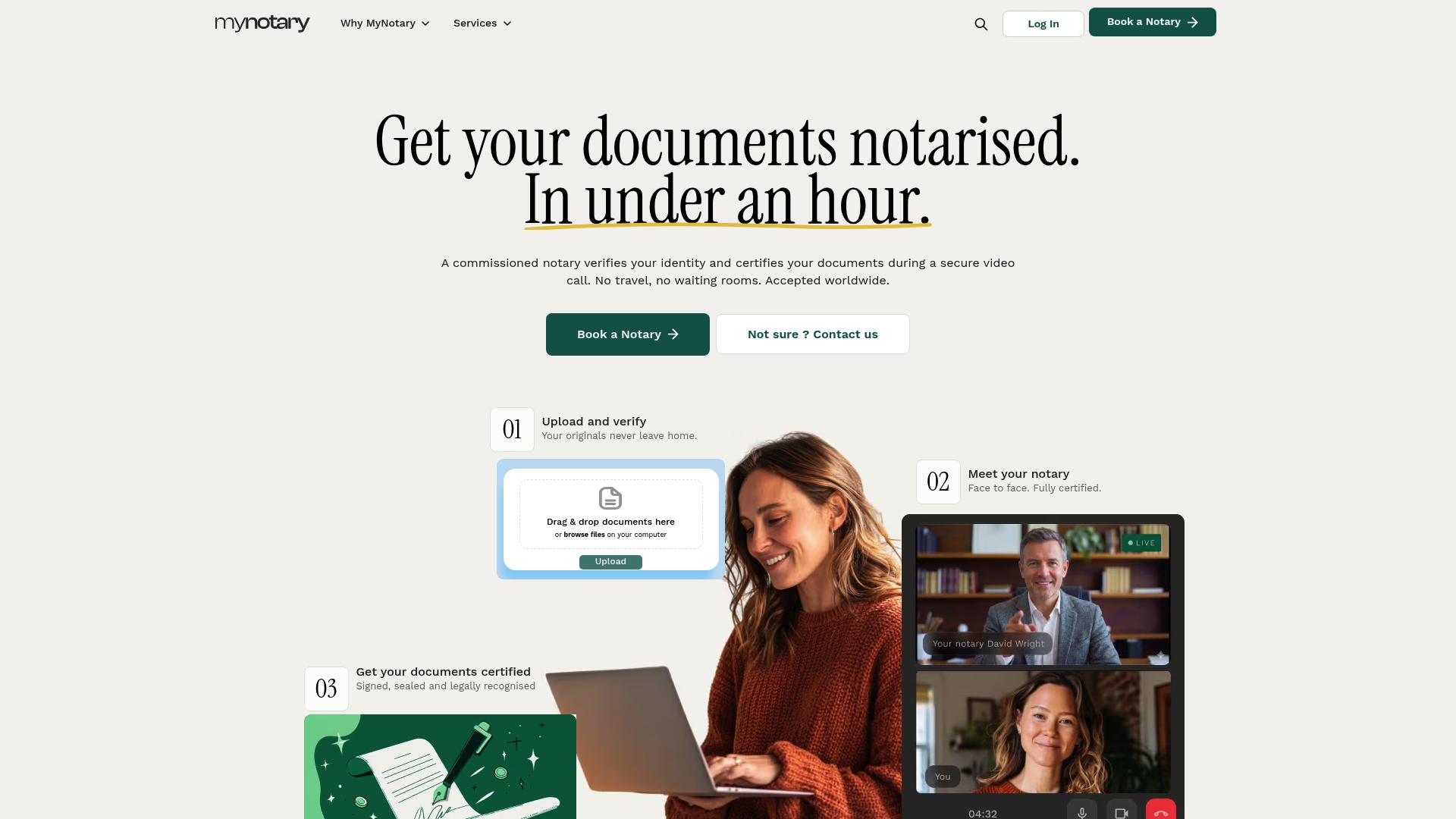
Relevant services for documents bound for Saudi Arabia include:
- Online notarisation by video call with a commissioned notary.
- Biometric identity verification using your passport.
- Legally recognised electronic signatures accepted in over 180 countries.
- Notarised Translation for documents that need a certified Arabic version alongside the English original.
If you're preparing a power of attorney, affidavit or corporate document for apostille and need it notarised first, our services page sets out the full range of options and lets you start the booking directly.
FAQ
Who can apostille documents in the UK?
UK apostilles are issued through the Legalisation Office's apostille service, which applies the certificate to public documents after any required notarisation. Private providers and online services can help prepare and submit documents on your behalf, but the apostille certificate itself comes from the official UK service.
Is Saudi Arabia part of the apostille?
Yes. Saudi Arabia is a contracting party to the Hague Apostille Convention, with the apostille taking effect there from 7 December 2022. This means UK apostilles are generally accepted without the older consular legalisation chain, though some document types still need translation or further local attestation.
Can I get an apostille online in the UK?
Yes, for eligible documents. The e-Apostille service lets you upload an electronically signed PDF and receive a digital certificate, which costs £35 under current UK fee rules. Some document categories, such as civil registry certificates and police checks, are not eligible and must use the paper apostille instead.
Can I get an apostille translation in the UK?
You can arrange a certified translation alongside your apostille application, which many Saudi authorities require for documents such as marriage certificates or court papers. MyNotary offers Notarised Translation as part of its service range for documents that need a certified Arabic version to accompany the apostilled original.
How long is a UK apostille valid for use in Saudi Arabia?
An apostille itself does not carry an official expiry date, but many receiving authorities, including some in Saudi Arabia, only accept apostilled documents issued within a recent window, often around six months. Check this directly with the Saudi recipient, since the requirement varies by authority and document type.
Sources
- HCCH | Apostille Convention enters into force for Saudi Arabia
- The Consular Fees (Amendment) Order 2023 (SI 2023/1388)
- Changes to notarial and documentary services in Saudi Arabia
Recommended
Got questions? We’re on it.
Most questions are answered here, drawn from what people actually ask before booking. If yours isn’t, our team is in chat.
UK apostilles are issued through the Legalisation Office's apostille service, which applies the certificate to public documents after any required notarisation. Private providers and online services can help prepare and submit documents on your behalf, but the apostille certificate itself comes from the official UK service.
Last updated: