UK Online Notarisation: What the 2000 Act Does Not Guarantee
By Jeremy Arhab, Founder · Published 16 October 2026 · Updated 16 October 2026
See what UK law and HM Land Registry guidance say about online notarisation, why recipients may refuse it, and what to check before relying on one.

Online notarisation can be legally sound in the UK, because the Electronic Communications Act 2000 makes electronic signatures admissible as evidence, and HM Land Registry practice guide 82 recognises certain electronic signing methods when set steps are followed. The main caveat is that the organisation asking for your document decides whether it accepts one. Some still insist on a wet-ink signature or a UK-commissioned notary.
***
TL;DR: - For HM Land Registry filings, use a controlled signing platform with one time passcodes and an audit trail; a conveyancer’s certificate is often required. - Before booking, ask the recipient in writing whether it accepts electronic notarisation, requires a UK commissioned notary, and needs a paper or electronic apostille. - An electronic apostille is available for properly certified notarised documents, but birth, death, marriage, civil partnership, police, and DBS certificates require paper processing. - Keep the document unsigned until the video call, have your passport ready, and retain the recording reference, audit trail, and recipient’s written requirements.
***
Table of Contents
- What do UK law and official guidance say about electronic signatures?
- When will online notarisation be accepted, and when is a wet-ink notary needed?
- How do apostilles and e-Apostilles fit in?
- How do you prepare for an online notarisation session?
- A practical view from the author
- How can MyNotary help with common UK documents?
- FAQ
- Sources
What do UK law and official guidance say about electronic signatures?
The legal starting point is the Electronic Communications Act 2000. Under the Act, an electronic signature is admissible as evidence in legal proceedings when it is logically associated with the electronic data and the signer intended it as a valid means of signing. The Act does not rank signing methods by prestige. It tells a court that a signature cannot be rejected merely because it is electronic.
Statutory position: Electronic signatures are admissible as evidence under the Electronic Communications Act 2000 when they are linked to the data and intended as a signature.
Admissibility is not the same as acceptance, so it helps to know the types of signature you may meet:
- Simple electronic signature: a typed name, a ticked box or a drawn signature, valid when the intent to sign is clear.
- Qualified electronic signature: a higher-assurance form tied to an identity check, referenced in UK eIDAS-based rules.
- Conveyancer-certified or platform-managed signature: a signature applied inside a controlled platform, with a conveyancer confirming it.
HM Land Registry sets out practical expectations in its practice guide 82. It asks for platform controls such as one-time passcodes and an audit trail, and in many cases a conveyancer's certificate when a document is lodged. The electronic document held in the signing platform is the original. Printing a copy and dating it outside the platform is invalid.
When will online notarisation be accepted, and when is a wet-ink notary needed?
The recipient's rules sit above the general permissiveness of UK law. A foreign authority, a bank or a university may set its own formalities, and GOV.UK guidance on notaries notes that requirements vary by destination and document. Some recipients insist on a wet-ink signature from a UK-commissioned notary. Others accept certified or electronically signed documents.
Situations that often call for wet ink or a UK-commissioned notary include:
- foreign authorities with their own formality rules for imported documents;
- institutions that only recognise notaries commissioned in the UK;
- documents with country-specific legal requirements for how they are signed or sealed.
We never promise that a recipient will accept a document, and no honest provider can. What you can do is confirm the requirement before you spend any money:
- Ask the recipient in writing what form of notarisation it requires.
- Ask whether an electronically signed, notarised document is acceptable.
- Ask whether it needs an apostille, and whether an e-Apostille will do.
- Ask whether it wants a certified electronic signature or a UK-commissioned notary.
- Keep the reply, so you can show the notary and any later reviewer what was requested.
How do apostilles and e-Apostilles fit in?
An apostille confirms the origin of a signature, stamp or seal on a public document. It rests on the Hague Convention, whose full text is published by the HCCH. The UK issues e-Apostilles for eligible documents, which can be quicker than paper. GOV.UK explains that an e-Apostille needs an original document that was properly certified or signed by an authorised person, such as a notary.
That is where notarisation and legalisation meet: the notarised document is the base, and the apostille is added on top. Our guides to the e-Apostille process and the step-by-step apostille route cover the practical detail.
| Document type | e-Apostille available? |
|---|---|
| Notarised documents and certified copies | Yes, where the original was properly certified |
| Birth, death, marriage and civil partnership certificates | No, paper process only |
| Police and DBS certificates | No, paper process only |
Service times change, so check the current figures on GOV.UK before you plan a deadline around them.
How do you prepare for an online notarisation session?
A little preparation makes the session short and the result easier to defend. Our requirements checklist explains the core conditions, and our piece on whether online notarisation is accepted covers the checks in more depth.
- Have a valid passport ready for the identity check, along with a device with a working camera and microphone.
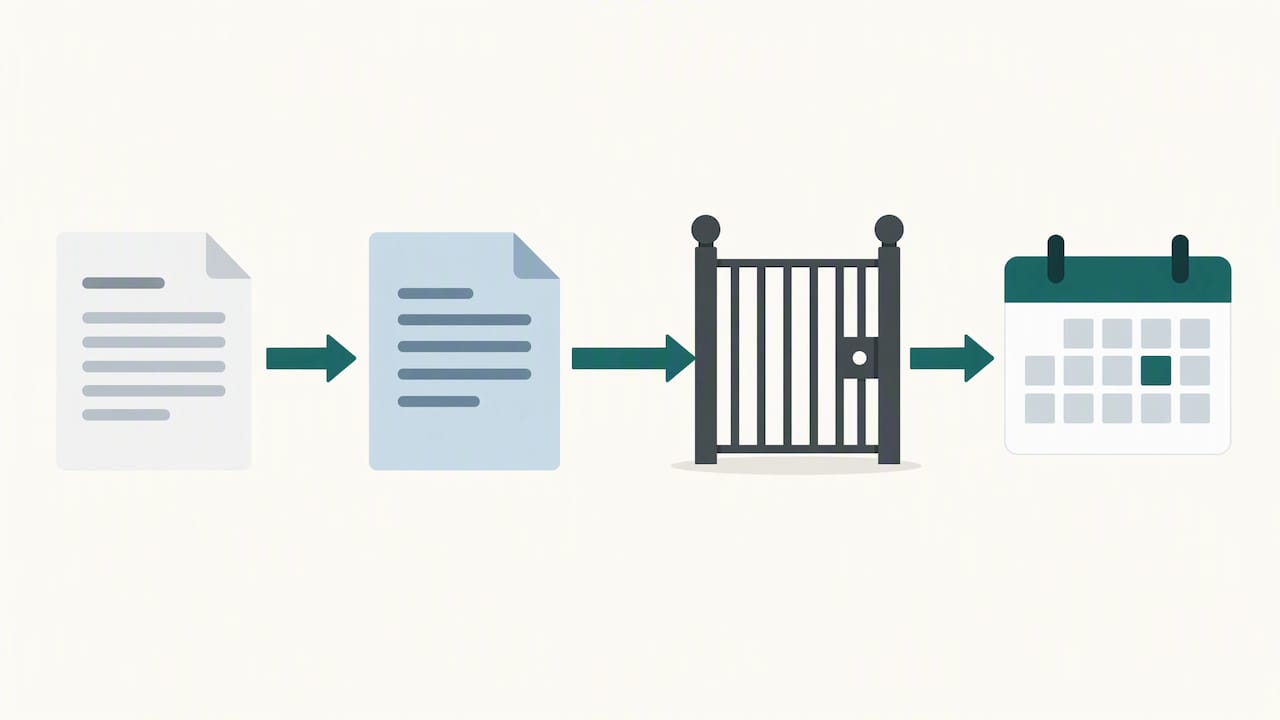
- Keep the document unsigned until the commissioned notary asks you to sign it during the video call.
- Expect the session to be recorded as part of the audit trail.
- Wait for the notary to apply the attestation and seal, then store the finished file safely.
- Keep the recording reference, the audit trail and the recipient's written confirmation of what it needs.
Identity checks matter well beyond notarisation. If you handle company paperwork, this guide to Companies House ID verification explains how identity checks apply to UK directors and persons with significant control.
Pro Tip: Ask the recipient for its requirements in an email before you book. A written reply is the best protection against a rejected document.
A practical view from the author
Most of the stress around notarisation comes from travel and waiting, not from the law. A video session with a passport check, a recorded call and same-day delivery removes much of that, and the audit trail gives the recipient something concrete to inspect. I still tell every reader the same thing: the law being permissive does not settle the matter. Settle what the recipient wants first, then choose the route.
— Jérémy
How can MyNotary help with common UK documents?
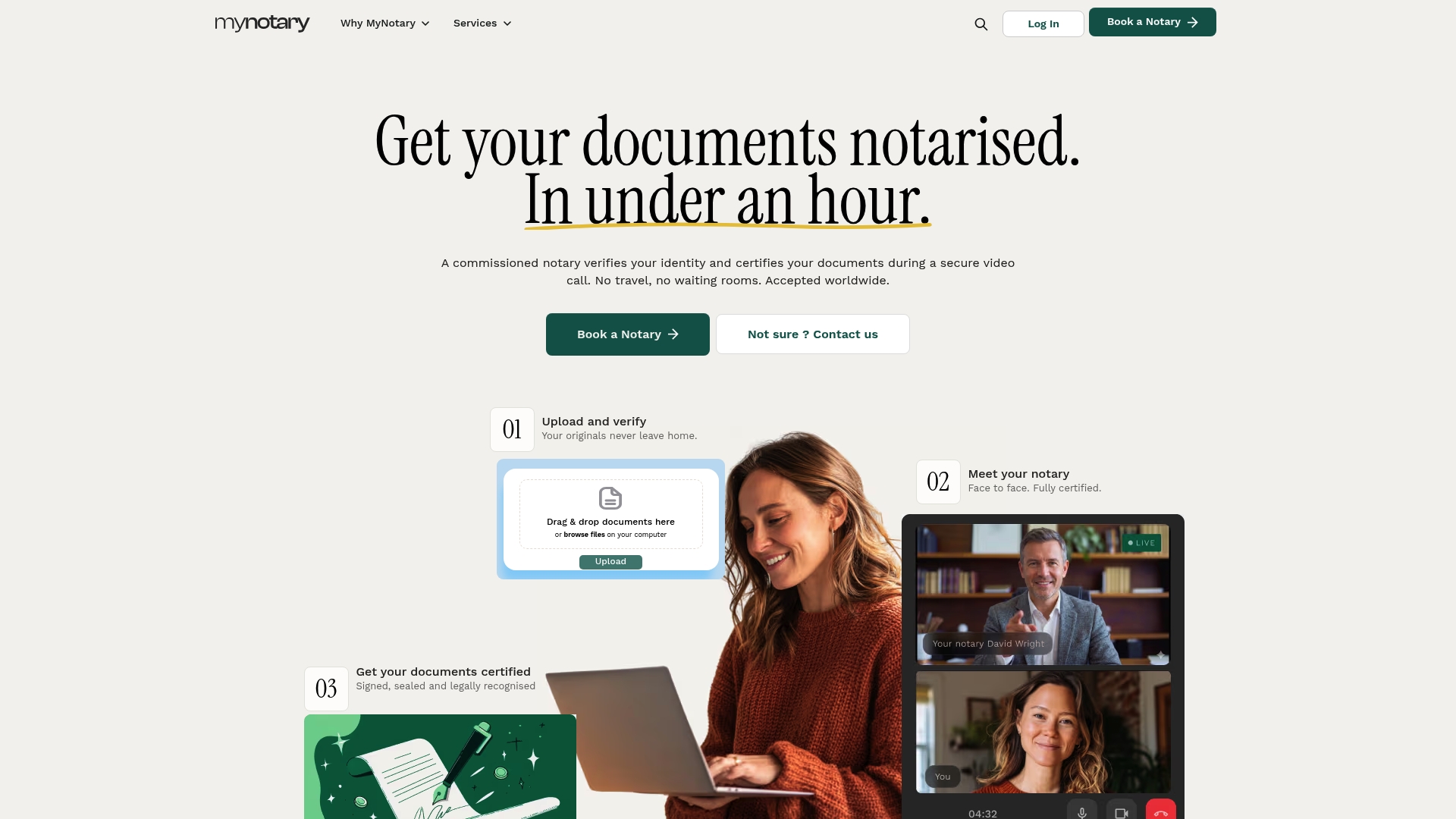
We run notarisation online by video call, with passport identity checks, a recorded session and delivery on the same day. Our services include:
- affidavit notarisation;
- certified true copies;
- power of attorney notarisation;
- signature notarisation, with apostille support where the recipient asks for it.
You upload your unsigned document, verify your identity, join the call and receive your notarised file. Browse everything on our services page and start your booking there.
This article is general information, not a substitute for advice from a qualified lawyer. Consult a qualified legal professional about your own circumstances before acting on anything here.
FAQ
Is online notarisation legally valid in the UK?
Electronic signatures are admissible as evidence under the Electronic Communications Act 2000. Whether a particular recipient accepts an online notarisation is a separate question, so confirm its requirements first.
Does HM Land Registry accept electronic signatures?
HM Land Registry accepts certain electronic signing methods when its practice guide 82 is followed. That includes platform controls and, in many cases, a conveyancer's certificate.
Can every document receive an e-Apostille?
No. GOV.UK lists document types that cannot be issued as e-Apostilles, including birth, death and marriage certificates, which use a paper process.
Who decides whether my notarised document is accepted?
The recipient decides. A foreign authority or institution may require a wet-ink signature or a UK-commissioned notary, so ask it before you proceed.
Sources
Recommended
Got questions? We’re on it.
Most questions are answered here, drawn from what people actually ask before booking. If yours isn’t, our team is in chat.
Electronic signatures are admissible as evidence under the Electronic Communications Act 2000. Whether a particular recipient accepts an online notarisation is a separate question, so confirm its requirements first.
Last updated: