Adoption: Online Notarisation Can Cut Travel for UK Consent Forms
By Jeremy Arhab, Founder · Published 12 October 2026 · Updated 12 October 2026
See which UK adoption forms may need notarisation, how video sessions work, and what to check about witnesses, apostilles, translations, and acceptance.
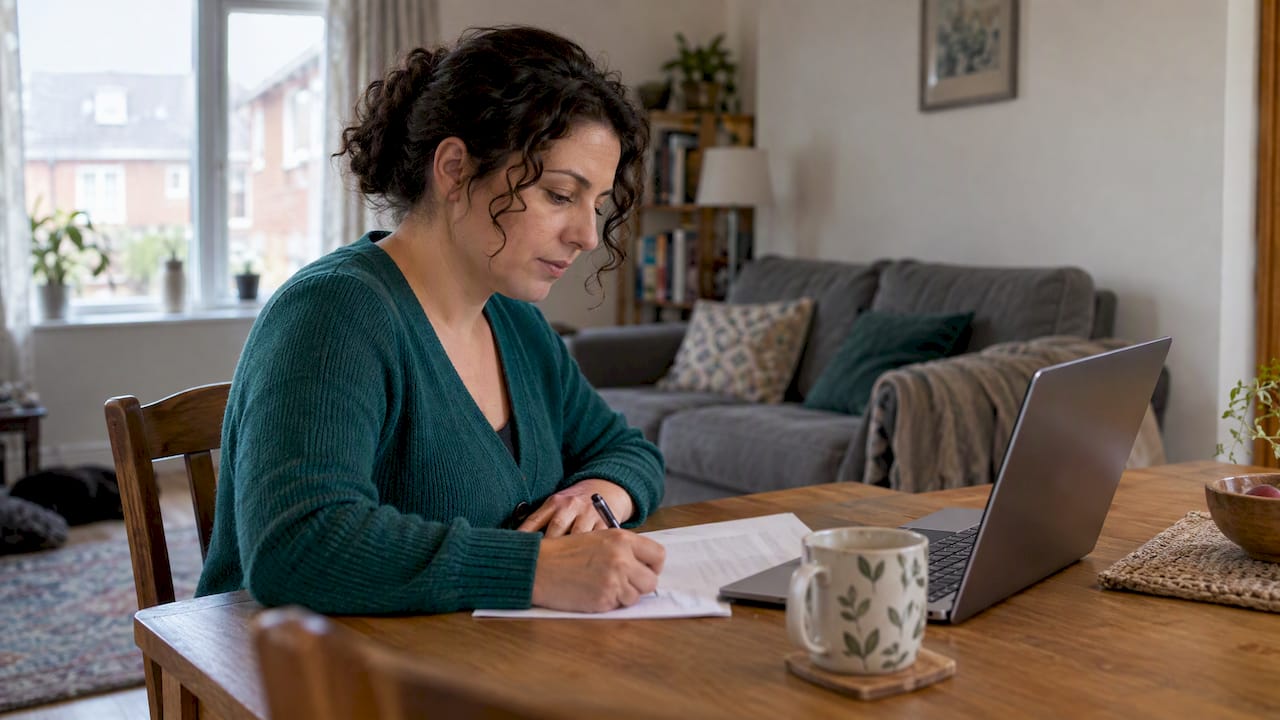
Consent forms, advance consents, home study affidavits, statutory declarations, certified copies and child travel consent letters are the documents most commonly flagged for notarisation during adoption. Which ones apply to you depends on the specific form and the authority receiving it, so we always recommend confirming requirements with your adoption agency or solicitor before signing anything. Remote notarisation by video is available for many of these documents where the receiving authority accepts it.
***
TL;DR: - A101, A103, A105, and A107 allow overseas witnesses authorised locally to administer oaths, British consular officers, notaries, or commissioned armed forces officers. - GOV.UK guidance attributes one in four rejected overseas adoption applications to paperwork that skipped or reordered notarisation, legalisation, and translation. - For overseas documents, notarise first, obtain any required apostille or consular legalisation, then arrange certified translation in the receiving authority’s required language. - Remote notarisation is accepted only when the receiving authority permits it; some still require wet ink originals before apostille or consular certification. - Bring original photo ID, preferably a valid passport, and leave every document unsigned until the notary witnesses each signature during the session.
***
Table of Contents
- Which adoption and related family documents commonly need notarisation
- How notarisation works for adoption paperwork, in person and remote
- Who can witness adoption consents, including signatures made abroad
- Step by step checklist for getting adoption documents notarised
- Legalisation, apostille and translation for documents used abroad
- What to bring, identity checks and originals versus certified copies
- Timelines, common rejection causes and how to avoid delays
- Practical notes from an online notarisation platform
- How notarisation requirements for adoption documents differ by jurisdiction
- Does electronic notarisation hold up for adoption paperwork across borders
- Preparing adoption documents for an online notarisation session
- Checking a notary's commission before your adoption documents are signed
- What notarising adoption documents typically costs
- Why the paperwork trips people up more than the law itself
- Getting your adoption documents notarised with MyNotary
- FAQ
- Sources
Which adoption and related family documents commonly need notarisation
Adoption paperwork falls into a few recognisable categories, each with its own witness or notarisation rules. Consent forms used in adopting a child from overseas often need to be witnessed by someone with specific legal authority, particularly when the signatory is outside the country where the adoption is proceeding.
Consent to Placement (A101), Advance Consent (A103), Consent to Adoption (A104) and partner or step parent consents (A107) carry witness notes directly on the forms. When these are signed abroad, the A101 form sets out that the witness must be someone authorised by local law to administer an oath, a British consular officer, a notary public, or a commissioned officer of the regular armed forces. The A104 form carries similar guidance and reminds signatories to take legal advice before consenting, given the effect on parental rights.
Beyond the consent forms themselves, several other document types are typically notarised or sworn:
- Home study affidavits and post placement reports, which are usually sworn to verify the truthfulness of statements made during assessment.
- Statutory declarations covering matters such as identity, marital status or prior adoptions.
- Certified true copies of birth, marriage and adoption certificates, which courts and overseas authorities commonly request alongside the original consent paperwork.
How notarisation works for adoption paperwork, in person and remote
A standard in person notarial session follows a consistent pattern. You present the document unsigned, the notary checks your identity, you sign in their presence, and the notary then applies a notarial certificate or seal confirming what they witnessed.
Remote online notarisation follows the same logic with video replacing the physical room. Identity is verified on camera, often against a passport, the session is recorded, and the notary applies an electronic certificate or digital seal where the receiving authority permits this format.
- In person: unsigned document presented, identity checked, signature witnessed, seal applied.
- Remote: video identity check against passport, recorded session, electronic certificate issued, acceptance confirmed with the receiving authority beforehand.
A notary's role has limits worth understanding before your session. They confirm identity and witness a signature, but they do not advise on the legal effect of what you are signing, and they cannot guarantee that a court or agency will accept the finished document.
Pro Tip: Check with your adoption agency whether electronic notarisation is accepted before you book a remote session, since some receiving authorities still insist on wet ink originals.
Who can witness adoption consents, including signatures made abroad
Witness rules differ depending on where the signature takes place and which form is involved. Within the UK, certain adoption documents require witnessing by a specific category of official rather than any notary, which catches some adopters out.
- A CAFCASS officer, family proceedings officer, Justice of the Peace, Sheriff or other court officer may be required for particular domestic consent forms.
- For signatures executed outside the UK, the A101, A103, A105 and A107 forms accept witnessing by a person authorised under local law to administer an oath, a British consular officer, a notary public, or a commissioned officer of the regular armed forces.
- Affidavits used in Scottish family proceedings and adoption applications must be sworn or affirmed before an authorised official, under rules set out in the relevant Sheriff Court practice note.
Because witness classes vary by form and jurisdiction, confirming the correct category with your agency or the relevant central authority before the signing session avoids the frustration of a rejected consent.
Step by step checklist for getting adoption documents notarised
A short checklist keeps the process moving and avoids the most common hold ups.
- Confirm with your agency or solicitor which signatures need notarisation and which require a specific court officer or authorised witness instead.
- Leave the document unsigned until you are in the session, whether in person or by video.
- Bring original photo ID for every signer, with a valid passport as the preferred document.
- If the paperwork is heading overseas, schedule notarisation before legalisation and translation rather than after.
- Once notarised, return the originals to your agency or solicitor exactly as instructed, rather than keeping copies back.
Pro Tip: Lay out every document that needs signing before the session starts, so nothing gets missed once the notary begins working through the stack.
Legalisation, apostille and translation for documents used abroad
Notarisation is usually the first step in a longer chain, not the last one. Once a document is notarised, many receiving countries also require legalisation, commonly through an Apostille under the Hague Convention, confirmed by HCCH. Annex C guidance on adoptions with a foreign element confirms that papers are forwarded to the State of origin only once they have been notarised, legalised and translated as required.
- Notarisation typically comes first, followed by legalisation or apostille where the receiving country requires it.
- Certified translations are usually needed when documents are not in the receiving authority's official language, and the translation itself often needs to be authorised to that authority's standard.
- Requirements differ depending on whether the adoption falls under the Hague Convention or follows a country specific bilateral process.
Getting this sequence wrong, translating before notarising, for example, is one of the most frequent causes of delay. Our guide on how to translate, certify, notarise and legalise documents in the right order walks through the sequence in more detail, and our combined workflow for notarisation, translation and apostille covers how these steps fit together.
What to bring, identity checks and originals versus certified copies
Preparation reduces the chance of a wasted session. A valid passport works as primary ID for most notarial sessions, with secondary photo ID sometimes requested as well.
- Bring the original documents that need certifying, not photocopies or scans.
- Confirm whether the receiving authority wants a certified true copy or the original document itself, since agencies handle this differently.
- If a signer does not hold conventional photo ID, raise this with the notary or agency in advance so an alternative can be agreed before the session.
Timelines, common rejection causes and how to avoid delays
How long the full process takes depends heavily on whether apostille or consular witnessing is required, and on how quickly a certified translation can be arranged. A straightforward notarisation can be finished quickly, but the surrounding legalisation and translation steps often set the real pace.
Rejections tend to cluster around a handful of avoidable mistakes:
- The wrong class of witness signed the document, rather than the one specified for that form or jurisdiction.
- A page was left unsigned or the document was altered after notarisation.
- The apostille or certified translation was missing when the receiving authority expected it.
- Documents were submitted out of sequence, with translation happening before notarisation rather than after.
One in four rejected overseas adoption applications trace back to paperwork that skipped or reordered the notarisation, legalisation and translation sequence, according to GOV.UK guidance on adopting from overseas. Confirming requirements early, planning the sequence on paper before signing anything, and using a recorded remote session where it is accepted all help you avoid repeating the process.
Practical notes from an online notarisation platform
Scheduling is the bottleneck we see most often. Travel to a notary's office, finding a slot that suits every signer, and redoing a session because of a missing document all add days to a process that often has a tight window.
Keeping every page unsigned until the session, and recording the session itself where the law permits, protects you if a receiving authority later queries what happened.
How notarisation requirements for adoption documents differ by jurisdiction
Adoption is governed locally, so the same document type can carry different witness or certification rules depending on where it originates and where it is heading. A consent form signed in England and Wales may specify a court officer, while the equivalent process in Scotland routes through a Sheriff Court and its own practice notes on affidavits in family actions.
Cross-border adoptions add another layer. Once a UK applicant's papers are ready to travel abroad, Annex C on adoptions with a foreign element explains that the receiving State of origin sets its own expectations for how documents must be notarised, legalised and translated before they are accepted. A country that is party to the Hague Convention on intercountry adoption typically expects an apostille rather than embassy legalisation, while a non-Hague country may require full consular legalisation instead.
Because of this variation, there is no single checklist that covers every case. The safest approach is to treat the receiving country's own instructions, relayed through your agency, central authority or solicitor, as the final word on witness class, certification format and translation standard, rather than relying on a generic guide or a previous applicant's experience.
Does electronic notarisation hold up for adoption paperwork across borders
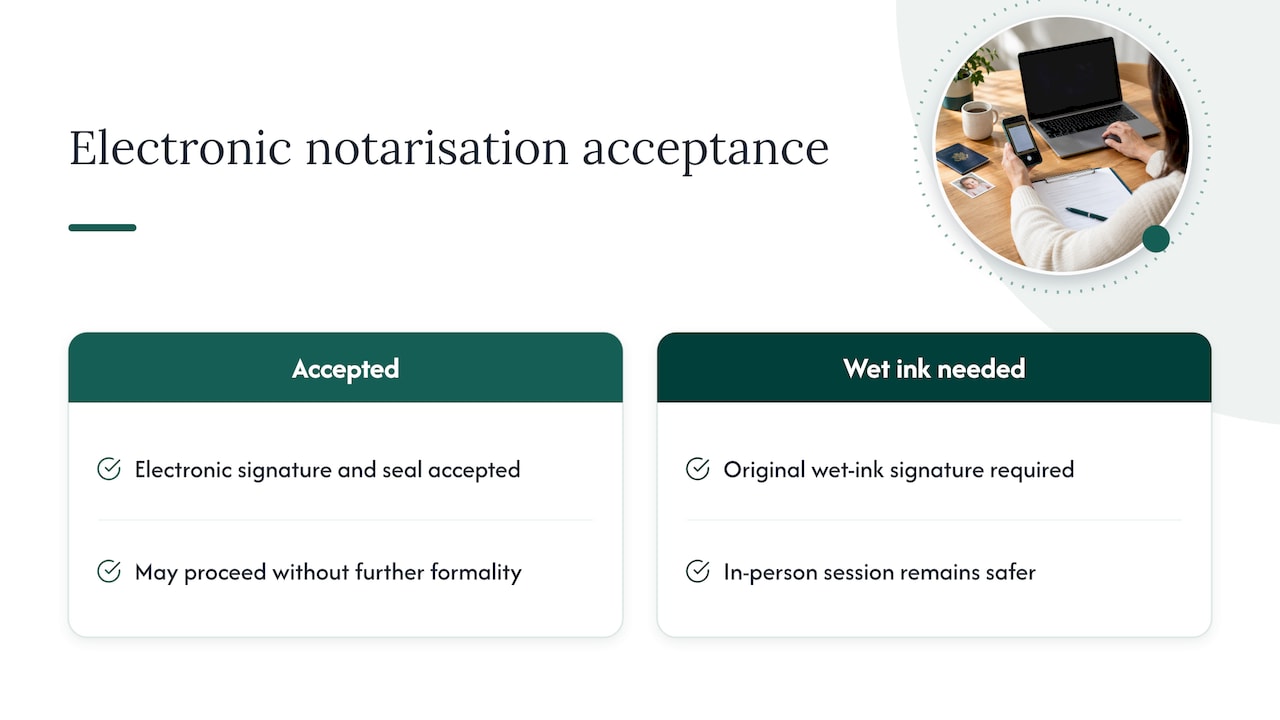
Electronic notarisation, carried out over video with identity verified against a passport and the session recorded, produces a certificate or digital seal in place of a wet ink stamp. Whether this is accepted for an adoption document depends entirely on the policy of the receiving authority, not on the notary's own practice.
Some courts and overseas agencies accept an electronically signed and sealed document without further formality. Others, particularly for documents being legalised abroad, still ask for an original wet ink signature before the paperwork can proceed to apostille or consular certification, a point echoed in GOV.UK's guidance on getting a document legalised. This is why confirming the accepted format before your session matters more than assuming one notarisation method fits every destination.
Where electronic notarisation is accepted, it tends to move faster because scheduling and travel are removed from the process entirely. Where it is not yet accepted, an in-person session with an original signature remains the safer route, and your agency or solicitor should be able to tell you which category your case falls into before you book anything.
Preparing adoption documents for an online notarisation session
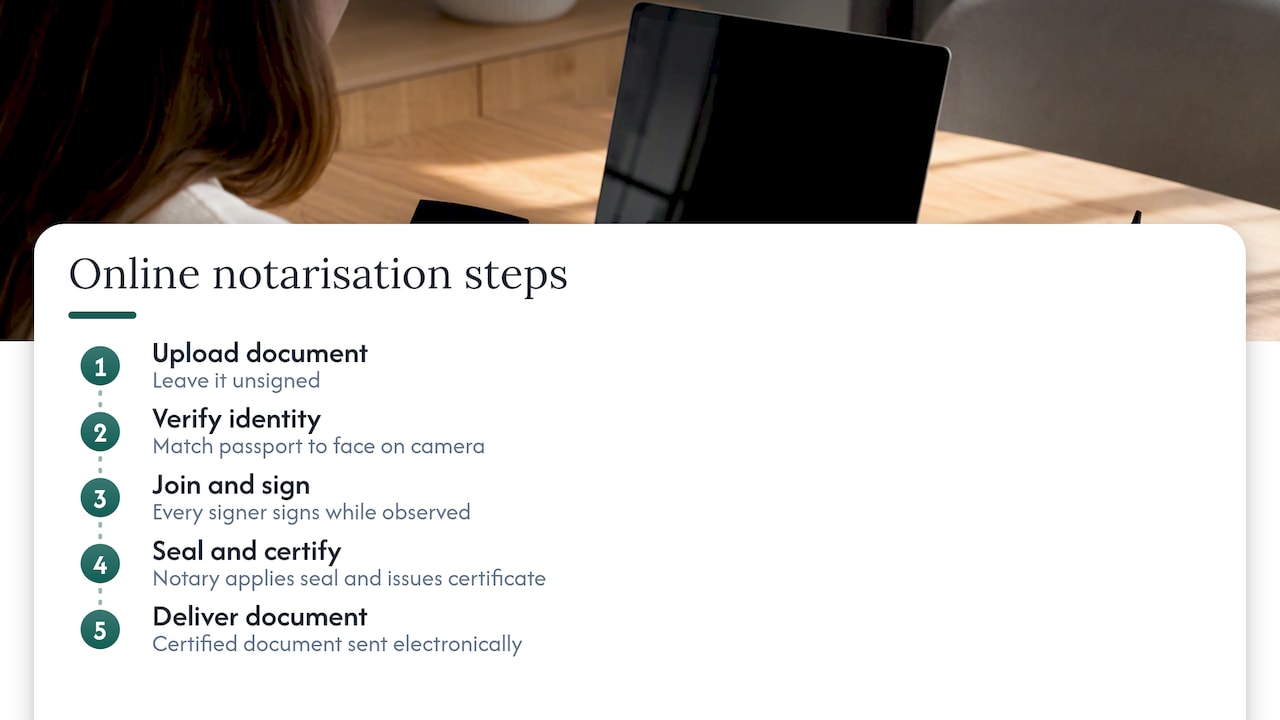
Getting ready for a video notarisation session follows a simple sequence. Start by uploading the document you need notarised without signing it first, since the signature has to happen during the session itself, in front of the notary.
Next, confirm your identity verification method. Most online sessions verify identity against a passport, matched to your face on camera, before any signing takes place. Have your passport ready and in good condition, since a damaged or expired document can hold up the verification step.
When the session begins, every signer joins the video call, confirms their identity, and signs the document while the notary watches and the session is recorded. The notary then applies their seal and issues the notarial certificate, after which the finished, certified document is delivered electronically, often the same day.
If your paperwork is destined for use abroad, flag this before the session so the notary can confirm whether the certificate format you need will support the apostille or legalisation step that follows.
Checking a notary's commission before your adoption documents are signed
A notary's authority to witness and certify documents comes from their commission, and confirming this before your session is a reasonable step for any adopter handling sensitive paperwork. A commissioned notary should be able to confirm their name, the authority that commissioned them and the scope of what they are authorised to witness.
For documents heading abroad, it is also worth checking that the notary's certificate format matches what the receiving country expects. GOV.UK's guidance on finding a notary abroad makes the point that not all notaries or witnesses are equivalent, and that the receiving authority's exact requirements should guide your choice rather than convenience alone.
If you are arranging notarisation through an online platform, the booking process should make clear which notary is assigned to your session and confirm their credentials before the call begins, so you are not left verifying this after the document has already been signed.
What notarising adoption documents typically costs
Notarisation fees for adoption paperwork are usually charged per document rather than as a flat package price, since a consent form, a certified copy and a sworn affidavit each involve different amounts of work. Our own notarisation services, including Affidavit Notarisation, Certified True Copy and Statutory Declaration, start from £70 per document.
These fees typically cover the notarisation step itself. Where a document also needs an apostille or a certified translation for use abroad, those are separate services with their own cost, and Annex C guidance confirms that central authority case management fees do not include notarisation, legalisation or translation costs. Budgeting for all three steps up front, rather than discovering the additional costs partway through, avoids an unwelcome surprise close to a submission deadline.
Why the paperwork trips people up more than the law itself
The adoption documents themselves are rarely the hard part. What catches people out is the sequencing: signing before confirming the correct witness class, or sending papers for translation before they have been notarised and legalised in the right order.
Official guidance is clear on the forms and the witness categories, but it says far less about scheduling, and that is where most delays actually happen. A UK based applicant working with an overseas agency often has to coordinate a notary, a translator and sometimes a consular office across different time zones, and conventional in person notarisation makes this harder than it needs to be.
Our view is that adopters should treat the sequence, notarise, then legalise, then translate, as fixed, and treat the method of notarisation as flexible. A recorded video session with passport based identity verification satisfies the same witnessing function as an in person signing wherever the receiving authority accepts it, and removes the travel and diary matching that otherwise adds days to an already long process.
— Jérémy
Getting your adoption documents notarised with MyNotary
We handle adoption related notarisation by video, with passport based identity verification, a recorded session and same day delivery of your certified document.
- Multi-signer video sessions for consent forms and affidavits.
- Certified translation and apostille handling available alongside notarisation.
- Certified copies delivered digitally the same day.
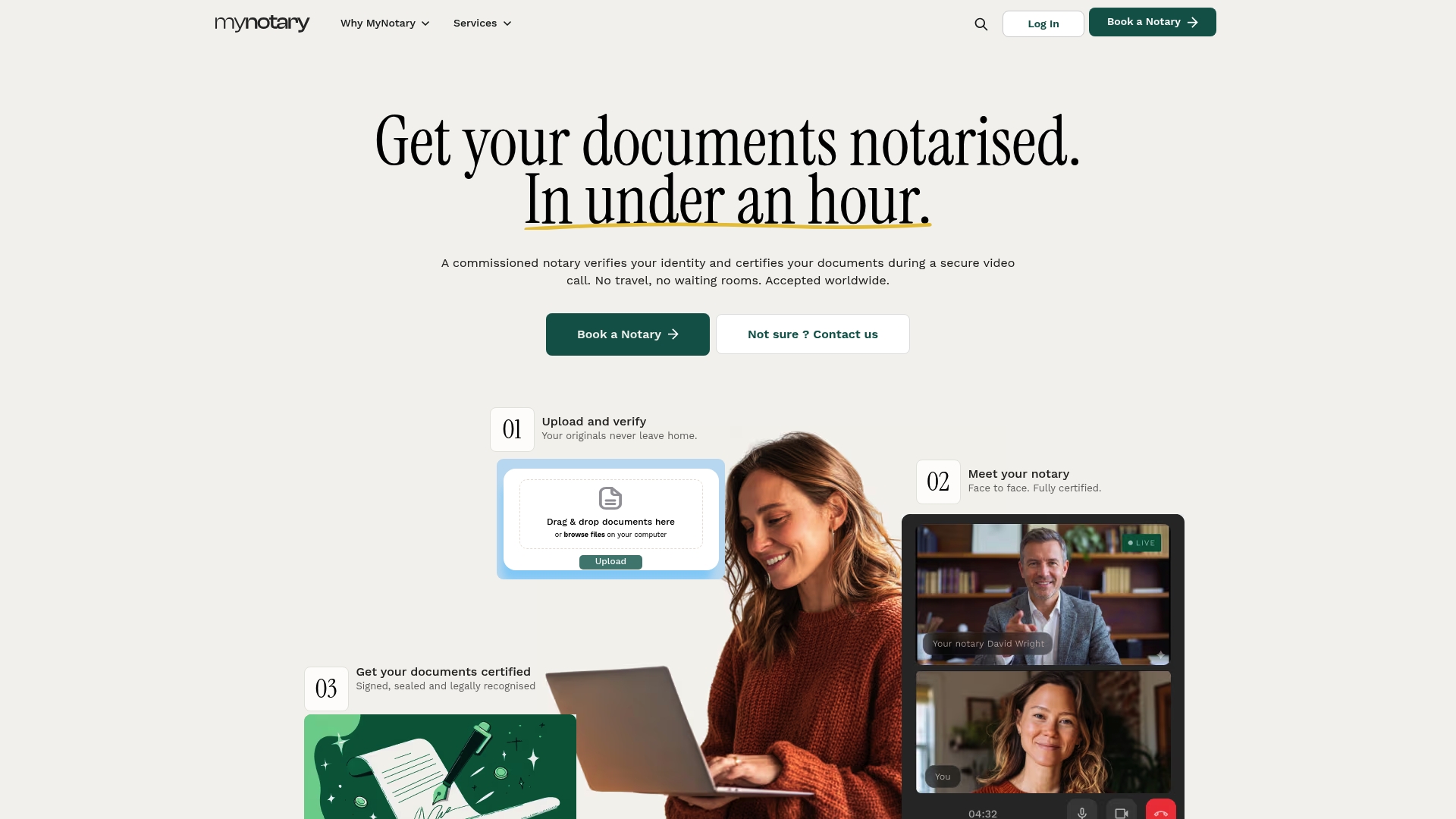
Browse our notarisation services to see pricing for Affidavit Notarisation, Certified True Copy and other document types, or go straight to Signature Notarisation Online to book a session for your adoption paperwork.
This article is general information, not a substitute for advice from a qualified lawyer. Consult a qualified legal professional about your own circumstances before acting on anything here.
FAQ
How do I get a document notarised for adoption purposes?
You book a session with a commissioned notary, bring unsigned documents and valid photo ID, and sign in the notary's presence, either in person or over video where that format is accepted. The notary then checks your identity, witnesses your signature and applies a notarial certificate or seal to the document.
What should I look for in an international adoption agency?
A suitable agency should clearly explain which consent forms apply to your case and which witness class each one requires, since this varies by form and by the country involved. GOV.UK guidance on adopting from overseas is a useful starting point for understanding the central authority's role before you choose an agency.
Can I get an adoption certificate certified online?
Yes, a certified true copy of an adoption certificate can usually be produced through an online notarisation session, provided you present the original document for the notary to verify against. Check with the receiving authority first whether they require the original certificate itself rather than a certified copy.
What is the simplest way to get an adoption document notarised?
Booking a video notarisation session is usually the most straightforward route, since it removes travel and lets multiple signers join from different locations. Confirm beforehand that the receiving authority accepts an electronically notarised document, particularly if the paperwork is going on to apostille or legalisation.
Sources
Recommended
Got questions? We’re on it.
Most questions are answered here, drawn from what people actually ask before booking. If yours isn’t, our team is in chat.
You book a session with a commissioned notary, bring unsigned documents and valid photo ID, and sign in the notary's presence, either in person or over video where that format is accepted. The notary then checks your identity, witnesses your signature and applies a notarial certificate or seal to the document.
Last updated: