5 Step UK Embassy Legalisation Checklist to Avoid Rejections
By Jeremy Arhab, Founder · Published 14 September 2026 · Updated 14 September 2026
Practical 5 step checklist for embassy legalisation in the UK. Prepare, notarise, get the apostille, arrange embassy stamping when needed, and avoid...

Start with an apostille. For most UK documents heading abroad, a single apostille from the Legalisation Office is all that's needed, provided the destination country has signed the Hague Apostille Convention. Only when it hasn't do you need the longer route: UK apostille, then embassy or consulate stamping in London, then final approval from the destination ministry. Before you do anything else, check the HCCH contracting parties list and confirm exactly what the requesting authority wants.
***
TL;DR: - Only documents issued in the UK and intended for Hague Convention countries can typically be certified with a single apostille from the Legalisation Office; non-Hague countries require embassy stamping after the apostille. - Proper preparation, including notarisation, certification, and verification of signatures and seals before applying, is essential to avoid delays and rejection during the legalisation process. - Costs vary based on service speed and destination, with standard postal apostilles being cheapest, while same-day and embassy stamping services incur higher fees and longer processing times. - Online notarisation through recorded video sessions can streamline document certification, reducing travel and scheduling delays especially for powers of attorney, degree certificates, and corporate documents. - Always verify document requirements with the requesting authority and official sources to ensure correct document type, signatures, seals, translations, and legalisation procedures.
***
Table of Contents
- What's the difference between an apostille and embassy legalisation?
- Which documents need legalisation, and how do you check?
- How do you get a document legalised in the UK, step by step?
- What does embassy legalisation actually cost, and how long does it take?
- How do you prepare documents so they aren't rejected?
- Why do embassy legalisation applications get rejected?
- How does online notarisation fit into the legalisation workflow?
- When is it worth using a service instead of doing it yourself?
- Getting your documents ready before the apostille stage
- Where to confirm the exact requirements
- Sources
- FAQ
What's the difference between an apostille and embassy legalisation?
An apostille is a certificate attached to a UK public document that confirms a signature, seal, or stamp is genuine, so a foreign authority can trust it without further checks. It works because the Hague Convention of 1961 replaced the old chain of consular checks with one standard certificate, recognised by every country that has signed up. The HCCH maintains the official list of contracting parties and runs the e-Apostille programme, which lets some competent authorities issue and verify apostilles electronically.
Embassy legalisation is the older, longer process. It still applies whenever the destination country has never joined the Hague Convention.
- Hague country: one apostille from the UK Legalisation Office, nothing more.
- Non-Hague country: apostille, then embassy or consulate stamping in London, then approval from the ministry abroad.
- Grey areas: some countries impose extra steps even for Hague-adjacent documents, so specialist legal guidance is worth checking for anything unusual.
Which documents need legalisation, and how do you check?
Legalisation applies to public documents you intend to use in another country, and the list is broader than most people expect.
- Birth, marriage, and death certificates
- Degree certificates, transcripts, and professional qualifications
- Powers of attorney and company documents
- Certified copies of ID documents, such as a passport or biometric residence permit
Some of these need notarisation or certification before they can even be apostilled. A degree certificate from a UK university, for example, often needs a certified true copy rather than the original, since universities are understandably reluctant to release originals for stamping abroad. A power of attorney, by contrast, usually needs to be signed and witnessed as an original before certification.
The safest move is always to ask the receiving authority, embassy, or institution exactly what they want: original, certified copy, or notarised copy, and whether they'll accept a translation attached to the apostille rather than a separate document.
How do you get a document legalised in the UK, step by step?
The process has a logical order, and skipping a step is the fastest way to end up starting again.
- Confirm the destination's status. Check the HCCH list of contracting parties and ask the requesting authority precisely what they need. Some organisations want a paper apostille even when an e-Apostille would technically qualify.
- Prepare the document. Decide whether you need the original or a certified copy, arrange any required translation, and make sure every signature is in place before you submit anything.
- Get it notarised or certified where required. A commissioned notary checks your identity, witnesses or certifies the document, and applies a notarial seal, which the Legalisation Office can then verify against its own records.
- Apply for the apostille. The Legalisation Office checks the signature, stamp, or seal against its records and attaches the apostille if everything matches. You can apply by post or via a premium service, though not every document qualifies for the faster e-Apostille route.
- For non-Hague countries, arrange embassy stamping. Once the UK apostille is issued, the relevant embassy or consulate in London authenticates it, then the destination country's ministry gives final approval.
Pro Tip: Book your notarisation and identity check the same day you start gathering documents. A recorded video session with a commissioned notary avoids the delay of finding an in-person appointment, and gives you a clean digital record if the Legalisation Office queries anything later.
What does embassy legalisation actually cost, and how long does it take?
Costs vary by document type, service speed, and whether embassy stamping is involved, so budget in ranges rather than fixed figures.
- UK apostille: standard postal service is the cheapest option but the slowest.
- Premium or same-day services: cost more but cut waiting time significantly.
- Embassy or consulate stamping: adds a further fee and a further wait, since each embassy sets its own turnaround and opening hours.
Not every document type qualifies for the faster route. The e-Apostille programme speeds up issuance and verification, but it isn't accepted everywhere, and not all documents are eligible for it at all. Always confirm with the receiving authority whether a PDF apostille will actually be accepted before you rely on it.
The single biggest driver of delay is submitting the wrong document type. A certified copy where an original was needed, or a missing translation, sends you back to the start of the queue.
How do you prepare documents so they aren't rejected?
Preparation matters more than speed. A document that's correctly certified the first time avoids the resubmission cycle that eats most people's timelines.
Not every UK certification is accepted overseas, which surprises a lot of applicants. Embassies abroad generally offer very limited notarial services and can't substitute for proper UK legalisation, so the certification needs to happen correctly before the document leaves the country.
- Confirm whether the receiving country needs a certified translation attached to the apostille, not sent separately.
- Check that every signature and seal is present and legible; smudged or partial stamps are a common rejection cause.
- Keep the correct number of copies. Some destinations want a stamped original plus a certified copy for their own records.
- Present documents in the order the receiving authority specifies. Some ministries reject bundles that arrive out of sequence.
If a certified translation is involved, get it right the first time. Guidance on sworn translations for Spain explains why translations attached after the apostille, rather than before, are a frequent cause of consular rejection.
Pro Tip: If your document needs both notarisation and translation, get the notarisation done first. Translating an unsigned or uncertified document usually means redoing the translation once the seal is added.
Why do embassy legalisation applications get rejected?
Most rejections trace back to a handful of avoidable errors.
- Wrong document type submitted: an original sent when a certified copy was required, or vice versa.
- Signature or seal doesn't match official records: common with older certificates or documents signed abroad.
- e-Apostille sent where a paper one was required: always confirm acceptance first.
- Document issued outside the UK: this needs the issuing country's own legalisation process, not the UK route.
Before sending anything, run through a short checklist: confirm the destination's Hague status, confirm e-Apostille acceptance, confirm whether a certified translation is needed, and double-check every signature against what the requester expects.
How does online notarisation fit into the legalisation workflow?
Preparation is where most delays start, and it's also where an online commissioned notary session can help. Video sessions can verify identity by passport, record the session, and apply a notarial seal to the unsigned document.
- Identity verification happens by passport during the recorded call.
- The notary applies their seal, creating a clear record the Legalisation Office can check against.
- Delivery of the certified document means less time waiting before you can submit for an apostille.
This won't replace the apostille or embassy stamping stages, but it removes the travel and scheduling friction that often stalls the first step. For the mechanics of applying once your document is certified, see this guide to getting an apostille from the UK.
When is it worth using a service instead of doing it yourself?
A simple apostille to a Hague country, with enough lead time, is manageable alone. Tight deadlines, non-Hague destinations, complex powers of attorney, or bulk corporate documents are where professional help pays for itself.
Getting your documents ready before the apostille stage
Most of the delay in embassy legalisation happens before the apostille is even applied, when a document turns out to be the wrong type, unsigned, or missing a seal that matches official records. This preparation stage can be handled by an online commissioned notary who verifies your identity by passport on a recorded video call, applies a notarial seal, and delivers the certified document usually the same day, without a trip to a notary's office.
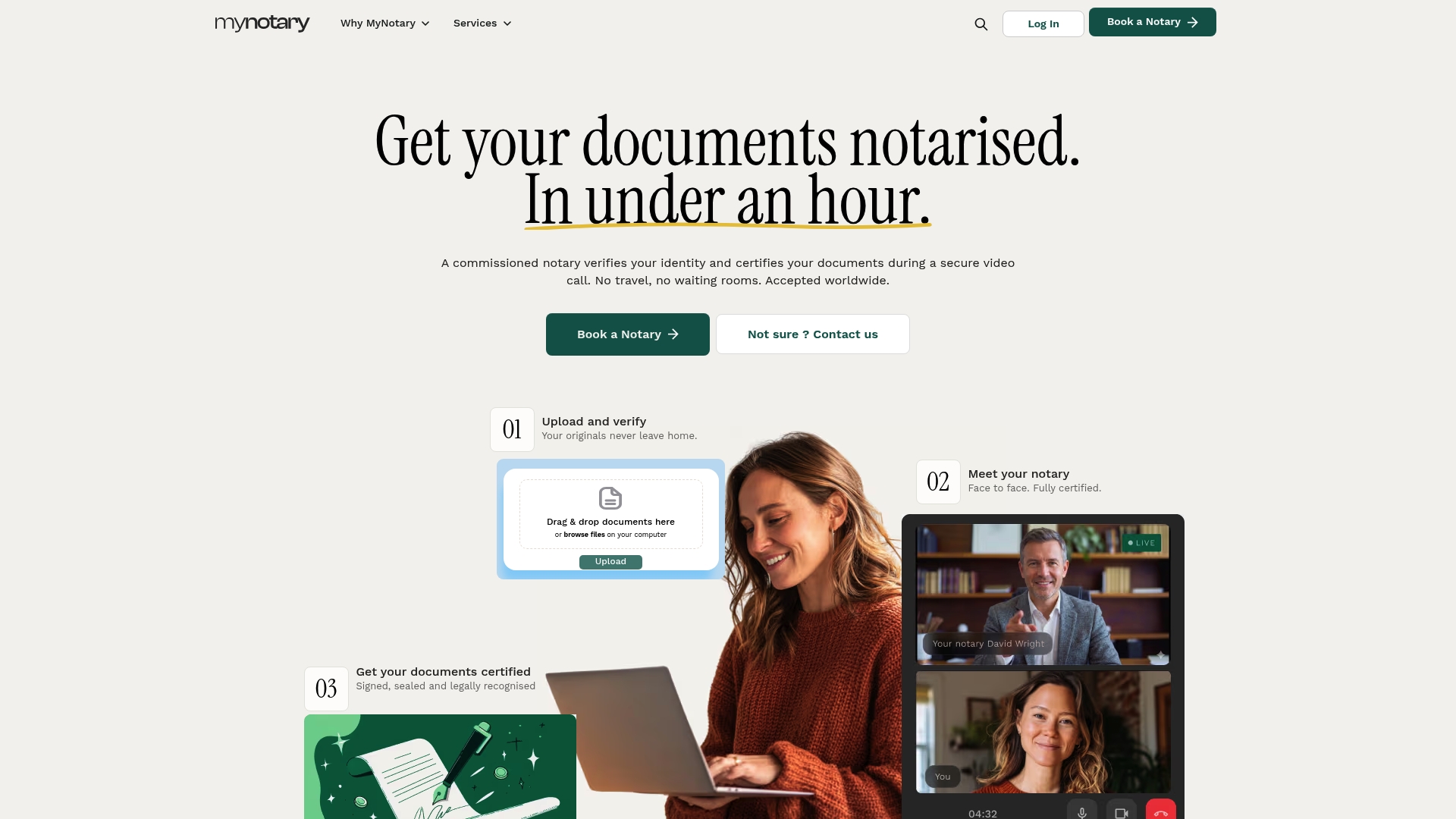
That's particularly useful for powers of attorney, certified copies of ID, and degree certificates, all documents that regularly need certification before they can go anywhere near the Legalisation Office. If you're preparing a power of attorney for banking use abroad, a degree certificate for a visa application, or corporate documents for overseas use, check the relevant service page for details and availability before you start the apostille process. For a full walkthrough of what happens between notarisation and the finished apostille, this guide to the UK apostille process sets out each stage.
Where to confirm the exact requirements
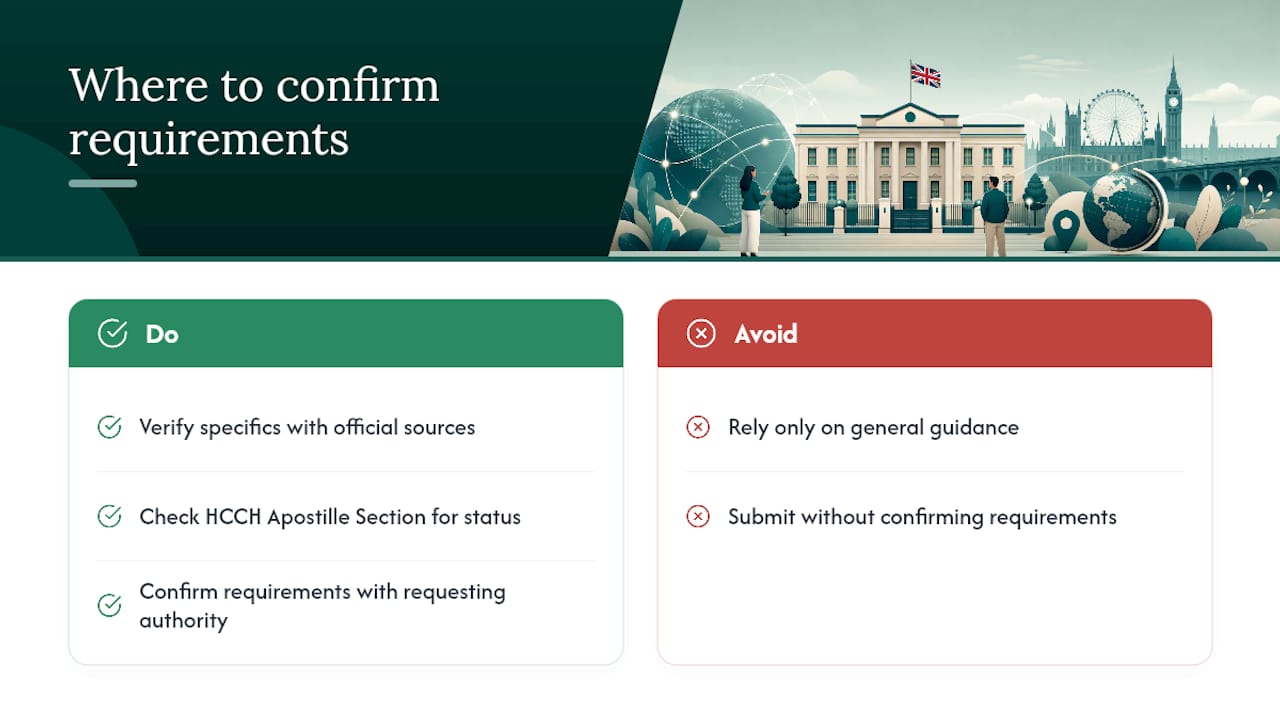
Rules vary by destination and document type, so verify specifics directly with official sources before you submit anything. Start with the HCCH Apostille Section for contracting party status, and always confirm the exact requirement with the requesting authority itself, since their instructions override general guidance.
Sources
- Gov
- HCCH | Apostille Section
- UK notarial and public document legalisation: FCDO Apostille, consular legalisation and e-Apostille - LexisNexis UK
FAQ
Where can I get documents legalised in the UK?
UK documents are legalised through the Legalisation Office, which checks the signature, stamp, or seal against official records and attaches the apostille if they match, as set out in GOV.UK's overview of the process.
How much does it cost to legalise a document in the UK?
Costs depend on the service speed you choose: standard postal apostille applications are the cheapest, while premium or same-day services and any required embassy stamping add extra fees on top.
Can I get an apostille in one day?
Some documents qualify for faster premium services, and e-Apostilles can speed up issuance, but not every document type is eligible for e-Apostille, so check with the receiving authority before assuming a same-day turnaround.
Do I need embassy legalisation if my destination country signed the Hague Convention?
No. If the destination is a contracting party to the Hague Convention, a UK apostille is normally sufficient on its own and embassy stamping isn't required.
What if my document was issued outside the UK?
Follow the issuing country's own legalisation process rather than the UK route, since UK legalisation only applies to documents issued in the UK.
Recommended
Got questions? We’re on it.
Most questions are answered here, drawn from what people actually ask before booking. If yours isn’t, our team is in chat.
UK documents are legalised through the Legalisation Office, which checks the signature, stamp, or seal against official records and attaches the apostille if they match, as set out in GOV.UK's overview of the process.
Last updated: