Stop Rejections: UK Order to Translate, Certify, Notarise and Legalise
By Jeremy Arhab, Founder · Published 3 September 2026 · Updated 3 September 2026
Practical UK checklist to prevent document rejections. Follow the correct order to translate, certify, notarise, and legalise; scan, bind, and submit the...
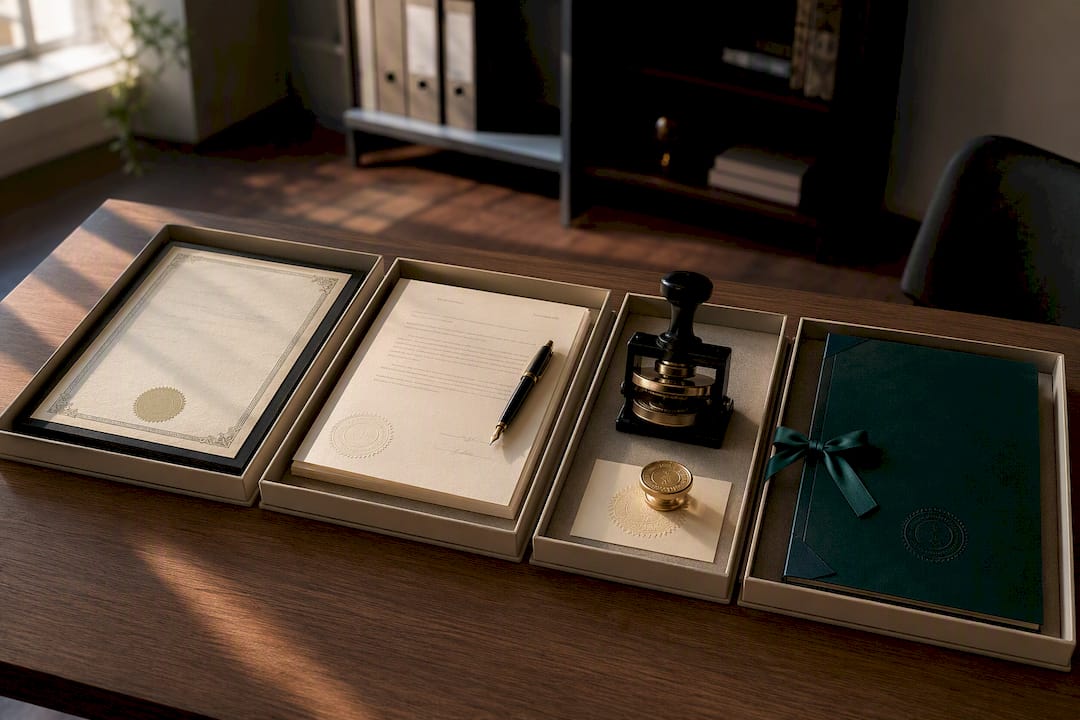
Most receiving authorities only need a certified translation with a signed accuracy certificate; notarisation is an extra step required only when the recipient explicitly asks for it, or when the translation forms part of an apostille or legalisation chain. Before you order anything, check the receiving authority's exact wording and destination country. Follow the correct order (translation, then certification, then notarisation, then apostille if needed), because skipping or reversing a step is the single fastest way to get a document bounced back.
***
TL;DR: - Notarisation is only required when explicitly requested by the receiving authority or part of a legalisation chain, not simply to make a translation official. - The correct process involves translating, certifying, notarising, then legalising or apostilling, with each step depending on the previous one being properly completed. - Proper document preparation focuses on legible scans, consistent spelling, complete certificates, and secure binding to avoid rejection. - Turnaround for notarisation via online services can be as quick as one hour, but government processing for apostilles often takes several days. - Always confirm specific requirements with the receiving authority to prevent unnecessary steps or missed legalisation needs.
***
Table of Contents
- What certified, notarised and sworn translations actually do
- The correct order: translate, certify, notarise, then legalise
- Preparing your documents so they're accepted first time
- What translation and notarisation actually cost, and how long each stage takes
- Documents that usually need notarisation or an apostille
- Professional checks that prevent rejections
- How My Notary handles the whole process in one booking
- Sources
- FAQ
What certified, notarised and sworn translations actually do
A certified translation is the translated document plus a signed statement from the translator confirming accuracy. That certificate typically names the translator, states the language pair, confirms the translation is complete and accurate, and carries contact details, a date, and a signature. Most government bodies, universities, and employers treat this as the baseline requirement, and nothing more is usually needed.
A notarised translation adds a second layer: a notary confirms the identity of the person signing the certificate and witnesses that signature. The notary does not check whether the translation itself is accurate. That distinction trips up a lot of people who assume notarisation somehow upgrades the translation's quality. It doesn't. Notarisation authenticates the signer, not the linguistic content, which means a badly translated document can still be perfectly notarised.
"Sworn translation" is a term that applies mainly outside the UK. In countries such as Spain or France, translators sit an official exam and gain the legal authority to certify translations themselves, without a separate notary step. The UK has no equivalent system, so a UK translator's certified statement plays a similar role for most purposes.
When should you actually pay for notarisation?
- The receiving authority's checklist explicitly asks for a "notarised translation".
- The translation forms part of a wider apostille or legalisation chain.
- A court, embassy, or foreign registry has specifically requested a notarised affidavit alongside the translation.
- Your own instinct says "better safe than sorry" — in this case, check first rather than paying twice.
Buyers frequently pay for notarisation they never needed, on the assumption it makes a translation more official. It doesn't change the translation at all; it only verifies who signed the certificate.
The correct order: translate, certify, notarise, then legalise
Documents get rejected constantly because someone did these steps out of sequence. The canonical order is translation, then certification, then notarisation, then apostille or legalisation, and each stage depends on the one before it being complete and correctly formatted.
- Translate the full document, including stamps, seals, and any annexes, not just the main text block.
- Certify the translation with a signed statement of accuracy from a qualified translator or accredited translation company.
- Notarise, if required, so the notary witnesses the translator's signature on that certificate.
- Apostille or legalise, if the destination country needs it, so the document is recognised abroad.
There's a genuine variant worth knowing about: sometimes it's the original document that needs the apostille, and the translation is done afterwards and attached; other times the translation itself (with its notarised certificate) is what gets apostilled. Which applies depends entirely on the receiving country and authority, so this is worth confirming before you commission anything.
Wet ink versus electronic delivery matters too. Electronic apostilles exist for some document types, but many receiving authorities still insist on physical, wet ink paperwork, so a fully digital pack can be rejected purely on format.
Pro Tip: Ask the receiving authority directly whether they accept an e-apostille before you commit to a digital-only route. A phone call now saves a week later.
At a notarisation appointment, expect the notary to check photo ID, confirm you're the person who signed the translator's certificate (or the document owner, depending on what's being notarised), and log the appointment in their records. That journal entry, sometimes called a chain of custody record, is what gives the notarisation its evidential weight.
Preparing your documents so they're accepted first time
Rejections rarely come down to translation quality. They come down to sloppy preparation: a missing stamp, an inconsistent name spelling, or a certificate that's missing a required detail.
Start with your scans. Every page needs to be legible, including both sides of any document with a stamp or seal on the back, and any annexes or attachments the original carries. A missing annex page is one of the most common reasons a pack gets sent back.
The translator's certificate needs specific content to hold up under scrutiny. Industry guidance from the Association of Translation Companies recommends clear certificate wording, a stamp on each page where relevant, and secure binding so pages can't be swapped or separated after signing.
- Match the name on the translation exactly to the name on your ID and the original document.
- Use consistent formatting for dates, addresses, and reference numbers across every page.
- Bind the pack securely (staple or ribbon and seal), rather than leaving loose pages.
- Keep a PDF copy that mirrors the physical bundle page for page.
| Common rejection cause | How to prevent it |
|---|---|
| Missing stamps or annex pages | Scan every page, both sides, including attachments |
| Name mismatch between ID and document | Check spelling and formatting before submission |
| Incomplete translator certificate | Confirm it includes name, language pair, statement, contact details, date, signature |
| Loose or unbound pages | Bind physically and keep the PDF in the same order |
What translation and notarisation actually cost, and how long each stage takes
Budgeting for this properly means separating four cost elements: the translation fee itself, the notary's fee for witnessing the signature, any apostille or legalisation fee charged by the issuing government body, and courier or handling costs if physical documents need to travel.
Turnaround times vary sharply between stages. Notarisation, when done through an online video call service, can be completed in around an hour. Apostille and legalisation, by contrast, often takes several working days because it depends on a government office physically processing and stamping the document, and e-apostilles aren't universally accepted, so many chains still need that physical step regardless of how fast the earlier stages moved.
Where you can genuinely save time:
- Booking translation, certification, and notarisation through one supplier instead of coordinating three separately.
- Choosing a provider that offers same-day or one-hour notarisation slots rather than an in-person appointment booked days out.
- Confirming apostille requirements upfront, so you're not translating a document twice because the first version missed a required stamp.
Expedited handling helps with the translation and notarisation stages, but it rarely speeds up a government apostille office, so build that lag into your planning regardless of how fast everything before it moves.
Documents that usually need notarisation or an apostille
Not every document type triggers extra steps, but some come up again and again. Powers of attorney, affidavits, and court papers almost always need notarisation because they carry legal weight on their own. Company formation documents, board resolutions, and other corporate paperwork frequently need the same treatment when used abroad, as do property deeds.
- Powers of attorney and affidavits
- Court orders, judgments, and litigation documents
- Company incorporation and corporate resolution documents
- Property deeds and conveyancing paperwork
- Diplomas, transcripts, and some professional certificates, particularly for visa or ENIC recognition purposes
- Certain civil registry papers, such as birth certificates destined for use abroad
The document type is only half the story. What actually decides whether you need notarisation is the exact wording used by the receiving authority, whether that's a consulate, an employer, a university admissions office, or a court. Two university applications for the same degree certificate can have completely different requirements depending on the receiving country, so always confirm with the specific body rather than assuming based on document category alone.
Professional checks that prevent rejections
Before ordering notarisation for any client, a professional always confirms three things: the exact wording the receiving authority uses, the destination country, and whether an apostille sits downstream in the process. Skip that check and you risk paying for notarisation nobody asked for, or missing an apostille step that was always going to be required.
Keeping a clear chain of custody record, who signed what, when, and in front of whom, matters more than most people realise. It's what separates a notarised document that sails through a foreign registry from one that gets queried and delayed. Requirements also genuinely differ by destination: what satisfies a UK university may fall short for a jurisdiction with different translation accreditation rules, so treat every case on its own terms rather than by habit.
— Jérémy
How My Notary handles the whole process in one booking
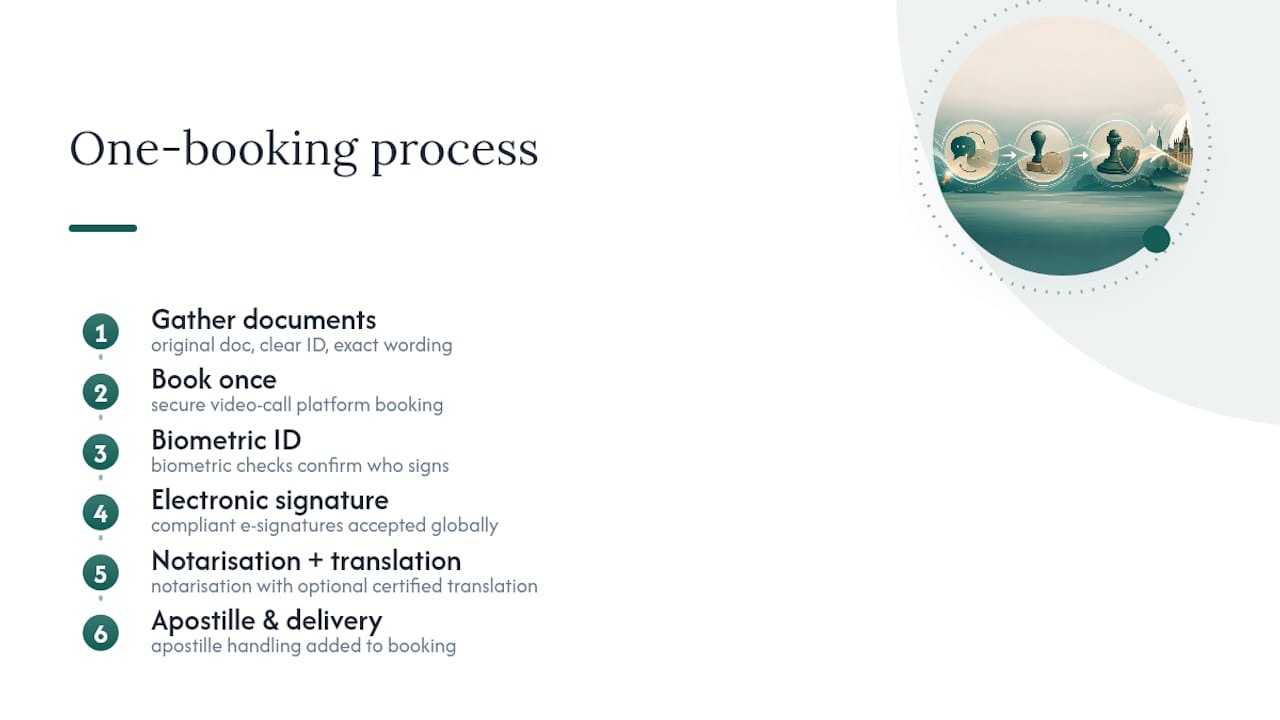
My Notary removes the coordination headache of juggling a translator, a notary, and a courier separately. Every step, certified translation, identity verification, and notarisation, happens through one secure video call platform, with biometric checks confirming who's signing and compliant electronic signatures recognised in over 180 countries.
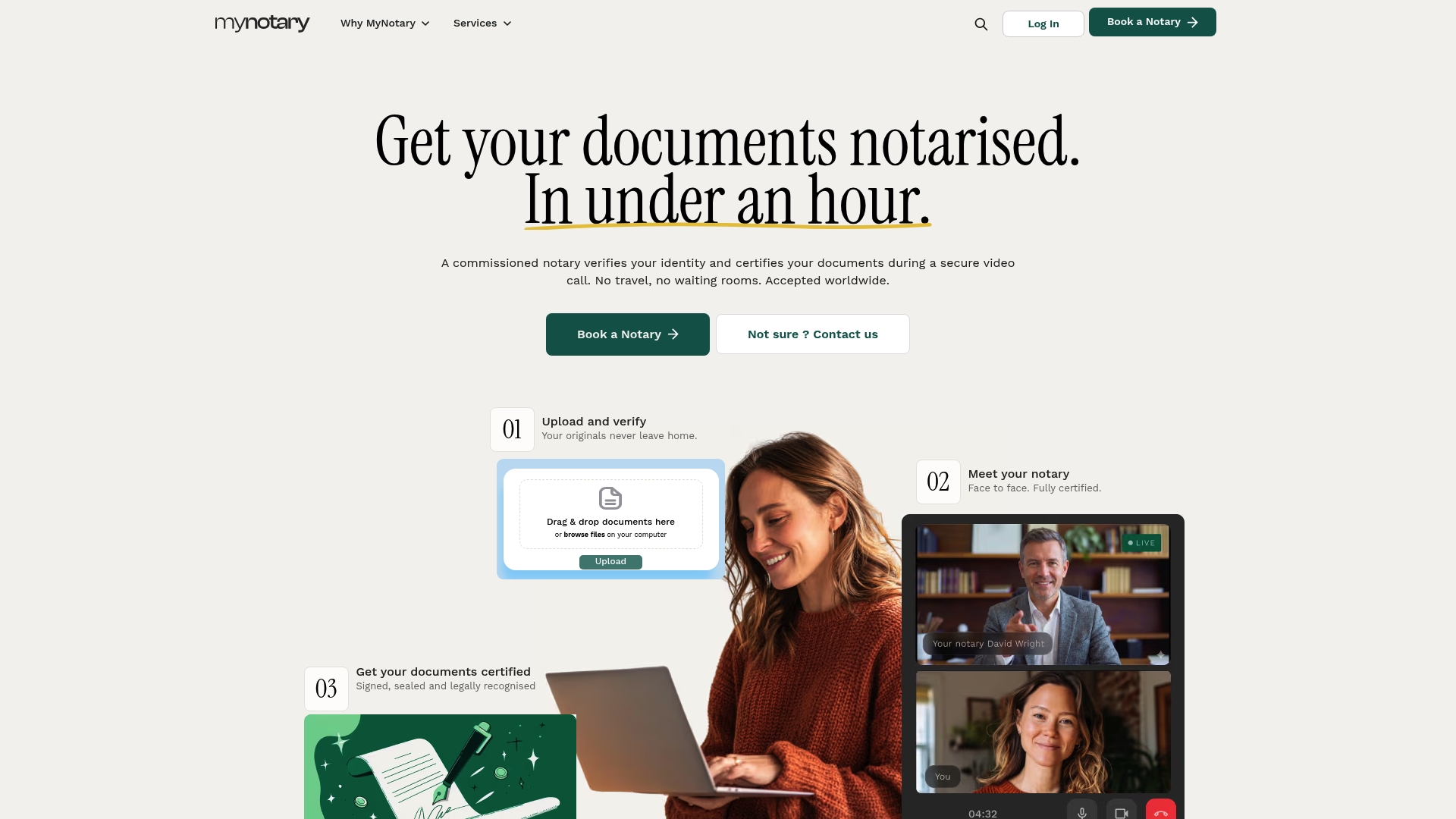
That single-supplier approach cuts out the usual failure point: a translation certificate that doesn't match what the notary expects, or a courier delay between two separate providers. My Notary reports an average notarisation turnaround of around one hour, with optional certified translation and apostille handling added to the same booking rather than sourced from a third party.
Before you book, gather your original document, a clear ID, and the exact wording the receiving authority uses. If your document is a power of attorney for a bank, a degree certificate for a visa application, or a corporate document for overseas use, check the relevant service page and start your booking with those details ready.
Sources
Always treat the receiving authority's own checklist as the final word, above anything in this guide or elsewhere.
FAQ
Can I translate a document and get it notarized?
Yes. The translation is completed and certified first, then a notary witnesses the translator's signature on the accuracy certificate if the receiving authority specifically requires that extra step.
Where can I get notarised translation services in the UK?
Online platforms offering video call notarisation can combine certified translation and notarisation in a single booking, avoiding the need to visit separate providers in person.
How much do notary and apostille cost?
Costs break down into separate elements: the translation fee, the notary's fee, and any apostille or legalisation fee charged by the relevant government office, plus courier costs if physical delivery is needed; exact figures depend on document type and destination.
Who can notarize documents in the UK?
A commissioned notary handles this role, verifying the identity of the person signing and witnessing their signature. They confirm who signed the certificate, not whether the translation itself is accurate.
Recommended
Got questions? We’re on it.
Most questions are answered here, drawn from what people actually ask before booking. If yours isn’t, our team is in chat.
Yes. The translation is completed and certified first, then a notary witnesses the translator's signature on the accuracy certificate if the receiving authority specifically requires that extra step.
Last updated: