Apostille UK Documents for Canada: 5 Provinces, Paper vs e‑Apostille
By Jeremy Arhab, Founder · Published 2 October 2026 · Updated 2 October 2026
Practical UK steps to apostille documents for Canada after Jan 11, 2024: when to choose paper or e‑Apostille, which provincial office applies, and how...
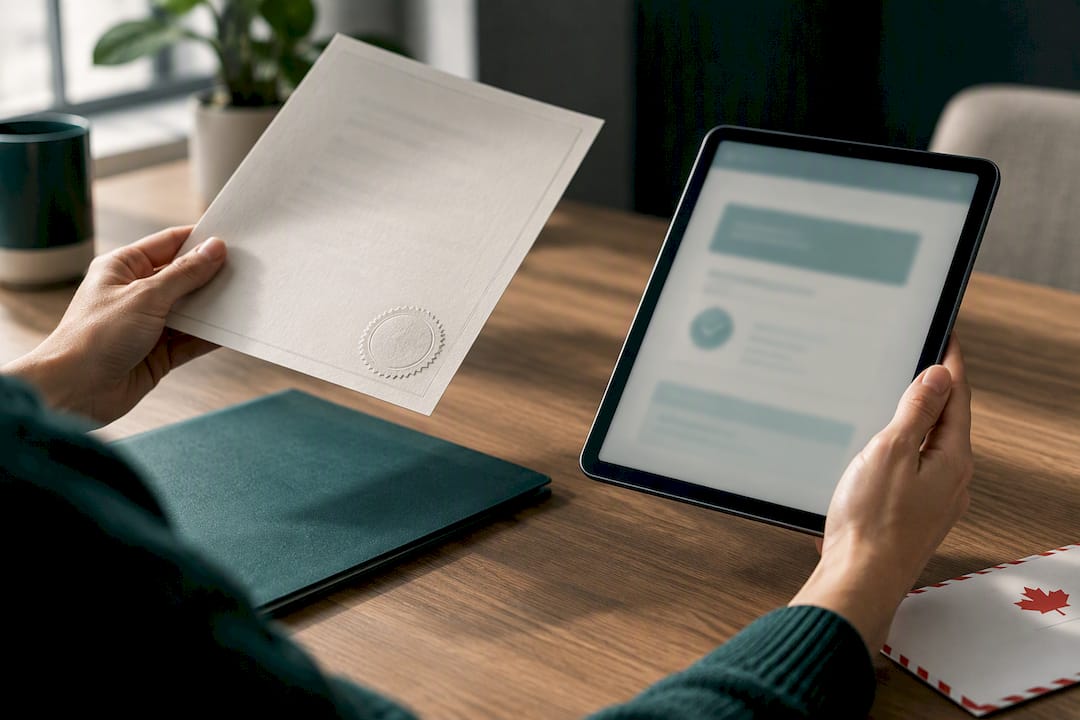
Yes: an apostille must always be issued by the authority in the country where the document was originally created. UK documents need the UK legalisation route, either paper or e-Apostille, while Canadian documents now go through Global Affairs Canada or one of five provincial authorities since Canada joined the Hague Apostille Convention. Confirm whether your recipient will accept an e-Apostille before you choose a route, then follow the steps below.
***
TL;DR: - Only the authority in the country where the document was created can issue an apostille, with different procedures for UK and Canadian documents. - Canada's apostille process is now split between provincial authorities and Global Affairs Canada, depending on where the document was issued or notarised. - Not all documents qualify for apostille; photocopies without proper certification, laminated papers, and religious records are usually excluded. - Applicants should verify whether a recipient accepts an e-Apostille before choosing the format, as not all countries or organizations do. - Using online notarisation can streamline preparation, since it speeds up notarisation and can produce certified digital copies ready for apostille.
***
Table of Contents
- What an apostille is and why the Hague Apostille Convention matters
- Who issues apostilles for UK and Canadian documents
- Which documents can be apostilled and which typically cannot
- How to get a UK document apostilled for use in Canada
- How to get a Canadian document apostilled for use in the UK
- How recipients verify an apostille
- Common problems and practical checks to avoid delays or rejections
- Why online notarisation makes pre-apostille preparation easier
- Preparing your documents with MyNotary before applying for an apostille
- Sources
- FAQ
What an apostille is and why the Hague Apostille Convention matters
An apostille is a standard certificate that confirms a public document is genuine, so it can be recognised in another country without further checks. The Hague Apostille Convention replaces the older system of embassy legalisation for its member states, known as Contracting Parties. Instead of visiting an embassy, applicants get a single apostille from a designated authority in the country that issued the document.
Both the UK and Canada are Contracting Parties, which means documents moving between them only need an apostille, not full consular legalisation. Countries outside the Convention still require the older, slower legalisation process, so it is worth checking your recipient country's requirements before applying.
The Convention also supports the e-Apostille Programme, an electronic format that some authorities issue instead of a paper certificate.
- A paper apostille is a physical stamp or attached certificate on the document itself.
- An e-Apostille is a digital certificate, often verified through an online register.
- Not every recipient accepts an e-Apostille, so it pays to ask first.
Who issues apostilles for UK and Canadian documents
The rule that matters most here is simple: an apostille always comes from the country where the document originated. You cannot get a Canadian document apostilled in the UK, or a UK document apostilled in Canada.
In the UK, apostilles are issued as either a paper certificate or an e-Apostille, depending on the document type and the applicant's preference. Some documents, including certain civil records, cannot be e-Apostilled and must go through the paper route.
Canada's arrangement changed after it joined the Convention, with accession taking effect on 11 January 2024. Since then, apostille issuance in Canada has been split between provincial authorities and the federal government:
- Alberta, British Columbia, Ontario, Quebec and Saskatchewan issue apostilles for documents created within their own jurisdictions.
- Global Affairs Canada issues apostilles for the remaining provinces, territories and federal documents.
- The correct office always depends on where the document was issued or notarised, not where the applicant lives.
This split system means a document from Ontario goes to a different office than one from a province without its own provincial authority. Getting this wrong is one of the most common causes of delay, so it is worth confirming the issuing province before you submit anything.
Which documents can be apostilled and which typically cannot
Public documents are the usual candidates for apostille: birth, marriage and death certificates, court orders, educational certificates and notarised documents such as powers of attorney or affidavits. Many personal and business documents that pass through a notary, including statutory declarations and corporate paperwork, become eligible for apostille once notarised.
Some items are routinely refused or need a different route entirely.
- Photocopies without proper certification are usually rejected outright.
- Laminated documents often cannot be apostilled because the laminate obscures the seal or signature.
- Religious records, such as baptism certificates, are generally outside the scope of apostille.
- Documents needing translation for the destination country should be translated separately, since the apostille does not certify translation accuracy.
Whether you need an original or a certified copy depends on the document and the issuing authority's rules, so check this before applying rather than after a rejection.
How to get a UK document apostilled for use in Canada
Getting a UK document ready for use in Canada means working through the UK apostille process correctly the first time, since resubmissions cost both time and money.
- Decide whether you need a paper apostille or an e-Apostille by asking your recipient in Canada which format they will accept.
- Check whether your specific document type is eligible for e-Apostille, since some UK civil records cannot be issued this way and must use the paper route.
- Prepare the original document or a certified copy, and arrange a certified translation if the recipient requires one.
- Submit your application through the correct UK channel for legalisation, by post or online depending on the service you use.
- Choose a delivery method: standard post, courier or in-person collection, each with different turnaround times and costs.
- Once issued, check the apostille details against your original request before sending the document on to Canada.
Pro Tip: Confirm your Canadian recipient's format preference in writing before you apply, since switching from paper to e-Apostille after issuance usually means starting again.
Fees and turnaround bands vary by service level, and published UK apostille fees differ between standard postal processing and faster premium options. The e-Apostille route tends to be quicker for eligible documents because it avoids postal transit both ways.
Once you have your apostille, the recipient in Canada, or the Canadian authority checking it, can verify an apostille using the relevant online register rather than relying on the physical stamp alone. This step matters more than most applicants expect, since a document that looks correct but cannot be verified electronically may still be questioned.
How to get a Canadian document apostilled for use in the UK

Canada's accession to the Hague Convention changed how Canadian documents are authenticated for use abroad, including in the UK. Before 11 January 2024, Canadian documents went through a red-stamp authentication and consular legalisation process. That older system still applies for documents heading to non-Hague countries, but for the UK, apostilles now cover the same ground more quickly.
The steps below assume you already know which province issued your document, since that determines who you contact.
- Identify the province or territory where the document was issued or notarised.
- If it was issued in Alberta, British Columbia, Ontario, Quebec or Saskatchewan, apply directly to that province's authentication authority.
- If it was issued anywhere else, or is a federal document, apply to Global Affairs Canada instead.
- Submit the original document along with any required identification or covering forms specified by the authority.
- Once issued, forward the apostilled document to your UK recipient, checking whether they need a physical copy or will accept a verified digital version.
A few practical points are worth flagging before you start.
- Provincial authentication authorities generally only handle documents notarised or issued within their own jurisdiction, so a document notarised in one province cannot be sent to another province's office.
- Where no provincial authority applies, Global Affairs Canada remains the default route for federal and out-of-scope provincial documents.
- Government guidance notes that commercial services can assist with the logistics of an application but do not have any special regulatory standing, so applicants can apply directly if they prefer.
How recipients verify an apostille
Verification exists so that a UK employer, university or government office receiving a Canadian document, or vice versa, does not have to take the certificate on trust. Most issuing authorities now maintain an official e-register that lets anyone check whether a given apostille is genuine.
To verify an apostille, a recipient typically needs a small set of details from the certificate itself:
- The apostille's unique reference number.
- The date it was issued.
- The name of the issuing authority.
For UK-issued apostilles, recipients or senders can verify apostille UK certificates through the relevant online register in a matter of minutes rather than contacting the issuing office directly. Canadian authorities have introduced similar verification tools for apostilles they issue. The practical workflow is the same on both sides: take the reference details from the certificate, enter them into the relevant register, and confirm the result matches the document in hand.
Common problems and practical checks to avoid delays or rejections
Most apostille rejections trace back to a handful of avoidable mistakes rather than genuine legal barriers.
- Applying to the wrong country's authority, such as sending a Canadian document to a UK office, is rejected immediately since apostilles must come from the country of origin.
- Submitting the wrong document type, for example a photocopy where an original or certified copy was required, causes delays.
- Missing original signatures or seals that the issuing authority cannot verify will stop an application before it starts.
- Poor-quality scans or copies with unclear text or damaged seals are a frequent cause of rejection at the checking stage.
- Assuming a recipient will accept an e-Apostille without confirming this in advance can mean reapplying for a paper version later.
Pro Tip: Before applying, write down exactly which document, which issuing country, and which format your recipient expects. Most delays come from getting one of these three details wrong, not from the apostille process itself.
Why online notarisation makes pre-apostille preparation easier
Many documents need notarising before they qualify for an apostille, and this step is often where delays start. Online notarisation by video call speeds up the identity verification stage and produces a notarised document ready to submit for apostille, without waiting for an in-person appointment.
Pairing an e-Apostille with a digital notarisation workflow can cut out postal transit almost entirely, provided the receiving party accepts electronic formats. This combination suits documents where certified digital copies are acceptable to the recipient, though it is not the right route when an original wet-ink document is specifically required.
— Jérémy
Preparing your documents with MyNotary before applying for an apostille
Many of the delays described above happen before the apostille stage, when a document is not properly notarised, poorly copied, or missing the right supporting paperwork. MyNotary handles that preparation stage through secure video call notarisation, with identity checks carried out by passport verification and sessions recorded for security.
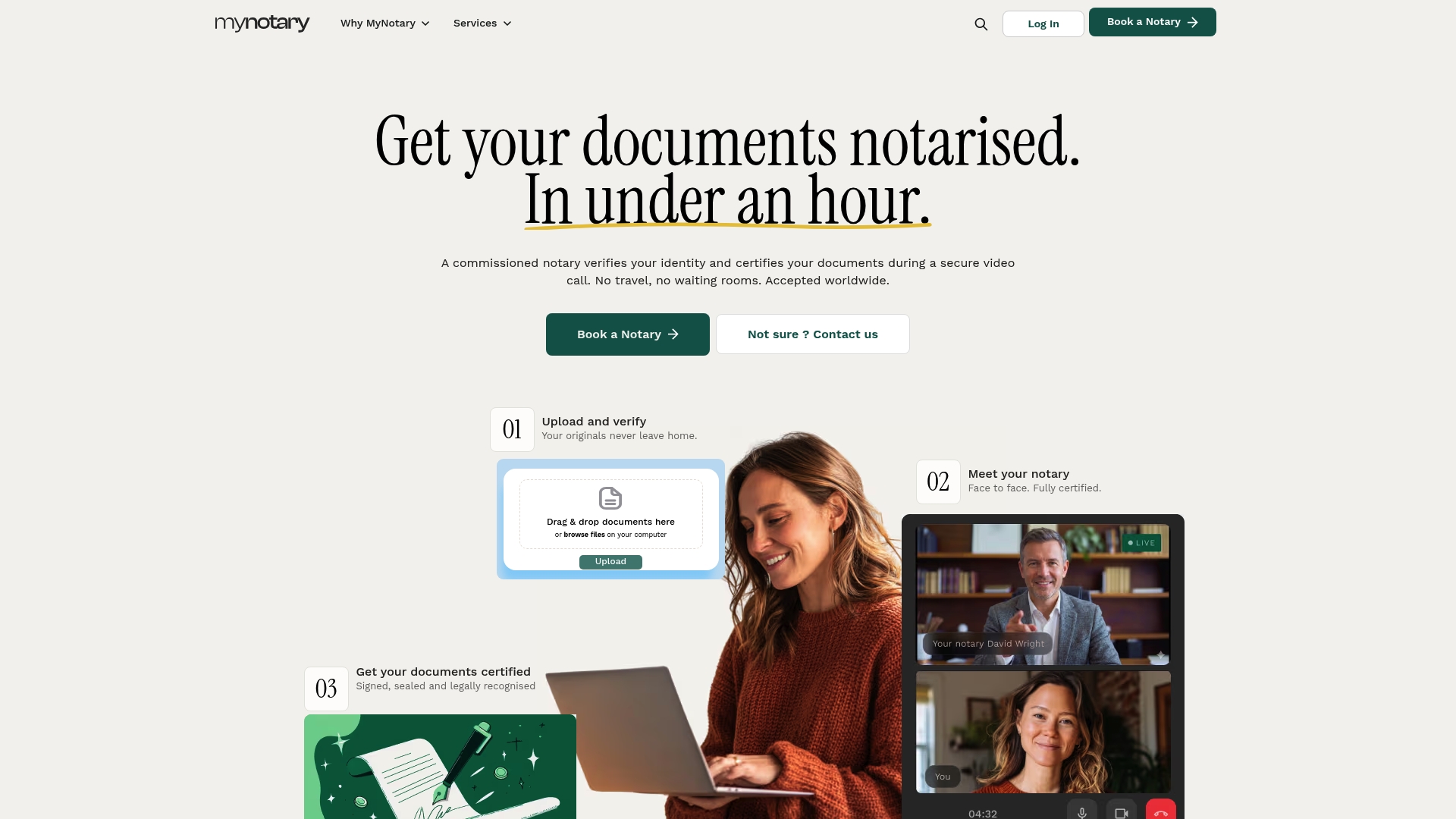
Several parts of this process map directly onto the steps covered in this guide.
- Notarisation by secure video call for documents such as affidavits, statutory declarations and powers of attorney, ahead of apostille submission.
- Biometric identity verification using a passport, recorded during the session.
- Certified true copies and notarised translations where a recipient requires them.
- Corporate document notarisation for businesses preparing paperwork for use across borders.
Documents notarised this way are delivered the same day, with the notary's seal applied and no requirement for the applicant to travel to an appointment. This does not replace the apostille step itself, since that still has to go through the correct UK or Canadian authority, but it removes much of the friction in getting a document properly notarised and ready for submission. You can check the full range of notarisation services or book a signature notarisation session directly if you need a document prepared before applying.
Sources
The rules and figures in this guide come from government and international sources, listed here so you can check them directly.
FAQ
Can I get an apostille online in the UK?
You can apply for a UK apostille online and choose between a paper certificate or an e-Apostille, depending on your document type. Some UK civil records, including certain birth and marriage certificates, cannot be issued as an e-Apostille and must go through the paper route.
Can I get an apostille on my UK passport?
A passport itself is not typically the kind of document that gets apostilled, since apostilles apply to public documents such as certificates, court orders and notarised paperwork. If you need to prove identity as part of an apostille application, your passport is more likely used for identity verification rather than being apostilled itself.
Where can I get an apostille stamp in the UK?
UK apostilles are issued through the UK legalisation route, either as a paper certificate or an e-Apostille, and applicants can prepare supporting documents such as notarised paperwork before applying. Services such as signature notarisation can notarise a document ahead of submission, though the apostille itself still has to be issued by the correct UK authority.
How long does it take to get an apostille in the UK?
Turnaround times in the UK depend on the service level and delivery method chosen, with e-Apostilles generally processed faster than paper certificates sent by post. Exact fees and turnaround bands are published on GOV.UK and vary by document type and priority service.
Does Canada's move to the apostille system affect older Canadian documents?
Documents issued before Canada's accession on 11 January 2024 can still be authenticated using the new apostille system, since the authority responsible depends on where the document was issued, not when. The applicant applies to the correct provincial authority or Global Affairs Canada in the same way as for a newly issued document.
Recommended
Got questions? We’re on it.
Most questions are answered here, drawn from what people actually ask before booking. If yours isn’t, our team is in chat.
You can apply for a UK apostille online and choose between a paper certificate or an e-Apostille, depending on your document type. Some UK civil records, including certain birth and marriage certificates, cannot be issued as an e-Apostille and must go through the paper route.
Last updated: