UK Documents: 4 Checks to Choose Certified or Notarised Copies
By Jeremy Arhab, Founder · Published 23 September 2026 · Updated 23 September 2026
UK guidance on when to use a certified or notarised copy, four checks to avoid rejection, and how online notarisation speeds delivery.

A certified copy is a photocopy that someone in a position of trust has checked against the original and signed to confirm it is a true likeness. A notarised copy goes further: a commissioned notary verifies the document, confirms the identity of the person presenting it, and attaches a formal seal and certificate. Choose a certified copy for routine domestic checks, such as opening a bank account or applying for a job. Choose notarisation when a foreign authority, court, or institution needs proof of authenticity and identity behind the paperwork.
***
TL;DR: - Certified copies match the original document but do not prove authenticity, making them suitable for routine domestic checks like job applications and tenancy verifications. - Notarised copies include verification of identity and capacity by a professional notary, primarily used for international or legal transactions requiring higher proof standards. - Choosing the correct type and wording is essential, as many authorities require a notarised copy rather than a certified one, especially for cross-border or legal purposes. - Online notarisation offers a quick, secure alternative to in-person appointments, with same-day delivery often available for urgent international needs. - Always verify the recipient's exact requirement before obtaining a copy, as using the wrong type or wording can cause delays or rejection of the document.
***
Table of Contents
- What is a certified copy?
- What is a notarised copy?
- Certified copy vs notarised copy: the direct comparison
- When to choose which: a decision checklist
- Who can certify or notarise documents
- How to get a certified copy or a notarised copy
- How online notarisation works and what to check
- What actually trips people up
- Getting a notarised copy without the waiting room
- Sources
- FAQ
What is a certified copy?
A certified copy is a duplicate of an original document that a suitably placed person has examined side by side with the original and then signed to confirm they match. It is a statement of comparison, not a legal attestation. Gov that the certifier should add their signature, printed name, occupation, and a contact address or telephone number, alongside a note confirming it is a true copy of the original.
Common certifiers include:
- Solicitors and legal professionals
- Bank or building society officials
- Accountants
- Police officers
- Post Office branch staff, for certain documents
A certified copy generally does not prove the original document itself is genuine. It only confirms that this particular photocopy matches it. Some documents, such as certain government-issued certificates, cannot be certified this way at all. Typical accepted uses include passport copies for job applications, degree certificates for employers, and utility bills for tenancy checks.
What is a notarised copy?
A notarised copy carries a formal attestation from a commissioned notary, not just a signed confirmation. The notary checks the original document, verifies the identity of the person presenting it, and confirms their legal capacity to act, before attaching a notarial certificate and seal. LexisNexis notes that this attestation is what allows foreign courts and institutions to rely on the copy without further proof.
A notary's checks typically cover:
- Confirming the identity of the person presenting the document
- Verifying their legal capacity or authority to sign
- Comparing the copy against the original in detail
- Applying a notarial seal and certificate of attestation
Foreign authorities often insist on notarisation precisely because it comes with an independent, officially recognised verification step attached, rather than a simple signed comparison. That extra layer of scrutiny is what gives a notarised copy weight outside the UK.
Certified copy vs notarised copy: the direct comparison
The two options differ across five practical measures: who verifies the document, what exactly gets checked, how far the copy travels, and what it costs in time and money.
- Purpose: certified copies confirm a document matches its original; notarised copies attest to authenticity and the signatory's identity.
- Verifier: solicitors, accountants, or bank officials for certified copies; a commissioned notary for notarised copies.
- Scope of check: certified copies compare paper to paper; notarised copies add identity and capacity verification.
- International acceptance: certified copies usually work domestically; notarised copies are the standard foreign authorities expect.
- Cost and turnaround: certified copies are typically cheaper and quicker; notarisation costs more but delivers a document built for cross-border use.
A common mistake costs readers real time: assuming any signed copy will satisfy an embassy or foreign registrar, when the receiving body specifically asked for notarisation. Consular guidance warns that authorities interpret these terms differently, and the wrong copy often means starting the process again from scratch.
A university applying for a UK job will usually accept a certified copy of a degree certificate. A foreign land registry processing a property transfer will almost always demand a notarised copy, sometimes with an apostille attached on top.
When to choose which: a decision checklist
Working through four questions before you book anything saves a second trip and a second fee.
- What is the document for? Routine domestic checks, such as employment vetting, bank account opening, or tenancy references, usually accept a certified copy without complaint.
- Who is the receiving country or authority? Embassies, foreign universities, cross-border property transactions, and powers of attorney used abroad commonly require notarisation rather than certification.
- What exact wording did they ask for? Some recipients specify "notarised true copy" or a particular certificate format; matching their wording precisely avoids rejection.
- Do you also need an apostille? Documents heading to a country that is party to the Hague Apostille Convention often need legalisation on top of notarisation before the destination authority will accept them.
Who can certify or notarise documents
For a certified copy, the professionals GOV.UK lists as suitable certifiers include solicitors, accountants, bank officials, police officers, and Post Office staff for specific document types. Each should add their signature, name, occupation, and contact details when signing.
- Solicitors and other legal professionals
- Accountants
- Bank or building society officials
- Police officers
- Post Office branch staff, for eligible documents only
A commissioned notary is a different kind of professional entirely. Rather than simply comparing paper to paper, a notary verifies identity, confirms capacity, and applies a formal seal that attests to the document's authenticity for use abroad. The Notaries Society explains that this attestation is what gives the copy standing outside the UK, where a standard certified copy may not be recognised at all.
Pro Tip: Always ask the recipient which certifier they accept before booking anything. Some organisations specify "solicitor certified" or "notarised" in their own wording, and turning up with the wrong type of copy means paying twice.

How to get a certified copy or a notarised copy
For a certified copy:
- Bring the original document and a clear photocopy.
- Find an acceptable certifier, such as a solicitor, accountant, or your local Post Office branch.
- Ask them to write "I certify this is a true copy of the original document seen by me" alongside their signature, name, occupation, and contact details.
For a notarised copy:
- Book a session with a commissioned notary, either in person or via a secure online video call.
- Present the original document and valid photo identification for verification.
- The notary attaches formal notarial wording, seals the document, and issues a certificate of attestation.
- Arrange legalisation or an apostille afterwards if the receiving country requires it.
Post Office certification is often free or low-cost and takes minutes. Notarisation costs more and typically takes longer in person, though online video notarisation can turn documents around the same day. Always confirm the receiving body's exact requirement before you start.
How online notarisation works and what to check
Online notarisation replaces the in-person appointment with a recorded video session, but the verification steps stay the same. A commissioned notary conducts the call, checks a valid passport or photo ID against biometric data, witnesses the signing of an unsigned document, and applies a digital seal before delivery.
The practical minimum receiving bodies look for is a combination of biometric identity verification, a recorded video session, and a commissioned notary's attestation. Anything less risks the copy being questioned later.
Before booking, check that a provider offers:
- A commissioned notary present throughout the session, not just an administrator
- A recorded video call for audit purposes
- Passport-based identity verification
- Clear delivery timing, and support for apostille or legalisation add-ons where needed
What actually trips people up
The costliest mistake is not choosing between certified and notarised. It is choosing the right one but the wrong wording. A reader who gets a document "certified as a true copy" when the recipient's letter specifically asked for a "notarised copy attested by a notary public" will usually be sent back to start again, often against a visa or court deadline.
Notarisation is worth the extra cost whenever a foreign authority, embassy, or cross-border transaction is involved, or whenever the document underpins something with legal weight, such as a power of attorney or a company filing. For a straightforward domestic reference check, paying for notarisation is unnecessary. The rule that saves the most time: read the recipient's exact wording before you book anything, and if in doubt, ask them directly rather than guessing.
— Jérémy
Getting a notarised copy without the waiting room
Traditional notarisation usually means booking an appointment, travelling to an office, and waiting your turn. My Notary removes that step by handling the entire process through a secure video call, with identity verification carried out against your passport and a commissioned notary attesting the document in a recorded session.
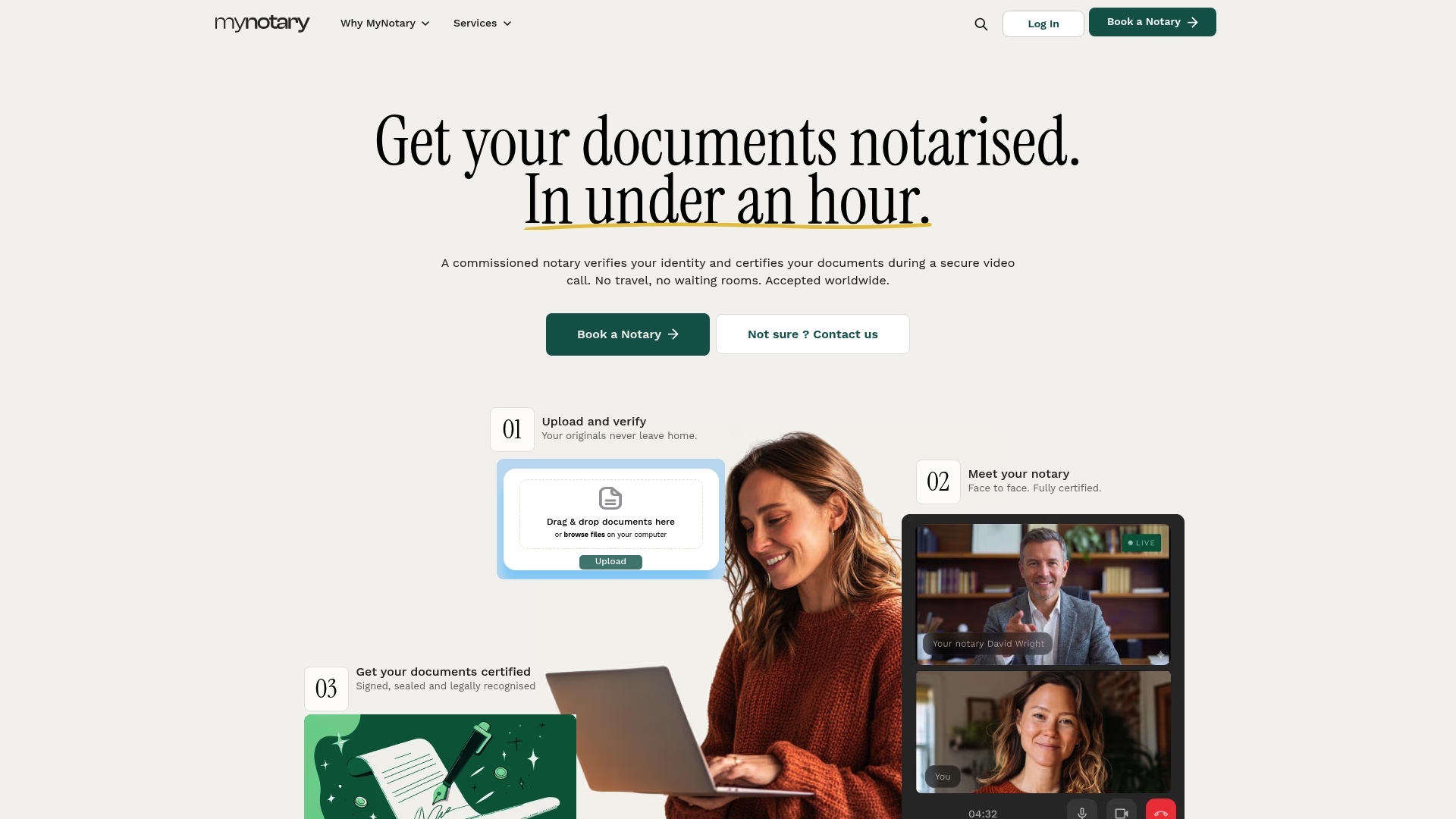
This suits anyone with a tight deadline, or with several documents to notarise at once, such as a degree certificate for an overseas job offer or a power of attorney for a property sale abroad. Sessions are recorded, identity checks are biometric, and electronic signatures produced this way have wide recognition internationally. Documents are usually delivered the same day the session takes place.
If your recipient has asked for a notarised copy rather than a certified one, browse the full range of certified and notarisation services and book a session that fits your timeline.
Sources
- Gov
- What a notary does - The Notaries Society
- Notaries and notarisation - LexisNexis
- Document Certification Service | Post Office®
This article is general information, not a substitute for advice from a qualified lawyer. Consult a qualified legal professional about your own circumstances before acting on anything here.
FAQ
Is certified the same as notarized?
No. A certified copy is signed by someone confirming it matches the original, while a notarised copy involves a commissioned notary verifying identity and attaching a formal seal. LexisNexis treats these as distinct levels of verification, with notarisation carrying more weight abroad.
Is a certified copy as good as an original?
A certified copy is accepted as evidence that it matches the original document seen by the certifier, but it does not replace the original for every purpose. Some organisations, particularly foreign authorities, still ask for notarisation or the original itself.
What is an example of a certified copy?
A common example is a photocopy of a degree certificate or passport, signed by a solicitor or accountant confirming it is a true copy. Post Office branches offer this service for many everyday documents at low cost.
Who can certify documents in the UK?
Solicitors, accountants, bank officials, police officers, and Post Office staff can certify many everyday documents, according to GOV.UK guidance. For documents needing international recognition, a commissioned notary is usually the better choice, and My Notary offers this through an online video session with same-day delivery.
Recommended
Got questions? We’re on it.
Most questions are answered here, drawn from what people actually ask before booking. If yours isn’t, our team is in chat.
No. A certified copy is signed by someone confirming it matches the original, while a notarised copy involves a commissioned notary verifying identity and attaching a formal seal. LexisNexis treats these as distinct levels of verification, with notarisation carrying more weight abroad.
Last updated: