Notarise Company Minutes Online for International Use
By Jeremy Arhab, Founder · Published 5 October 2026 · Updated 5 October 2026
Only notarise company minutes when an overseas recipient requires it. Follow the recipient's instructions, arrange remote notarisation, and add an...

Company minutes do not normally need notarisation. Once authenticated by the chair, they stand as evidence under the Companies Act for internal and most UK purposes. Notarisation becomes relevant only when an external recipient, often overseas, asks for independent certification of identity, signature or copy authenticity, and that notarised document may then need an apostille or further legalisation depending on where it is going.
***
TL;DR: - Notarisation of company minutes is generally unnecessary for internal use and is only required when an external entity requests independent certification. - Requests for notarisation often come from foreign banks, overseas registries, cross-border investors, or visa authorities, each with their specific formatting and legalization needs. - The notarisation process involves verifying identity, choosing the correct document type, and can be completed remotely with same-day digital or sealed paper copies, often followed by an apostille for international use. - Certificates of authenticity, certified extracts, and full minutes serve different purposes, so confirming recipient requirements beforehand saves time and money. - Notarisation is an exception rather than routine, and certified copies or extracts are usually sufficient, with legalisation depending on the destination country’s acceptance of the document.
***
Table of Contents
- Notarisation versus chair authentication: what's the difference?
- When you need to notarise minutes: a recipient-led checklist
- How to get company minutes notarised: a step-by-step process
- Apostille and legalisation after notarisation for use abroad
- Record-keeping and evidential status under the Companies Act
- How online notarisation through a commissioned notary can help
- Treat notarisation as targeted compliance, not routine paperwork
- Practical next step: arranging online notarisation for company minutes
- FAQ
- Sources
Notarisation versus chair authentication: what's the difference?
Chair-authenticated minutes are the standard route for recording what happened at a directors' or members' meeting. Under the Companies Act 2006, minutes signed by the chair of the meeting (or the next one) are evidence of the proceedings, and companies must keep them for inspection and retention purposes. This is sufficient for nearly all domestic business.
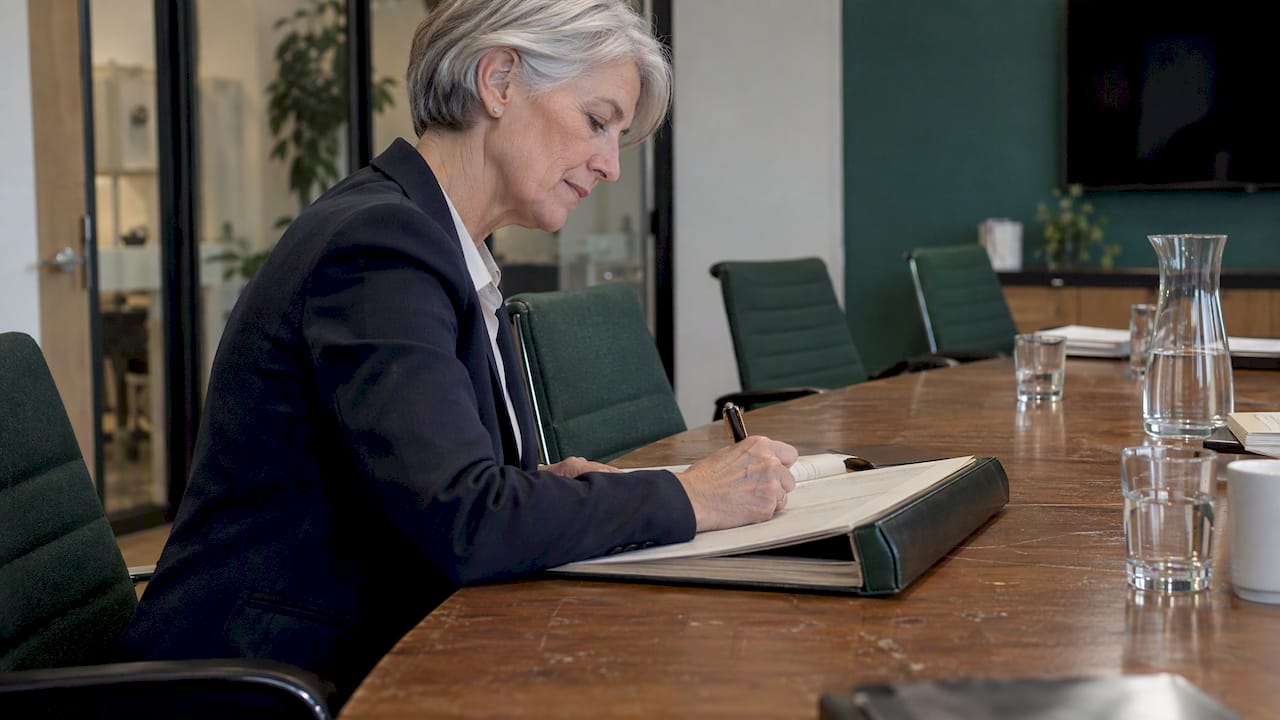
Notarisation adds a separate layer: a notary independently verifies who signed a document, confirms a copy matches an original, or certifies that a signature is genuine. It does not replace chair authentication, it sits alongside it when someone outside the company specifically asks for that extra verification.
Requesters tend to use a handful of generic labels when describing what they want:
- A certified extract, covering only the relevant resolution or paragraph.
- A certified copy of the full minute book entry.
- A certificate of authenticity confirming the document is genuine.
Knowing which of these is actually requested saves time before any notarial session is booked.
When you need to notarise minutes: a recipient-led checklist
Notarisation is almost always triggered by someone outside the company rather than by an internal policy. The most common requesters are:
- Foreign banks opening or verifying a corporate account.
- Overseas company registries processing an incorporation or filing.
- Investors or counterparties in a cross-border transaction.
- Immigration or visa offices assessing a business-related application.
Each of these recipients sets its own rules: the exact wording the notary must use, whether the notary needs to be based in a specific jurisdiction, whether a certified translation is required, and whether the document needs an apostille afterwards. None of this is standardised, so the recipient's own instructions govern the process.
Before booking anything, it helps to ask the recipient directly: what format do they need (extract or full minutes), what wording must appear on the certificate, is a translation required, and will the document need legalising once notarised? Getting clear answers here avoids paying for certification that turns out to be the wrong type.
Pro Tip: Ask the recipient for a sample of previously accepted wording if one exists. It removes most of the guesswork before the notarial session.
How to get company minutes notarised: a step-by-step process
Once requirements are confirmed, the process itself is straightforward.
- Decide which document is needed: a certified extract (the relevant resolution only) or the full minutes, and check whether the recipient wants the underlying document unsigned until the notary certifies it.
- Gather identity evidence for each signatory, usually a valid passport, along with proof of their authority to sign (such as a board resolution or a register extract showing their role).
- Book a notarial session, in person or remotely by video, where the notary checks identity against the passport, sights the document, and applies the appropriate notarial wording and seal.
- Confirm delivery format and timing with the notary before the session.
In a remote setting, the session is typically recorded, the notary verifies identity through passport and biometric checks, sights the unsigned document on camera, then applies the notarial certificate and seal once satisfied. The practical outputs usually include:
- A scanned, electronically signed PDF suitable for digital submission.
- A physically sealed paper copy for recipients who require an original.
- Same-day delivery in most straightforward cases.
Turnaround depends on how quickly identity documents and corporate evidence are supplied. A session with everything ready beforehand is far faster than one where signatories still need to locate a passport or a register extract.
Apostille and legalisation after notarisation for use abroad
A notarial certificate is sometimes only the first step. If the minutes are going to a country that is party to the Hague Apostille Convention, an apostille confirms the notary's signature and seal are genuine, which allows the document to be recognised abroad without further consular involvement.
Some recipients accept an e-Apostille, others require the traditional paper version, and the choice rests entirely with the receiving authority rather than with the applicant. Before ordering one:
- Confirm with the recipient whether paper or electronic apostille is acceptable.
- Check whether the destination country requires additional consular legalisation beyond the apostille.
- Ask whether a certified translation must accompany the apostilled document.
Our guide to getting an apostille and our e-Apostille walkthrough cover the ordering process in more detail, while our apostille guide for company documents looks specifically at corporate paperwork.
Record-keeping and evidential status under the Companies Act
Notarisation never replaces the statutory duty to keep proper records. Under the Companies Act, minutes of directors' and members' meetings must be retained for at least ten years and made available for inspection.
Chair-authenticated minutes carry evidential weight for that statutory purpose. A notary certificate is a separate, additional layer aimed at satisfying an external recipient, not a substitute for the underlying record.
- Keep an internal master copy in the minute book at all times.
- Issue certified extracts or copies only when an external party specifically asks for one.
- Treat the notarised version as a derivative document, not the statutory original.
How online notarisation through a commissioned notary can help
For readers who need a notarised extract or copy of company minutes without travelling to a notary's office, an online session with a commissioned notary covers the same ground remotely. A typical session runs as follows:
- A video call is booked at a convenient time.
- Identity is verified against a passport, with the session recorded.
- The document is sighted unsigned, then the notary applies the appropriate wording and seal.
- A digital copy is issued the same day, with a physically sealed copy available where required.
Services commonly used for this purpose include corporate document notarisation, certified copies of supporting evidence, identity verification, and apostille support where the destination requires it, including authenticated documents filed with the Registrar of Companies meaning. Always confirm the recipient's exact wording and format requirements before booking, since acceptance of any notarised document ultimately rests with the recipient, not with the notary who certifies it.
Treat notarisation as targeted compliance, not routine paperwork
Our view is that notarisation should be the exception, not the default, for company minutes. Confirm what the recipient actually needs before arranging anything, since a simple certified extract is often enough and costs less than full notarisation plus legalisation. Keep wording minimal, and make sure whoever manages company secretarial records knows which externally certified copies exist and why.
— Jérémy
Practical next step: arranging online notarisation for company minutes
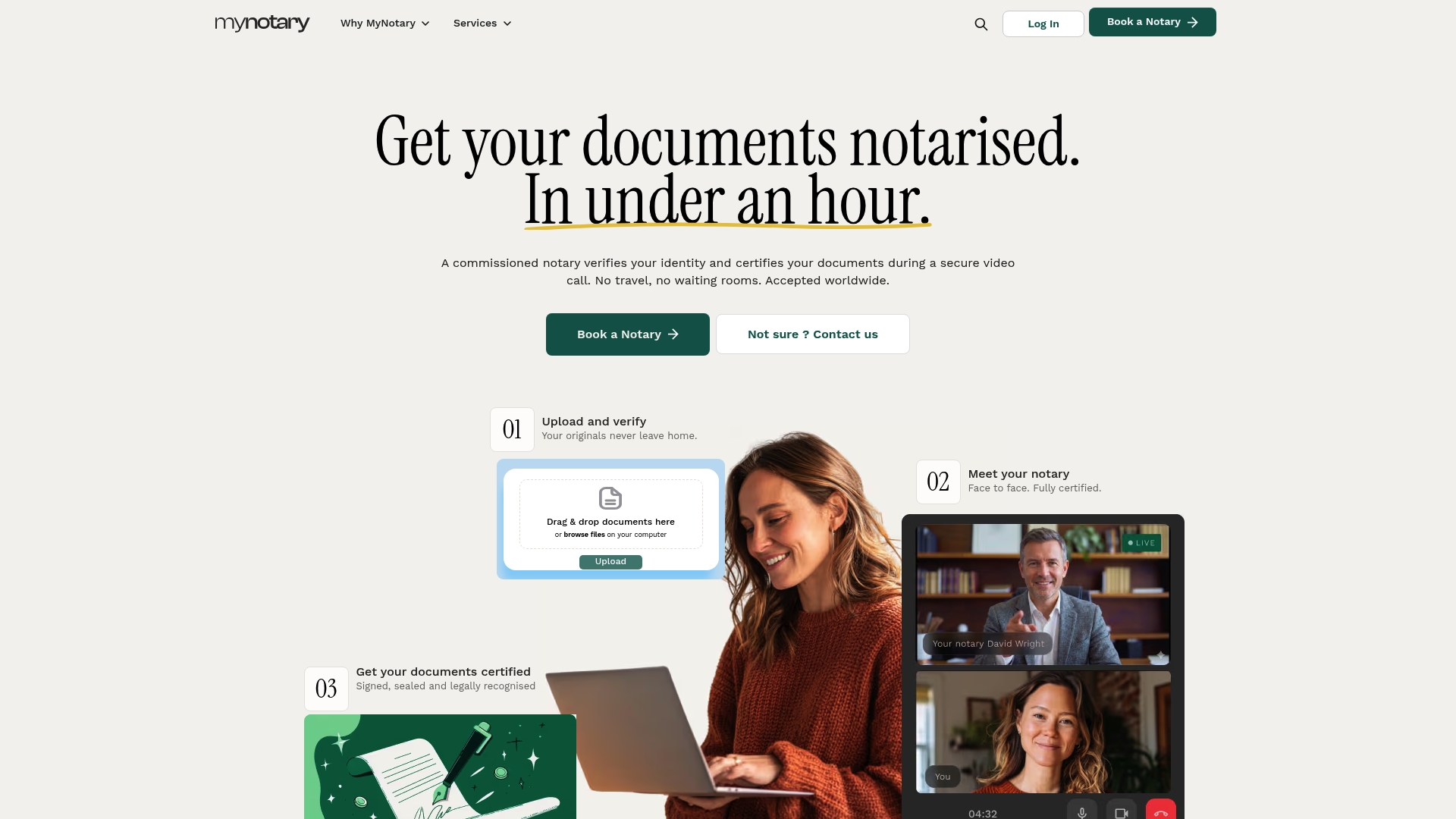
If a recipient has confirmed that your company minutes need notarising, the next step is booking a session rather than guessing at requirements. We offer corporate document notarisation by video call, with identity verified against a passport, the document sighted unsigned, and a certificate issued once the notary is satisfied.
Before booking, confirm the recipient's exact wording, whether a certified extract or full minutes is needed, and whether an apostille will follow. We cannot promise that any particular recipient will accept the finished document, since that decision always sits with them. Our full range of services covers certified copies, identity verification and apostille support for the same booking if more than one certificate is needed.
FAQ
Who can notarise a document for use abroad?
A notary commissioned to certify identity, signatures or true copies can notarise a document for overseas use. The GOV.UK guidance on finding a notary explains that requirements vary by destination, so it is worth checking with the recipient which jurisdiction's notary they expect.
How much does notarisation of company minutes cost?
Pricing varies by provider and document type. Our own corporate document notarisation service starts from £70 one-off, covering identity verification, document sighting and certificate issue.
Can company minutes be notarised online?
Yes, remote notarisation by video call is widely used, with identity checked against a passport during a recorded session before the notary applies the certificate and seal. Delivery is usually same day as a digital copy, with a physically sealed version available where the recipient requires one.
Do notarised minutes still need an apostille?
Sometimes, depending on the destination. If the receiving country is party to the Hague Apostille Convention, an apostille confirms the notary's signature and seal are genuine, and the recipient decides whether a paper or electronic apostille is acceptable.
What documents typically need notarisation alongside minutes?
Supporting documents such as passports, certified company extracts or proof of signatory authority are often requested alongside notarised minutes. Companies House guidance on certified copies explains how to obtain certified copies of registered documents that may be accepted instead of, or in addition to, notarised minutes.
Sources
Recommended
Got questions? We’re on it.
Most questions are answered here, drawn from what people actually ask before booking. If yours isn’t, our team is in chat.
A notary commissioned to certify identity, signatures or true copies can notarise a document for overseas use. The GOV.UK guidance on finding a notary explains that requirements vary by destination, so it is worth checking with the recipient which jurisdiction's notary they expect.
Last updated: