Record at UKIPO for £65: When Patent Assignments Need Notarisation
By Jeremy Arhab, Founder · Published 8 October 2026 · Updated 8 October 2026
Do UK patent assignments need notarisation? Decide deed or simple assignment, file PF21 (£65), and learn when an apostille or online notary will suffice.

No, under UK law a patent assignment need not normally be notarised for it to be valid or to be recorded at the UK Intellectual Property Office. The Manual of Patent Practice confirms that a written, signed document is enough for domestic purposes. Notarisation tends to matter once the document needs to work abroad. Before you sign anything, decide whether you need a deed or a simple assignment, and check what the destination country actually asks for.
***
TL;DR: - Recording a patent assignment at the UKIPO requires only completing form PF21 and paying a £65 fee, without notarisation. - A simple assignment is enforceable for six years, whereas a deed extends enforceability to twelve years and demands witness signatures. - Foreign patent offices often require notarisation or an apostille, especially in civil law jurisdictions, to recognize the assignment. - Online notarisation offers same-day certification via video call, but offices may still demand wet-ink signatures or full legalisation. - To avoid unnecessary costs, determine your target jurisdiction’s requirements before deciding on notarisation, legalisation, or legal form.
***
Table of Contents
- Deed versus simple assignment: what the law requires
- Recording the assignment at the UKIPO: form PF21 and the fee
- Why foreign patent offices ask for notarisation or an apostille
- A practical checklist for preparing your assignment documents
- Online notarisation explained: what it does and where it stops short
- Choosing the minimum necessary formalities
- How we can help with notarising patent assignment documents
- FAQ
- Sources
Deed versus simple assignment: what the law requires
A patent assignment can take one of two legal forms, and the choice affects how long your rights are enforceable and how much formality you need at signing.
A simple assignment is a written contract signed by the assignor. It transfers the patent under section 30 of the Patents Act 1977, which requires transactions of this kind to be in writing and signed, but says nothing about notarisation. Many business transfers use this route because it is quick and needs no witness.
A deed is a more formal document, and parties often choose one when the assignment is part of a larger corporate transaction or when they want the longer limitation period a deed carries. Signing a deed properly means each party signs in the presence of a witness who attests the signature, a formality that comes from the Law of Property (Miscellaneous Provisions) Act 1989.
The practical difference between the two forms shows up years later, not at signing:
- A simple contract assignment is generally enforceable for six years from breach.
- A deed extends that limitation period to twelve years.
- A deed also tends to carry more weight with counterparties who expect formal execution.
If the patent is valuable or the deal involves several related agreements, the extra step of arranging witnesses for a deed is usually worth it.
Recording the assignment at the UKIPO: form PF21 and the fee
Once the assignment is signed, recording it at the UK Intellectual Property Office protects your position and makes the change of ownership visible on the public register. This is done using Patents Form PF21, available through the UKIPO's application to register or give notice of rights service.
The process follows a predictable sequence:
- Complete form PF21, naming the parties, the patent or application number, and the nature of the transaction.
- Attach supporting evidence, typically the assignment document itself or a certified copy.
- Pay the filing fee and submit the form to the UKIPO.
- Wait for confirmation that the register has been updated.
The current UKIPO fee for recording a transaction on form PF21 is £65, effective from April 2026. That single fee covers the registration regardless of how many patents fall under the same assignment, provided they are filed together.
The UKIPO generally accepts photocopies or scanned versions of the signed assignment for this purpose, so you do not usually need to send an original. Original documents are only requested in disputed cases or where the office has specific doubts about authenticity.
Timing matters more than most assignors assume. Guidance on common pitfalls suggests recording within six months of the assignment to avoid procedural disadvantages, particularly around remedies in later infringement proceedings. Leaving the register out of date for too long can complicate enforcement even where the underlying assignment is perfectly valid.
Why foreign patent offices ask for notarisation or an apostille
UK recordal rarely requires notarisation, but many overseas patent offices take a different view, and this is usually where notarisation becomes relevant to a patent transfer.
Civil law jurisdictions often expect documents to carry some form of official authentication before they will accept them for recordal. According to practitioner guidance from Carpmaels & Ransford, most requests for notarisation of patent assignments originate from these foreign registries rather than from the UKIPO itself, because their systems are built around notarial certification as a standard evidentiary step.
Two distinct processes sit behind these requests:
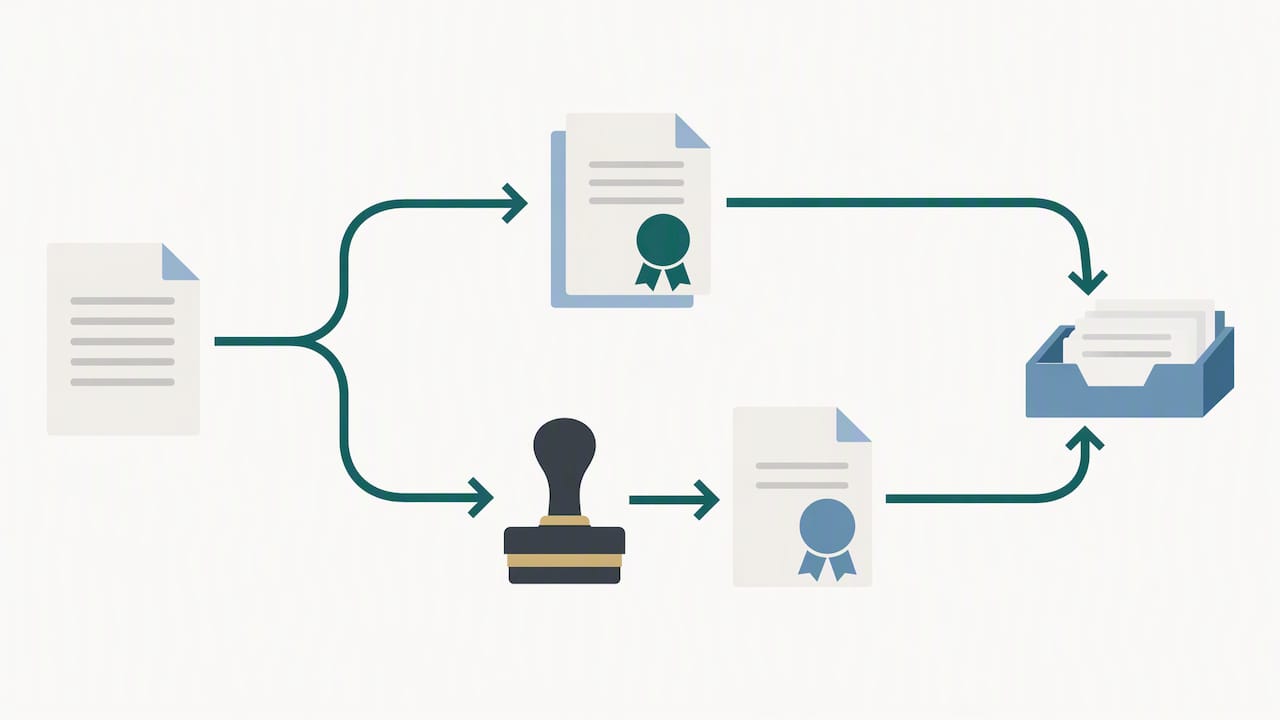
- Notarisation confirms identity and signature before a notary, who attests that the document was signed as stated.
- An apostille is a further certification under the Hague Convention, administered through Hcch, confirming that a public official's signature and seal are genuine.
- Consular or embassy legalisation is an older alternative, used where the destination country has not joined the Hague Convention.
The same practitioner guidance notes that the European Patent Office often expects wet-ink signatures or specific signature formats, and relying solely on an electronic signature risks rejection for European applications. Where legalisation is slow, filing a scanned notarised copy to meet a deadline, then following up with the fully legalised original, is a workaround practitioners use routinely.
Pro Tip: Check the destination patent office's own filing requirements before you notarise anything. Some accept a simple certified copy, others insist on a full apostille chain, and starting the wrong process wastes both time and the notary's fee.
If the assignment also affects the value of the underlying business, it is worth having the patent properly valued before signing, something an independent IP valuation specialist can help with alongside the legal paperwork.
A practical checklist for preparing your assignment documents
Getting the paperwork right the first time avoids delays at both the UKIPO and any foreign office involved.
- Decide early whether the transaction needs a deed or a simple assignment, and arrange witnesses accordingly if it is a deed.
- Use wet-ink signatures where any foreign office is likely to be involved, since several registries still reject electronic signatures outright.
- Keep certified copies of the signed document if the original will stay with one party, so the other side has something usable for recordal.
- If an apostille is needed, build in courier and processing time, and agree in advance which party pays for the extra step.
- Record the assignment at the UKIPO within six months to avoid the procedural risks that come with a stale register.
Common mistakes worth avoiding include signing the wrong party as assignor on a company reorganisation, forgetting that a global assignment covering several countries often needs local confirmatory assignments in the format each national office wants, and submitting PF21 without checking that every patent number on the form actually matches the signed document.
Online notarisation explained: what it does and where it stops short
Notarisation itself has moved online in recent years, and the mechanics are worth understanding before you decide whether it fits your situation.
A typical online notarisation session runs through a video call. The notary verifies the signer's identity against a passport, the session is recorded, and the document is attested and sealed once the notary is satisfied. The output is a certified copy carrying the notary's seal, produced without the document needing to travel anywhere.
- Identity is checked against a passport during the call itself.
- The whole session is recorded for the notarial file.
- The certified document is delivered the same day in most cases.
That speed is the main draw: no travel, no waiting room, and a certified document same day rather than over several business days. Pro Tip: Always confirm with the receiving office, whether that's a foreign patent registry or another authority, that it will accept a notarised copy produced this way before you rely on it, since some still insist on wet-ink originals or a full apostille chain.
Choosing the minimum necessary formalities
The temptation with patent assignments is to over-engineer the paperwork, notarising and apostilling everything just in case. That is usually wasted effort and cost for a transaction that only ever needed UKIPO recordal.
The better approach is to work backwards from where the document will actually be used. If it stays within the UK register, a signed simple assignment or deed is normally enough. If it needs to satisfy a foreign office, find out exactly what that office wants before paying for notarisation or legalisation that might not match its requirements.
Three questions are worth settling before signing: who will use this document and where, does that recipient require a deed or accept a simple assignment, and who bears the cost if notarisation or an apostille turns out to be necessary later.
— Jérémy
How we can help with notarising patent assignment documents
We run video sessions where a commissioned notary checks your identity against your passport, records the session, and produces a sealed certified copy. That removes the travel and waiting that come with finding a notary in person, which matters when a foreign patent office is waiting on paperwork.
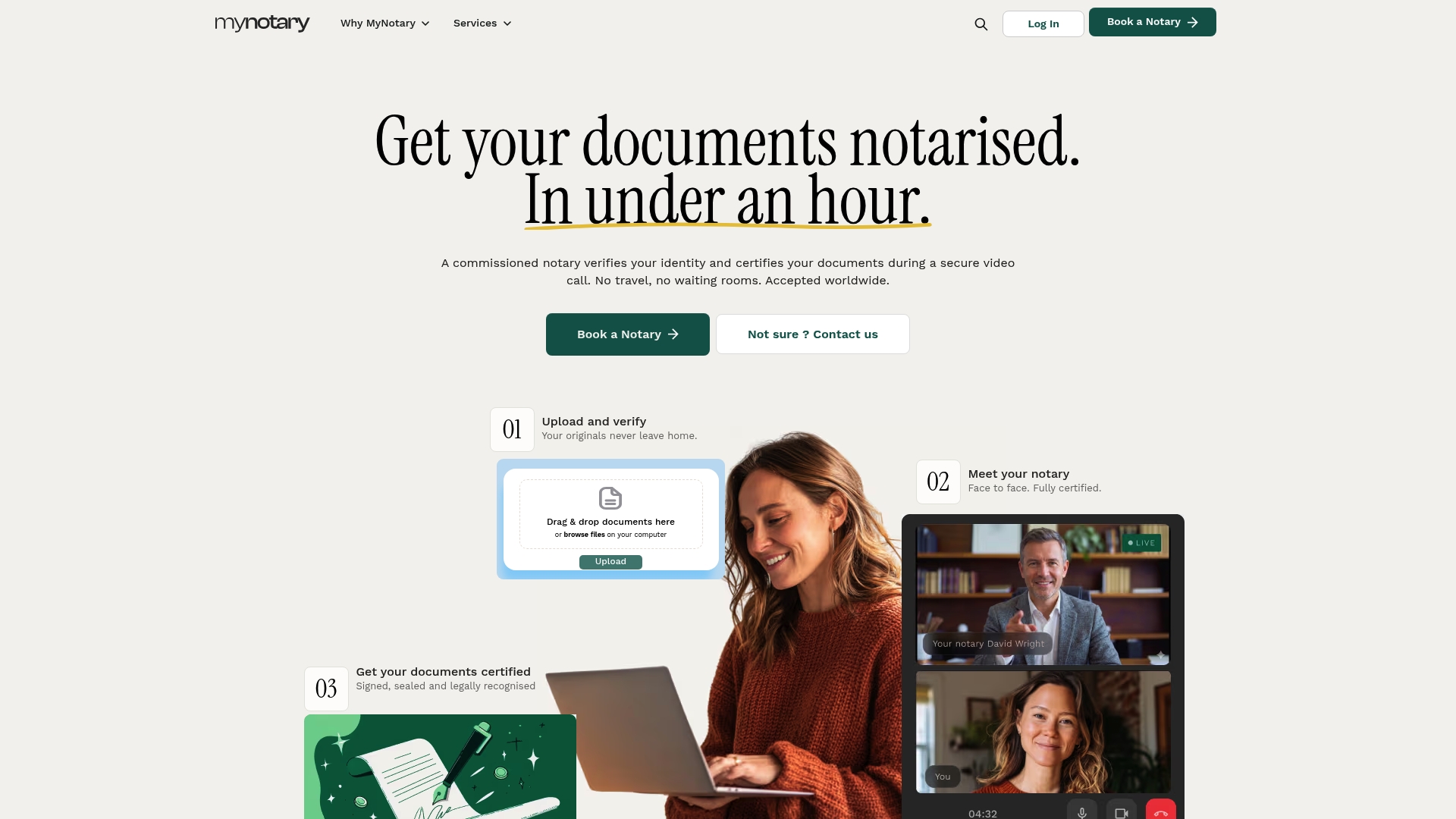
- We verify identity by passport during the call itself, not beforehand.
- Sessions are recorded as part of the notarial record.
- Certified outputs are delivered on the same day in most cases.
Always confirm with the receiving patent office what form of certification it expects before booking, since requirements vary between jurisdictions. For corporate documents connected to a patent transfer, our corporate document notarisation service covers the certification step, and our full range of services lists everything else we handle for individuals and businesses.
FAQ
Do patent assignments need to be notarised?
Not usually, for UK validity or UKIPO recordal. A written, signed document satisfies section 30 of the Patents Act 1977; notarisation typically becomes necessary only when a foreign patent office requires it.
Does a patent assignment need to be witnessed?
Only if it is executed as a deed. Under the Law of Property (Miscellaneous Provisions) Act 1989, a deed requires each signature to be witnessed, while a simple written assignment does not.
What is a patent assignment agreement?
It is the document that transfers ownership of a patent or application from one party to another. The Manual of Patent Practice confirms it must be in writing and signed by or on behalf of the assignor to be valid.
Does a patent assignment need to be recorded?
Recording is not mandatory for the assignment to take effect between the parties, but it protects your position on the public register. UKIPO guidance recommends filing form PF21 with the £65 fee, and recording within six months helps avoid procedural issues in later disputes.
Sources
- Manual of Patent Practice - section 30: nature of, and transactions in, patents and applications for patents
- Patents Act 1977 — section 30
- Sign on the digital line — Carpmaels & Ransford
- Assignments and common pitfalls — Lexology
Recommended
Got questions? We’re on it.
Most questions are answered here, drawn from what people actually ask before booking. If yours isn’t, our team is in chat.
Not usually, for UK validity or UKIPO recordal. A written, signed document satisfies section 30 of the Patents Act 1977; notarisation typically becomes necessary only when a foreign patent office requires it.
Last updated: