How the online notary process works
By Jeremy Arhab, Founder · Published 12 August 2026 · Updated 5 September 2026
Discover how the online notary process in the UK simplifies notarisation with secure video sessions and quick identity verification.

Remote notarisation is available online worldwide. A commissioned notary conducts the act via a secure audio-visual session, verifies your identity using biometric and document checks, witnesses or observes your signature electronically, and issues a notarial certificate that records the appearance was remote. The process is recognised under eNotary and remote online notarisation frameworks, which allow notarisation without physical presence through electronic signatures and audio-visual technology.
Here is what the online notary process involves at each stage:
- Book and upload: submit your document and personal details through a secure platform, then select a time slot.
- Identity verification: complete biometric and document checks before or at the start of the video call.
- Video session: join the live audio-visual call, answer the notary's confirmatory questions, and sign electronically or present a wet-ink signature on camera.
- Certificate and delivery: the notary attaches a notarial certificate, and you receive a certified digital copy or a physical document by post.
Pro Tip: Before booking, contact the authority or organisation that will receive your document and ask explicitly whether they accept a remotely notarised act. The certificate wording will state that appearance was by audio-visual technology, and some foreign authorities require in-person notarisation instead.
***
Key takeaways
Remote notarisation via audio-visual technology is legally available in the UK, but recipient acceptance must be confirmed before booking, and the notarial certificate must explicitly state that appearance was remote.
| Point | Details |
|---|---|
| Confirm recipient acceptance first | Contact the receiving authority before booking to confirm they accept a remotely notarised act. |
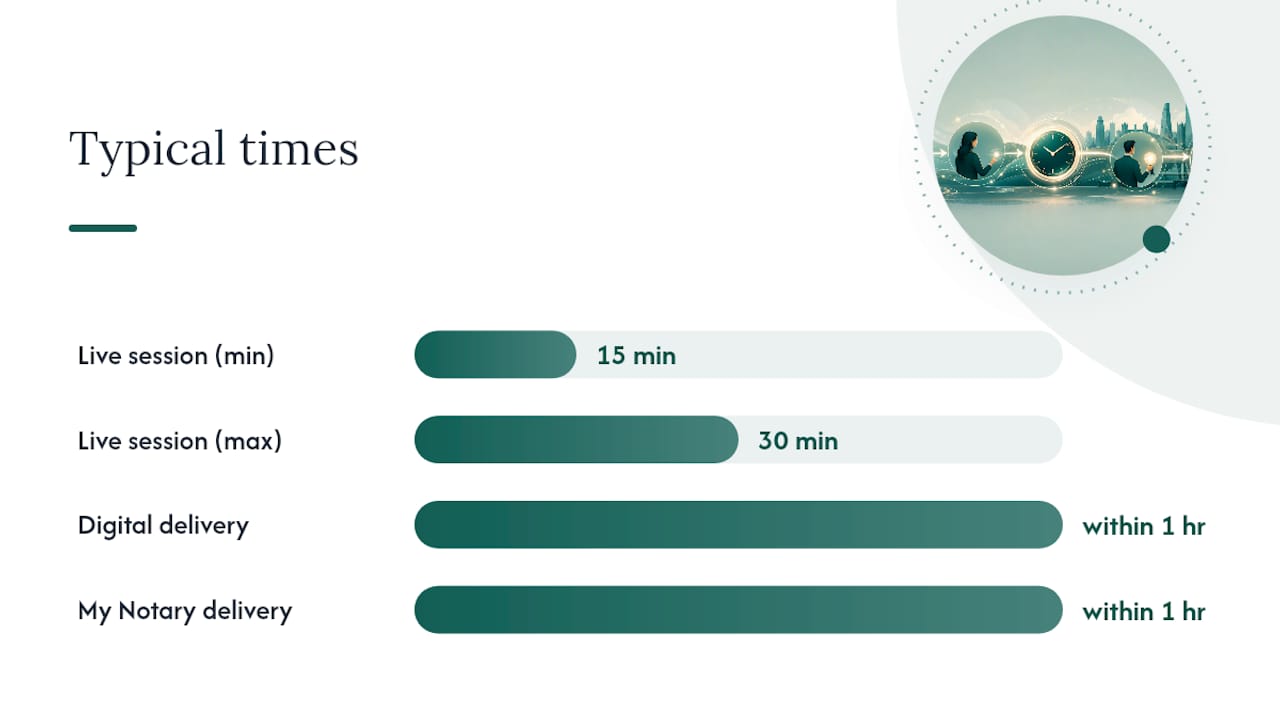
| Session length and turnaround | A live session typically runs 15–30 minutes; digital delivery is often within one hour. |
| Certificate wording matters | The notarial certificate must state appearance was by audio-visual technology, not imply physical presence. |
| Add apostille or translation for overseas use | Combining remote notarisation with an apostille or certified translation reduces the risk of rejection abroad. |
| My Notary for fast digital delivery | My Notary provides video-call notarisation with biometric ID checks and electronic signatures, with certified documents typically delivered within one hour. |
***
Table of Contents
- How the online notary process works step by step
- Which documents can you get notarised remotely in the UK?
- How identity checks and platform technology protect your session
- How long does it take and what does it cost?
- Legal acceptance limits and the checks you must do first
- Your preparation checklist before booking an online notary appointment
- What the commissioned notary checks and keeps after your session
- When remote notarisation is the right choice for you
- My Notary makes the online notary process straightforward
- Sources
- FAQ
How the online notary process works step by step
The sequence below reflects standard practice for a remote notarisation session. Timings vary by provider and document complexity, but the order of steps is consistent.
- Upload your documents. Scan or photograph every page clearly and upload them to the platform before your appointment. Most platforms accept PDF format. Include any supporting documents the notary has requested.
- Book your appointment slot. Select a date and time that suits you. If signatories are in different time zones, confirm the session time in each location.
- Complete pre-call identity checks. Submit scanned copies of your passport or national identity card in advance. Some platforms run a biometric face-match at this stage. You may also be asked to complete a short knowledge-based verification.
- Join the video call. Connect via the platform's audio-visual session at the agreed time. Use a device with a working camera and microphone, a stable internet connection, and good lighting so the notary can see your face and documents clearly.
- Answer the notary's questions. The commissioned notary will confirm your identity on camera, ask whether you understand the document and are signing freely, and check that the document is complete and unaltered.
- Sign the document. Depending on the document type and the receiving jurisdiction's requirements, you will either apply a compliant electronic signature through the platform or hold up a wet-ink signed copy to the camera for the notary to observe.
- Notary applies the certificate. The notary attaches a notarial certificate to the document. Official guidance on remote notarisation states that the certificate must record that appearance was remote and by audio-visual technology, not suggest physical presence.
- Receive your certified document. The platform delivers a tamper-evident electronically signed PDF, usually within the same session or within a few hours. A physical hard copy can be posted if required.
Typical durations: a live session usually runs 15–30 minutes for a straightforward document. End-to-end turnaround, from upload to receiving the certified copy, is often one hour for digital delivery, or two to five working days if a physical document is posted.
Pro Tip: At the start of the session, confirm whether the call is being recorded and give your explicit consent. Keep a copy of any recording reference or session ID the platform provides. This forms part of the audit trail if the document is ever questioned.
***
Which documents can you get notarised remotely in the UK?
Remote notarisation suits a wide range of personal and corporate documents. The following are commonly accepted:
- Powers of attorney (general, banking, property, and tax purposes)
- Certified true copies of passports, national identity cards, and biometric residence permits
- Certified copies of degree certificates, diplomas, and professional qualifications
- Affidavits and statutory declarations (subject to the receiving jurisdiction's rules)
- Corporate documents: board resolutions, certificates of incorporation, company powers of attorney
- Letters for employers, universities, or government bodies confirming identity or qualifications
- Certified copies of bank statements and financial documents
Some document types carry restrictions or require additional steps:
- Deeds (including property transfer deeds and deed polls) often require physical witnessing or in-person notarisation depending on where they will be used.
- Wills typically require in-person witnessing and are rarely suitable for remote notarisation.
- Documents for jurisdictions that do not accept remote acts must be notarised in person regardless of the document type.
Industry commentary confirms that online notarisation speeds up the process and reduces travel, but international acceptance can be limited, and for some foreign uses a traditional in-person notarisation remains the safer route.
Pro Tip: If your document is a deed or will, or if it is going to a country with strict in-person requirements, ask the receiving authority directly before booking a remote session. Choosing the wrong route can mean repeating the entire process.
***
How identity checks and platform technology protect your session
The security of a remote notarisation rests on two things: rigorous identity verification and a controlled technical environment. Best practice guidance sets out concrete checks that a commissioned notary and their platform should apply.
Identity verification methods typically include:
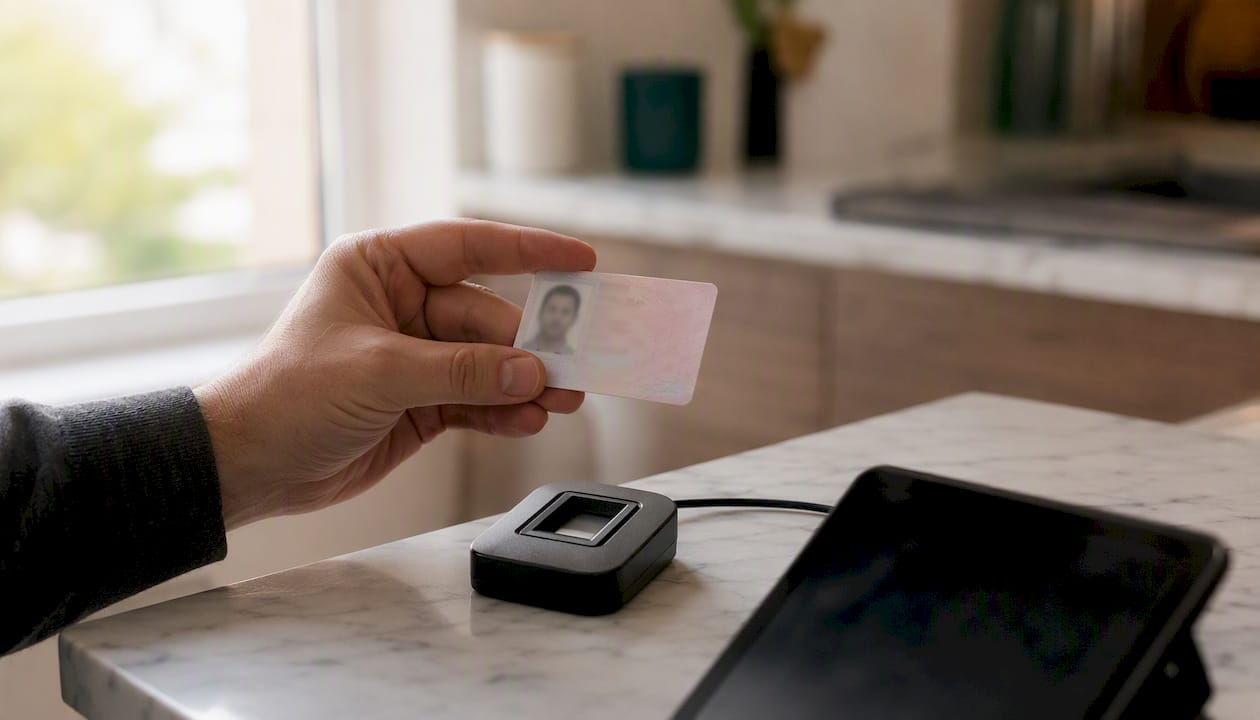
- Live video check: the notary views your face and original identity document on camera simultaneously
- Biometric face-match: the platform compares a live selfie or video frame against your passport photograph
- Document scan: a legible copy of your passport or national ID is submitted and checked for authenticity
- Knowledge-based verification: you may be asked questions only the genuine document holder could answer
- Two-factor authentication: a one-time code sent to your registered mobile or email confirms device ownership
Platform features that support trust:
- Secure document upload with encryption in transit and at rest
- Real-time audio-visual session with a commissioned notary
- Qualified or compliant electronic signature applied within the platform
- Audit trail recording every action: who signed, when, and from which device
- Tamper-evident delivery so any alteration after signing is detectable
Retainable AV recordings, biometric face-match, and a controlled signing flow all increase the likelihood that a remotely notarised document will be accepted by a receiving authority. The guidance on remote notarisation specifically recommends that notaries retain recordings (with consent) and perform a risk assessment as part of the process.
Technical requirements on your side: a stable broadband connection, a device with a front-facing camera and microphone, adequate lighting, and a current, undamaged identity document. Blurred or glare-affected ID scans are the most common cause of delays.
***
How long does it take and what does it cost?
Typical timelines:
- Live session length: 15–30 minutes for a single-signer, straightforward document
- Digital delivery turnaround: often within one hour of the session completing
- Physical hard copy by post: typically two to five working days depending on the postal service selected
- Same-day options: available from some platforms for urgent requests, usually at a premium
What affects the price:
- Document complexity: a simple certified copy costs less than a multi-page power of attorney
- Number of signatories: each additional signer adds to the session time and fee
- Certified translation: if the document must be translated for use abroad, this is usually charged separately
- Apostille or legalisation: adding an apostille for international use is an optional add-on with its own fee
- Physical delivery: couriered hard copies carry a postage and handling charge on top of the notarisation fee
Fees for notarisation in the UK are not fixed by statute and vary between providers. For straightforward certified copies, fees tend to start at a modest flat rate. Complex corporate notarisations or documents requiring multiple add-ons cost considerably more. Always confirm the full fee breakdown, including any apostille or translation charges, before booking.
***
Legal acceptance limits and the checks you must do first
Remote notarisation is not universally accepted. The code of practice on remote appearance states that notaries may use remote technologies to issue notarial acts, but should take reasonable steps to confirm acceptance in the receiving jurisdiction and perform a risk assessment. The responsibility to verify acceptance ultimately rests with the client.
Mandatory checks before booking:
- Confirm the receiving authority (a government body, bank, employer, or court) will accept a remotely notarised act
- Check whether the destination country or institution requires an apostille or legalisation in addition to notarisation
- Establish whether a certified translation is required alongside the notarised document
- Ask whether the receiving authority has any specific format requirements for the notarial certificate
The notary will carry out their own reasonable checks, but they cannot guarantee acceptance in every jurisdiction. You must obtain written confirmation from the recipient where possible.
For international uses, combining remote notarisation with a certified translation or an apostille can reduce the risk of rejection by a foreign authority. The online notarisation guide at My Notary covers the legal criteria and procedural steps in detail, including how to handle recipient checks.
Pro Tip: When contacting a foreign authority, ask specifically: "Will you accept a notarial act performed by audio-visual technology where the signatory appeared remotely?" A general "yes to notarised documents" is not sufficient confirmation. Get the answer in writing.
***
Your preparation checklist before booking an online notary appointment
Arriving at your session well prepared prevents the most common hold-ups. Work through this checklist before you book or at least 24 hours before your appointment.
- Gather the original document and any copies required. Check whether the receiving authority needs a certified copy or the original returned.
- Scan your identity document. Use a flat, well-lit surface. Capture all four corners, both sides where applicable, and ensure the photograph page is sharp and glare-free.
- Confirm whether a witness is required. Some documents need a witness present on the call. Arrange this in advance and ensure the witness also has valid ID.
- Check your device and internet connection. Test your camera, microphone, and browser compatibility on the platform before the day of the session.
- Agree the time zone and session details. If you or any co-signer is abroad, confirm the session time in local time for each party.
- Upload documents in advance. Most platforms ask for documents to be uploaded before the call. Name files clearly (e.g. "SmithPOAPage1.pdf") and keep pages in order.
- Note the recipient's requirements. Have written confirmation of what the receiving authority will accept, including any apostille or translation needs, ready to share with the notary if asked.
Pro Tip: Name your files with your surname, document type, and page number before uploading. A notary reviewing "SmithPowerOfAttorneyp1.pdf" can work far more quickly than one opening "scan0047.pdf". Clear file names reduce the chance of a document being returned for re-submission.
***
What the commissioned notary checks and keeps after your session
A commissioned notary performing a remote act carries out the same substantive checks as they would in person. The remote format changes the channel, not the duty of care.
During the session, the notary will verify:
- Your identity against the documents submitted and the live video image
- Your legal capacity: that you are an adult, appear to understand the document, and are not under duress
- Your free will: that you are signing voluntarily without pressure from a third party
- The document itself: that it is complete, unaltered, and matches what was uploaded in advance
Records the notary retains after the session:
- An entry in their electronic journal recording the date, parties, document type, and nature of the act
- A copy of the signed and certified document
- The notarial certificate, which must state that appearance was by audio-visual technology
- An AV recording or screen capture of the session, retained with your consent, as part of the audit trail
The guidance on remote notarisation is explicit: the certificate wording must not imply physical presence. It should state that the signatory appeared remotely by audio-visual technology. Where a notary subsequently issues a hard copy after receiving the original document, the repeat process and its timing must also be recorded in the notarial register.
This combination of an electronic journal entry, retained recording, and correctly worded certificate forms the audit trail that gives receiving authorities confidence in the act.
***
When remote notarisation is the right choice for you
Most people who ask about the online notary process are trying to solve a practical problem: they are abroad, they cannot take time off work, or they need a document certified quickly for an overseas employer or bank. For those situations, remote notarisation is genuinely the better option.

Expats renewing a power of attorney from overseas, freelancers certifying qualifications for a foreign client, and businesses needing corporate documents authenticated for a cross-border transaction all benefit from the speed and accessibility of a video-call session. The electronic notarisation guide explains the distinctions between electronic notarisation and remote online notarisation for those who need to understand which applies to their document.
Where I would urge caution is with documents that carry real legal weight in a foreign jurisdiction: property deeds, wills, and documents going to countries with strict in-person requirements. For those, the convenience of a remote session is not worth the risk of rejection. The wiser course is to combine local legal advice in the destination country with in-person notarisation, even if that means more effort upfront.
The practical middle ground, which most people overlook, is to use remote notarisation for the notarial act itself and then add an apostille or certified translation as a separate step. That combination satisfies the majority of international requirements without requiring a physical appointment. Professional bodies such as STEP publish guidance that private client advisers use when assessing whether a remotely notarised document will be accepted overseas, and consulting a local adviser in the destination country before proceeding is rarely wasted effort.
Remote notarisation is not a shortcut. It is a legitimate, well-governed process that happens to be faster and more accessible than the traditional alternative. Used correctly, with recipient checks done in advance and the right add-ons in place, it works well for the vast majority of personal and business documents.
***
My Notary makes the online notary process straightforward
For individuals and businesses who need documents notarised without the delay of a physical appointment, My Notary offers a complete solution via secure video call. Upload your document, verify your identity with biometric checks, and connect with a commissioned notary, all from your home or office. Certified digital documents are typically delivered within one hour of the session.
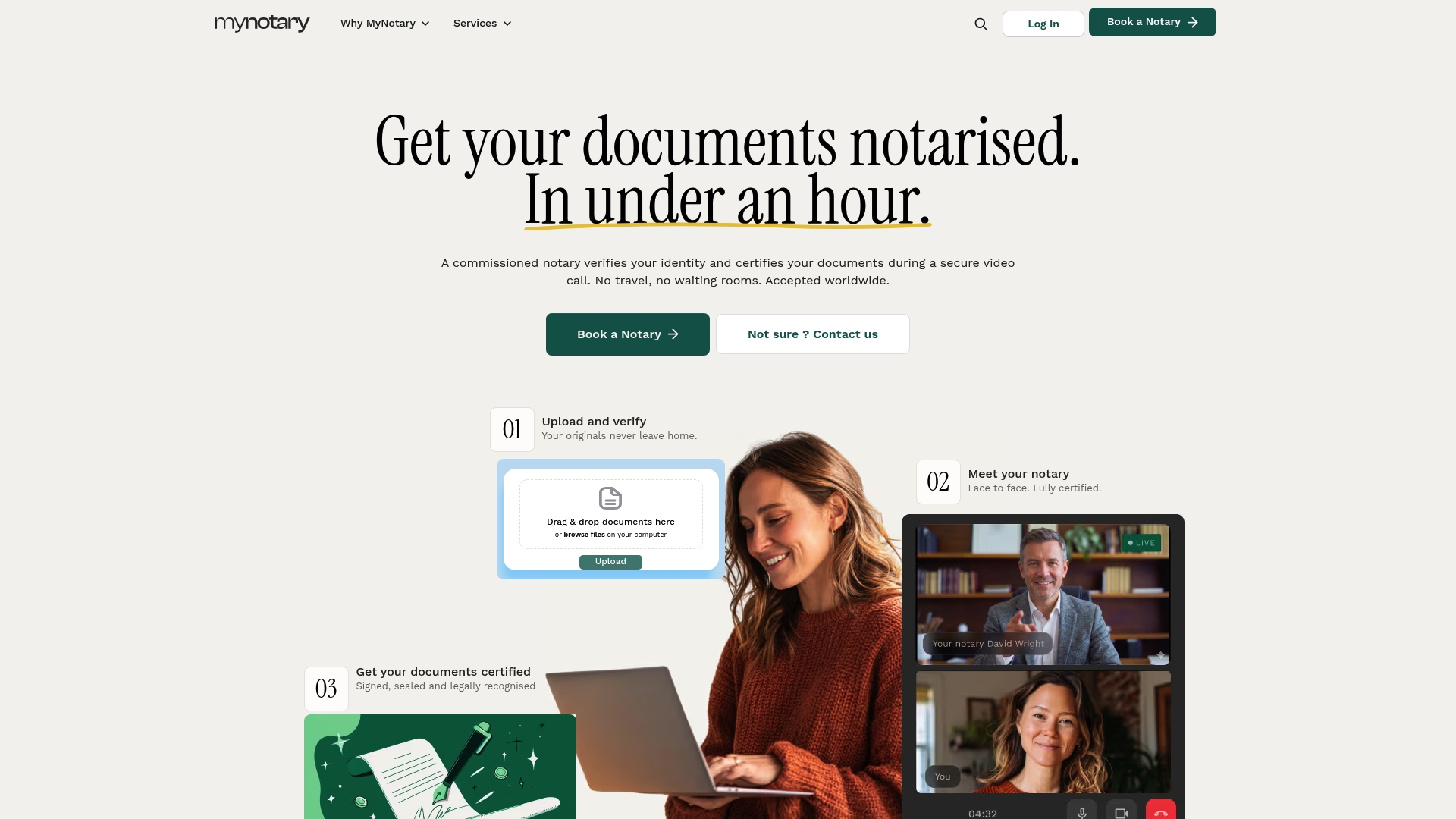
My Notary's services cover the full range of documents most commonly needed for personal, family, and corporate purposes:
- Signature notarisation online for individual signing workflows
- Corporate document notarisation for board resolutions, company powers of attorney, and commercial certificates
- KYC identity verification for compliance and due diligence requirements
- Power of attorney for banking and financial authorisations
- Optional apostille and certified translation add-ons for documents going overseas
To start, visit the My Notary services page, select your document type, and follow the booking steps. A commissioned notary will be available to conduct your session, and your certified document will be ready for digital download or physical delivery shortly after.
***
Sources
The following sources were used in preparing this guide and are worth consulting directly for further detail:
***
FAQ
Is online notarisation legally valid?
Yes. A commissioned notary may perform remote notarial acts using audio-visual technology, provided the notarial certificate correctly records that appearance was remote. Acceptance by the receiving authority, particularly overseas, must be confirmed separately before proceeding.
How do you get a document notarised online?
Upload your document to a secure platform, complete biometric identity verification, join a video call with a commissioned notary, sign electronically or on camera, and receive a certified digital or physical copy. My Notary offers this full process with typical digital delivery within one hour.
How much does a notary cost?
Notary fees for UK documents are not set by a single statutory scale and vary by document type and complexity. Simple certified copies tend to start at a modest flat rate, while complex corporate documents or those requiring apostille and translation add-ons cost considerably more. Always request a full fee breakdown before booking.
Will a remotely notarised document be accepted abroad?
Not automatically. Remote notarisation is not universally accepted in every jurisdiction. You must contact the receiving authority directly and obtain written confirmation that they will accept a notarial act performed by audio-visual technology before proceeding with a remote session.
What is the difference between remote notarisation and in-person notarisation?
Remote notarisation uses an audio-visual session and electronic or observed wet-ink signatures in place of physical presence, while in-person notarisation requires the signatory and notary to be in the same room. Both result in a notarial certificate, but the remote version must explicitly state that appearance was by audio-visual technology.
Recommended
Got questions? We’re on it.
Most questions are answered here, drawn from what people actually ask before booking. If yours isn’t, our team is in chat.
Yes. A commissioned notary public may perform remote notarial acts using audio-visual technology, provided the notarial certificate correctly records that appearance was remote. Acceptance by the receiving authority, particularly overseas, must be confirmed separately before proceeding.
Last updated: