Keep UK Identity Verification Private: 3 Methods Aligned with ICO
By Jeremy Arhab, Founder · Published 17 September 2026 · Updated 17 September 2026
Practical UK guide to identity verification privacy. Learn three privacy-preserving methods, how ICO and GOV.UK rules apply, and which questions to ask...

Identity verification can be private, provided the provider collects only what a specific check requires, treats biometric data as special category information under ICO guidance, and follows the transparency and remedy standards set out in the Gov. Before sharing a passport or a selfie with any platform, including My Notary, expect three things as standard: minimal data collection, an explicit lawful basis for biometric handling, and a straightforward way to see, correct, or delete your record.
***
TL;DR: - Providers must limit data collection, ensure biometric data is processed only with explicit consent, and offer transparent options for record correction or deletion. - Biometric data and scanned documents pose permanent risks because they cannot be changed once exposed, requiring strict handling and minimal retention. - On-device matching, verifiable credentials, and zero-knowledge proofs each address parts of privacy concerns but have inherent trade-offs and interoperability challenges. - Individuals should request clear information on retention periods and data sharing before submitting sensitive documents, while businesses need to map attribute needs and conduct DPIAs. - My Notary verifies identity via live passport checks during video calls, retains recordings for audit only, and emphasizes minimal data collection and privacy-focused practices.
***
Table of Contents
- What privacy risks does identity verification create?
- What UK rules govern identity verification and biometric data?
- Which privacy-preserving verification methods actually work?
- How can I limit my privacy exposure during identity checks?
- What questions should you ask an identity verification provider?
- How does My Notary handle identity checks during notarisation?
- Why governance matters as much as the technology
- Another route: notarisation without the paperwork pile-up
- Sources
- FAQ
What privacy risks does identity verification create?
Every identity check creates exposure at several points, not just one. Data can leak during collection (an over-broad form asking for more than the task needs), storage (documents kept far longer than necessary), sharing (third-party checks passed to sub-processors without clear disclosure), and even in support workflows, where a staff member handling a query can see far more than they should. Metadata, such as device fingerprints or timestamps, often gets logged without users realising.
Biometric data and document images carry more risk than most personal data because they are permanent. You can change a password after a breach. You cannot change your face or your fingerprint. Once a biometric template or a scanned passport photo page is exposed, the exposure is effectively irreversible, and any downstream copy, in an email attachment or a backup drive, multiplies the potential damage.
- Collection creep: forms requesting fields unrelated to the actual check.
- Long retention: documents stored well past the verification event.
- Uncontrolled sharing: data passed to processors without clear consent.
- Metadata leakage: device and session data logged silently.
A useful illustration: a rental applicant uploads a passport for a background check, the file sits on a server for years after the tenancy ends, and a later breach exposes it alongside thousands of others. The ICO's biometric recognition guidance is explicit that these systems must be tested for fairness precisely because the consequences of getting it wrong are so hard to undo.
What UK rules govern identity verification and biometric data?
UK data protection law does not leave data minimisation as a suggestion. Under the data protection principles, personal data collected for verification must be adequate, relevant, and limited to what the specific purpose actually requires. Anything extra should not be collected, and anything no longer needed should be deleted rather than archived indefinitely.
Biometric data sits in a stricter category. Because a fingerprint or facial scan can identify someone uniquely and permanently, ICO guidance classes it as special category data, meaning a provider needs an explicit lawful basis, usually consent, before processing it. That is a higher bar than ordinary personal data checks.
The GOV.UK identity assurance principles add a further layer, built for government-grade identity services but useful as a benchmark for any provider:
- Transparency: users should understand what is collected and why.
- Minimisation: only the identity assurance data needed for the task is gathered.
- Certification: independent checks confirm the service meets its stated standards.
- User remedy: people can challenge, correct, or delete an inaccurate record.
GOV.UK One Login shows what this looks like in practice, with minimal collection and clear user control built into the design rather than added afterwards.
Which privacy-preserving verification methods actually work?
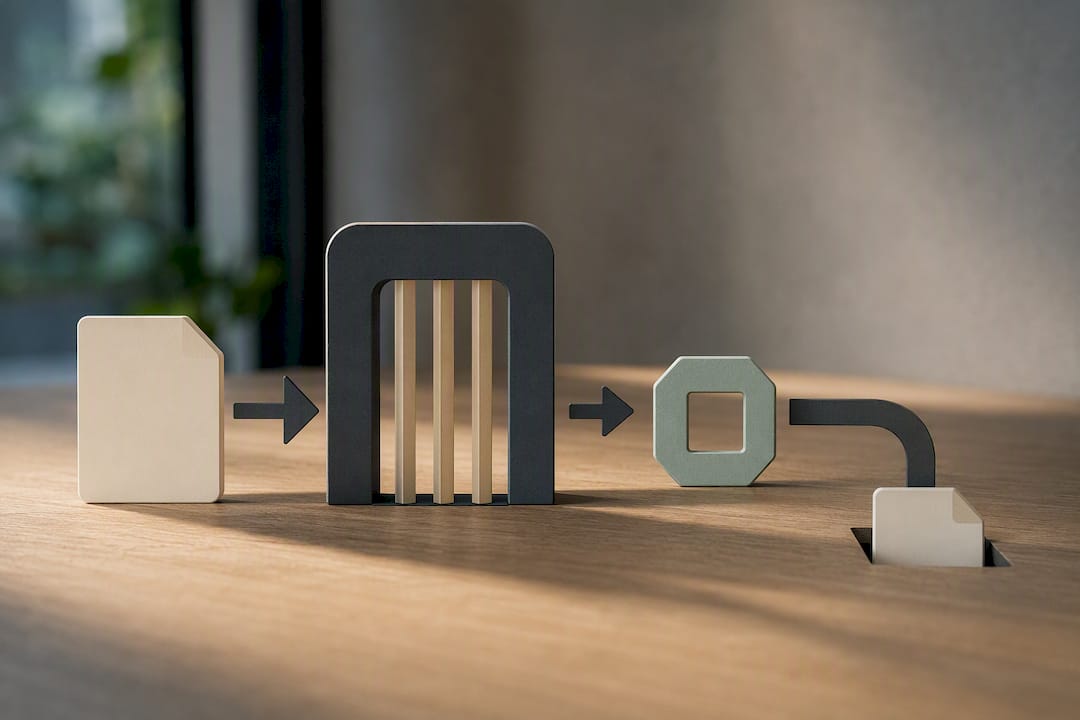
Three technical approaches dominate current thinking on privacy-preserving identity checks, and each solves a different part of the problem rather than the whole thing.
- On-device matching compares your face or fingerprint against your own document locally, so the biometric template never reaches a central server. It reduces the risk of a mass breach, though the device itself can still log metadata such as location or app usage.
- Verifiable credentials and tokenised assertions let a provider confirm a fact, such as "this person is over 18" or "this document is genuine", without handing over the underlying data. Selective disclosure shrinks what security professionals call the blast radius of a breach, since there is far less raw data sitting anywhere to steal.
- Zero-knowledge proofs (ZKPs) allow one party to prove a claim is true without revealing the data behind it. They are genuinely useful for narrow attribute checks, but the Electronic Frontier Foundation has warned that ZKPs do not stop a verifier from misusing its position, over-collecting session metadata, or building a profile from repeated checks. The cryptography protects the specific proof, not the whole interaction.
None of these methods is free of trade-offs. Stronger fraud resistance tends to require richer signals, which pulls against minimal disclosure, and every new method needs interoperability testing before it can replace document uploads at scale.
Pro Tip: Ask any provider whether verification decisions are based on a proof or a token rather than a stored copy of your document. If the answer is vague, assume the raw file is being kept.
How can I limit my privacy exposure during identity checks?
Individuals and businesses face different exposure, and both benefit from a short, repeatable checklist rather than a vague sense of caution.
For individuals:
- Prefer providers that ask for the minimum claim needed, not a full document scan, wherever an alternative exists.
- Ask directly how long your data will be retained and whether it is deleted automatically.
- Favour services that support selective disclosure over ones that demand a complete identity file.
- Keep your own record of when you gave consent and when you requested deletion.
For businesses collecting identity evidence from customers or staff:
- Map the exact attributes each process actually needs before designing the form.
- Apply progressive disclosure, asking for more only if an earlier, lighter check fails.
- Separate the decision output (verified or not verified) from the raw artefact used to reach it, and retain the decision record rather than the document itself where possible, an approach the privacy-first identity verification guide sets out clearly.
- Run a Data Protection Impact Assessment (DPIA) and test for bias before deployment, not after a complaint.
Pro Tip: When evaluating any provider, ask for retention periods, DPIA summaries, and bias testing results in writing before you commit. A provider unwilling to share this is telling you something.
What questions should you ask an identity verification provider?
Before handing over a document or a biometric scan, ask what specific attributes are being extracted, how long they are retained, what the lawful basis is, where the data is stored, and who inside the organisation can view it. A provider that answers these clearly, with named policies rather than general reassurance, is a stronger sign of maturity than any marketing claim.
Genuine trust signals include independent audits, publicly available DPIA summaries, documented bias testing (echoing the ICO's fairness guidance on treating biometric matches as probabilistic, challengeable outputs), and visible consent logs a user can review.
- Vague or open-ended retention periods with no fixed deletion date.
- Default storage of the full document image when only one field was needed.
- No practical route to request deletion or export of your own data.
- Unexplained background data transfers or "phoning home" behaviour during a check.
Any one of these should prompt a pause before you proceed.
How does My Notary handle identity checks during notarisation?
My Notary verifies identity by passport during a recorded video call with a commissioned notary, rather than collecting a broad file of personal documents upfront. The session is recorded to create an audit trail, and the document itself remains unsigned until the notary confirms identity live on the call.
- Passport-based identity verification happens during the video session, used as evidence for that specific transaction rather than banked for unrelated future use.
- The recorded session supports dispute handling, though retention of that recording should still be limited to what the notarisation actually requires.
- Typical turnaround for a notarised document is typically short.
These features illustrate a workable pattern: verify what is needed for the transaction, keep an audit trail for accountability, and avoid accumulating unrelated personal data along the way.
Why governance matters as much as the technology
Zero-knowledge proofs and on-device matching genuinely reduce what gets shared, but neither stops a verifier from over-collecting metadata or misusing its position, a limit the EFF has been blunt about. The GOV.UK principles exist precisely because technology without independent bias testing and a published DPIA is only half a solution. Demand both.
— Jérémy
Another route: notarisation without the paperwork pile-up
There are other ways to get a document identity-checked and certified, from visiting a solicitor's office to posting original documents to an agency and waiting for their return. An alternative route offers identity verification and document certification handled in a single video call, with no travel and no document left sitting in an unknown filing system afterwards.
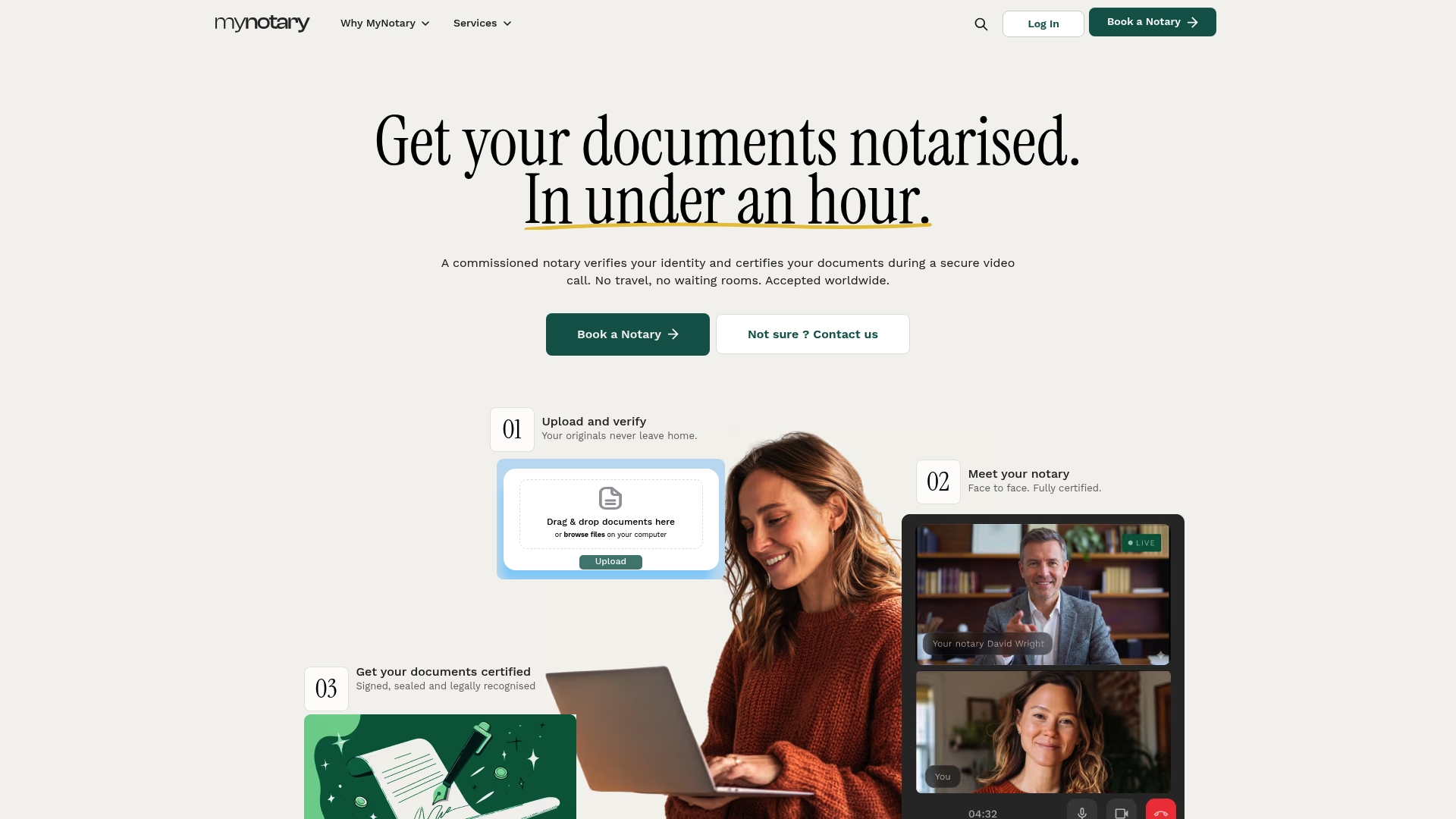
The process centres on a live video session where a commissioned notary verifies your passport, records the call for the audit trail, and applies the notary's seal once identity is confirmed, with the document remaining unsigned until that point. Turnaround times vary depending on the service and provider, and the same approach applies whether you need a Certified True Copy, a Power of Attorney, or Corporate Document Notarisation. Before booking any identity check, whether with My Notary or elsewhere, it is reasonable to ask what happens to your passport image after the session and how long the recording is kept, questions any provider serious about privacy should answer readily. For guidance on how identity evidence fits into the wider process, the electronic notarisation overview is a useful starting point. If you have a document that needs certifying, the full range of services is listed on the My Notary services page, where you can check details and start a booking.
Sources
- ICO guidance: special category data and lawful basis
- Identity assurance principles for building identity services in government
- Zero Knowledge Proofs Aren't Age Verification Silver Bullets (EFF)
This article is general information, not a substitute for advice from a qualified lawyer. Consult a qualified legal professional about your own circumstances before acting on anything here.
FAQ
Is digital ID becoming mandatory in the UK?
No single mandatory digital ID scheme currently applies across all UK services. GOV.UK One Login is expanding as a shared way to prove identity for government services, built around the identity assurance principles of minimal data and transparency.
How do I turn off identity verification on an account?
This depends entirely on the individual service, since some checks are a legal or contractual requirement you cannot bypass. Where a check is optional, look for account privacy settings, or contact the provider directly and ask what alternative verification route exists.
What happens if you don't verify your identity?
Most services will restrict or refuse the specific action requiring verification, whether that is opening an account, completing a payment, or having a document notarised. With My Notary, identity verification during the video call is required before the notary can proceed, since it is central to confirming who is signing.
Is it safe to complete online age or identity verification?
It can be, provided the provider minimises what it collects, treats biometric data as special category information under ICO rules, and gives you a clear way to see or delete your record afterwards. Ask about retention and lawful basis before assuming any service is safe by default.
What does identity verification cost with My Notary?
Pricing for services such as KYC Identity Verification starts from £70 one off, with the exact figure for your document type listed on the My Notary services page.
Recommended
Got questions? We’re on it.
Most questions are answered here, drawn from what people actually ask before booking. If yours isn’t, our team is in chat.
No single mandatory digital ID scheme currently applies across all UK services. GOV.UK One Login is expanding as a shared way to prove identity for government services, built around the identity assurance principles of minimal data and transparency.
Last updated: