Avoid Rejected Documents: Acknowledgment vs Jurat in Two Minutes
By Jeremy Arhab, Founder · Published 18 September 2026 · Updated 18 September 2026
Learn how to choose between an acknowledgment and a jurat with a five step decision checklist, avoid rejections, and complete either act online in about...

An acknowledgment verifies a signer's identity and confirms the signature was made voluntarily. A jurat records a sworn oath that a document's contents are true. The two acts are not interchangeable, and using the wrong one can get a document rejected. When in doubt, read the certificate wording on the document itself, or ask the person or office that requested it.
***
TL;DR: - Acknowledgments verify only the signer's identity and willingness to sign, without confirming any statement's truth or content accuracy. - Jurats require the signer to swear or affirm the truth of the document's contents in front of the notary, with signing occurring after the oath. - In legal and official documents, acknowledgment is common for property transfers and powers of attorney, while jurats are used for affidavits and sworn declarations. - Using the wrong act can lead to document rejection or invalidation, especially if the certificate wording or procedural steps are not carefully followed. - Online notarization offers a flexible way to complete both acts remotely, but the correct sequence, certificate wording, and identity verification remain critical.
***
Table of Contents
- Acknowledgment vs jurat: what an acknowledgment actually certifies
- Acknowledgment vs jurat: what a jurat requires that acknowledgments don't
- Jurat vs acknowledgment: a quick reference comparison
- When to use which: a decision checklist before your appointment
- What to bring and how to behave at your notarisation appointment
- How online notarisation handles acknowledgments and jurats
- Practical pitfalls and quick remedies
- Getting either notarial act completed without leaving home
- Sources
- FAQ
Acknowledgment vs jurat: what an acknowledgment actually certifies
An acknowledgment confirms two things only: that the person signing is who they claim to be, and that they signed (or already signed) the document willingly. That is the whole scope of the act. The notary is not vouching for anything written inside the document, and is not confirming that its contents are true.
The procedure is fairly simple. The signer appears before the notary, presents valid photo identification, and either signs the document there or confirms that a signature already on the page is theirs. Many jurisdictions allow the signature to have been made earlier, as long as the signer personally acknowledges it in front of the notary during the session. The notary then completes a certificate, usually stamped or sealed, stating that the named individual "personally appeared" and "acknowledged" the signature as their own.
Certificate wording to look out for typically includes phrases close to "acknowledged before me" or "personally appeared before me and acknowledged that he/she executed the instrument". That phrasing is the clearest signal you are dealing with an acknowledgment rather than a jurat, since a comparison of the two acts notes the certificate language is usually the deciding clue.
Acknowledgments turn up most often on documents where identity and voluntary intent matter more than sworn truthfulness. Common examples include:
- Property and real estate documents, such as deeds and mortgage paperwork
- Powers of attorney, where the signer is granting authority to someone else
- Deed polls and other name change instruments, where confirming identity is central to the document's acceptance
- Trust documents and corporate resolutions, where a company officer's signature needs verifying
- Contracts and agreements between parties who need their signatures formally recognised
What the notary is not doing in an acknowledgment matters just as much as what they are doing. They are not reading the document for accuracy, not confirming any facts stated in it, and not administering an oath. If a receiving office later disputes something written in the document, that is a separate matter from the notarisation itself.
Acknowledgment vs jurat: what a jurat requires that acknowledgments don't
A jurat is a different kind of promise. It certifies that the signer swore or affirmed, under oath, that the contents of the document are true, and it requires the signer to sign in the notary's presence, not beforehand. That single detail, presence at the moment of signing, is the biggest procedural difference from an acknowledgment, and it is written directly into the legal definition of the act.
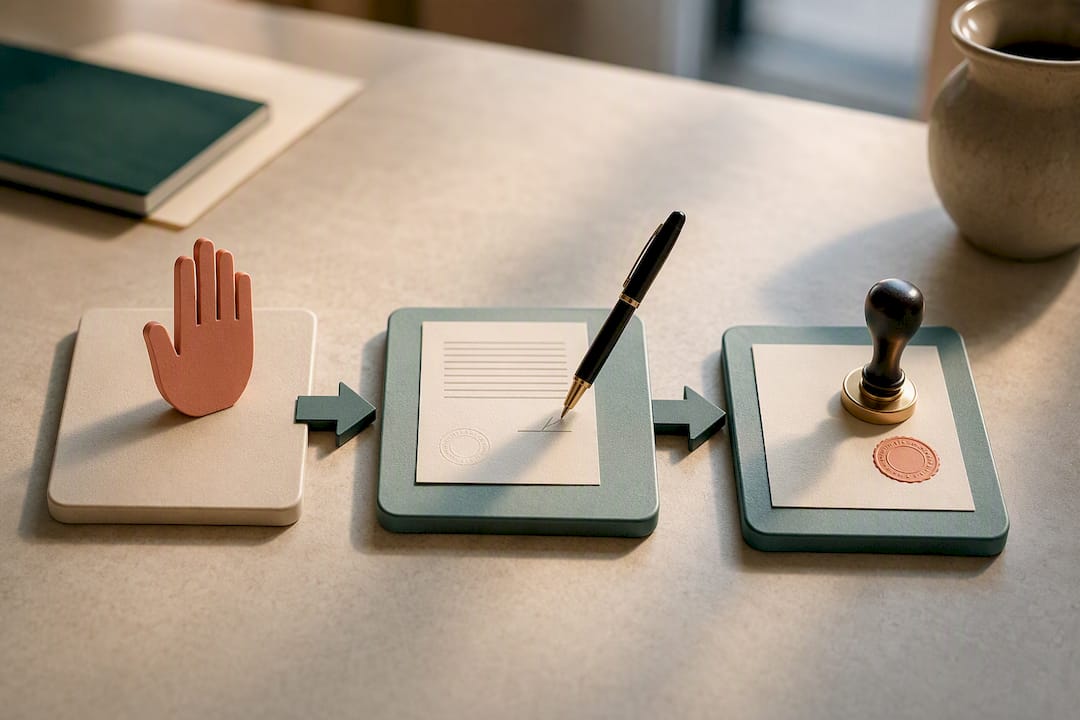
The sequence runs in a specific order. First, the notary administers a verbal oath or affirmation ("Do you swear or affirm that the statements in this document are true?"). Only after the signer answers does the signing happen, in front of the notary, followed by the notary completing the jurat certificate. Skipping the oath, or letting someone sign before it is administered, breaks the act entirely. The National Notary Association is blunt about this: an oath that is not actually spoken and answered makes the resulting jurat incomplete, and potentially invalid, no matter how correct the paperwork looks.
Certificate wording for a jurat reads noticeably differently from an acknowledgment. Look for phrases such as "subscribed and sworn to before me" or "sworn to (or affirmed) and subscribed before me". That "sworn" language is the tell.
Jurats appear on documents where the truthfulness of the content, not just the identity of the signer, is what the receiving party cares about:
- Affidavits and sworn declarations, where a signed statement of fact is needed
- Statutory declarations, common in legal and administrative processes
- Certain court pleadings and verified complaints, where accuracy under oath is required
- Immigration and visa affidavits, where sworn statements support an application
Because the signer is swearing to the truth of what they have written, a jurat carries genuine legal weight the acknowledgment does not. Making a false sworn statement can expose the signer to perjury consequences, which is not a risk that attaches to an acknowledgment in the same way. That asymmetry is worth sitting with for a moment: a jurat is not just a formality, it is the signer putting their name to the truth of a claim, in front of a witness with legal standing to record it.
Jurat vs acknowledgment: a quick reference comparison
| Acknowledgment | Jurat | |
|---|---|---|
| What the notary certifies | Signer's identity and voluntary signature | Signer's sworn oath that contents are true |
| Oath or affirmation required | No | Yes, administered verbally before signing |
| Signature must occur in notary's presence | Not always. Signer can acknowledge a signature made earlier | Yes, always, at the time of the oath |
| Common document examples | Deeds, powers of attorney, deed polls, trust documents | Affidavits, statutory declarations, sworn court statements |
| Consequence if the wrong act is used | Document may be rejected by the recording office or receiving party | Oath omission can invalidate the notarisation; false sworn content carries perjury exposure |
The table covers the common cases, but ambiguity does happen. Some documents include both types of clauses, or a form drafted for one jurisdiction gets used somewhere with different conventions. When the certificate wording is missing, damaged, or looks unfamiliar, that is your cue to stop and check with whoever is asking for the document rather than guessing.
When to use which: a decision checklist before your appointment
Working out which act you need rarely requires legal training. It requires reading carefully and asking the right person one question.
- Read the certificate wording on the document first. If it already contains a printed notarial certificate, the wording tells you directly. "Acknowledged before me" means acknowledgment; "sworn to" or "subscribed and sworn" means jurat, a distinction backed up by notary education guidance on reading certificates correctly.
- Check any instructions from the requesting party. Courts, government offices, banks, and universities often specify exactly which act they want. Follow that instruction over any personal assumption.
- If nothing is specified, call and ask. A two-minute phone call to the receiving office before your appointment prevents the most common problem in notarisation: turning up with the wrong act completed and having to start again.
- Ask yourself what is actually being certified. If the receiver needs proof the content is truthful, you need a jurat. If they only need confirmation of who signed and that they meant to, an acknowledgment will do.
- Bring the document unsigned if a jurat is likely. Since jurats require signing in the notary's presence, signing early defeats the purpose and may force a re-appointment.
Pro Tip: Keep a screenshot or note of the exact wording the requesting office gave you, if any. If the notary later flags the certificate as unclear, you can show precisely what was asked for instead of relying on memory.
Getting this wrong is one of the more avoidable causes of delay at recording offices and courts, and notaries themselves are not allowed to choose for you; the decision belongs to the signer or the document's issuing authority, not the notary performing the act.
What to bring and how to behave at your notarisation appointment
Turning up prepared avoids a wasted trip, whether the appointment is in person or over video. A few points apply regardless of which act you need.
- Bring valid, government-issued photo identification. A passport or driving licence is standard; check in advance if your specific document type has stricter identity requirements.
- Do not sign in advance if you are completing a jurat. The oath must come before the signature, so signing early means signing again.
- For an acknowledgment, signing beforehand is often fine, since you are simply confirming a signature you already made, but check the certificate wording to be sure.
- Bring the notarial certificate or any instructions from the requesting party, including any specific wording they have asked for.
- Ask the notary to read the certificate wording aloud before they act. This is a reasonable request and a useful final check that everyone is on the same page about which act is being performed.
Pro Tip: If your document has no printed certificate at all, mention this to the notary immediately. A loose certificate can be attached, but only the correct one for the act you actually need.
How online notarisation handles acknowledgments and jurats
Both acts translate to a video session without losing their legal substance, provided the platform follows the same procedural steps a face-to-face appointment would. Identity verification happens through document scanning and biometric checks rather than a notary examining a physical card, and the session itself is recorded, which creates a clear record of what was said and signed.
For a jurat specifically, the oath still has to be spoken aloud and answered on camera before the signature happens. That sequence does not change just because the appointment is remote. Online platforms that document identity checks and record the full session are, by design, addressing the same procedural requirements that apply to both notarial acts in person.
Before booking with any remote provider, confirm the following:
- Session recording. The video appointment should be recorded and retrievable, not just witnessed live.
- Identity verification method. Ask whether checks include passport verification and biometric matching, not just a visual glance at an ID.
- Certificate wording. Confirm the certificate used matches what your receiving party actually expects, acknowledgment or jurat.
- The notary's seal. A completed notarisation should carry the commissioned notary's seal on the finished document.
None of this guarantees a specific receiver will accept the finished document. Rules vary by institution and by country, so always confirm acceptance with whoever is asking for the notarised paperwork before you rely on it for anything time-sensitive. If the document needs to be recognised abroad, that is a separate step, governed for many countries by the Hague Apostille Convention, not by the notarisation itself.
Practical pitfalls and quick remedies
The most common mistake is a signer arriving having already signed a document that needed a jurat. The fix is simple but slightly annoying: sign a fresh copy, or have the document re-executed, in front of the notary with the oath administered properly beforehand.
A second frequent error is assuming the notary will decide which act applies. They will not, and should not. A notary's role is ministerial: verify identity, administer the oath if required, and complete the correct certificate, not interpret what a court or bank actually wants. If you are unsure, contact the requesting authority before your appointment, not during it. Re-booking is far less costly than a rejected document weeks later.
— Jérémy
Getting either notarial act completed without leaving home
Working out whether you need an acknowledgment or a jurat is only half the job; getting it done without a wasted trip to a notary's office is the other half. Online notarisation by video call can be arranged for both types of act, with a commissioned notary administering the correct oath where a jurat is required, or confirming identity for an acknowledgment, all in one recorded session.
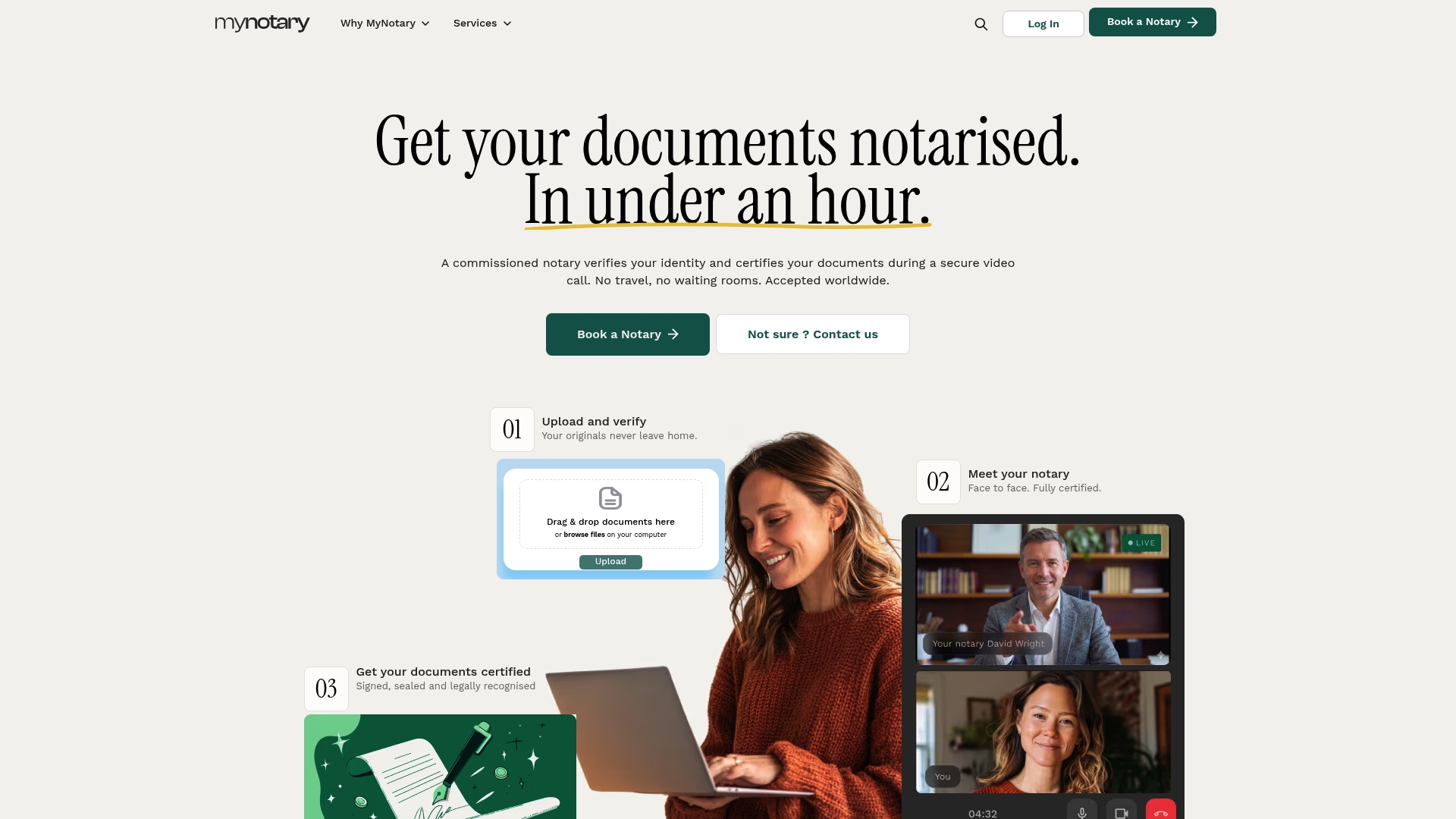
Whichever act your document needs, the same checks apply. Confirm the certificate wording matches what your receiving party expects, check that identity verification includes passport and biometric checks, and make sure the finished document carries the notary's seal. These features can be included in the booking flow, with identity verification and electronically signed documents accepted in multiple countries, and turnaround times typically within an hour of the session.
If your document is an affidavit, statutory declaration, or sworn declaration needing a jurat, or a power of attorney, deed poll, or signature that needs certifying as an acknowledgment, you can browse the full range of notarisation services and book a video appointment at a time that suits you. If your document is destined for use abroad, check whether it will also need a certified copy or professional attestation, a step covered in more detail by attestation and background check guidance for international documents.
Sources
- Jurat law and legal definition | USLegal, Inc.
- Jurat vs Acknowledgment: Key Differences (2026) | Notary Guide
- Tips to help Notaries complete error-free jurats | National Notary Association
FAQ
What is the difference between an acknowledgment and a jurat?
An acknowledgment confirms a signer's identity and that they signed voluntarily, while a jurat additionally requires the signer to swear or affirm, under oath, that the document's contents are true.
What is an example of a jurat?
A sworn affidavit or statutory declaration typically uses a jurat, since the signer must swear the statements inside are accurate before signing in front of the notary.
Is an acknowledgment legally binding?
An acknowledgment is a valid, legally recognised notarial act confirming identity and voluntary signature, though it does not attest to the truth of the document's contents.
What does jurat mean?
A jurat is the notarial certificate confirming that a signer swore or affirmed the truth of a document's contents and signed it in the notary's presence.
Can My Notary complete both acknowledgments and jurats online?
Online notarisation sessions by video call can support services such as affidavits and statutory declarations that typically require a jurat, alongside acknowledgment-based documents like powers of attorney and deed polls.
Recommended
Got questions? We’re on it.
Most questions are answered here, drawn from what people actually ask before booking. If yours isn’t, our team is in chat.
An acknowledgment confirms a signer's identity and that they signed voluntarily, while a jurat additionally requires the signer to swear or affirm, under oath, that the document's contents are true.
Last updated: