Statutory declaration online UK: how to get one witnessed remotely
By Jeremy Arhab, Founder · Published 23 August 2026 · Updated 23 August 2026
Learn how to get a statutory declaration witnessed online in the UK through secure video. Ensure acceptance by the recipient first!
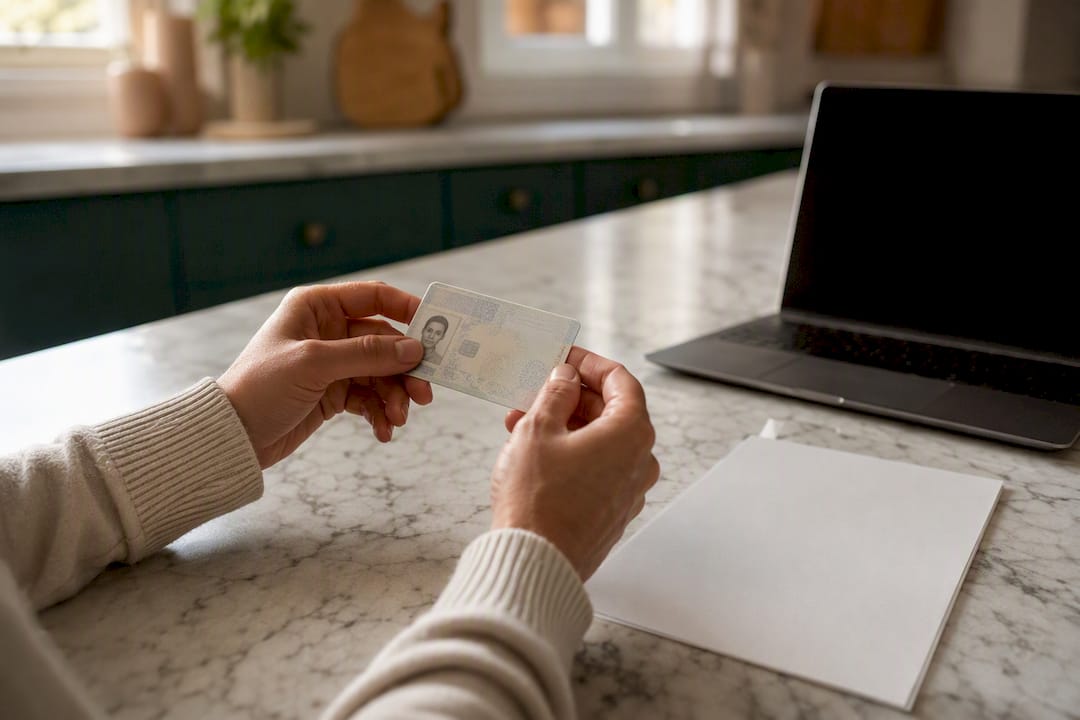
Yes, you can get a statutory declaration witnessed remotely in the UK, but only through an authorised witness using secure video, and only if the organisation receiving it accepts remote witnessing. That caveat matters more than the process itself: acceptance varies by recipient, so check before you book anything.
If you want to move today, here's the order of operations:
- Draft the declaration using the prescribed statutory wording, but leave the signature blank.
- Have valid photo ID (passport, driving licence, or biometric residence permit) ready to show on camera.
- Book an authorised witness, such as a solicitor or notary, who offers secure video appointments.
- If the document is going abroad, ask whether you also need a notary endorsement and an apostille.
Pro Tip: Signing before the witness sees you do it live is the single most common reason declarations get rejected. Keep that signature field empty until you're actually on the call.
Key Takeaways
Remote witnessing works in the UK when an authorised professional conducts it and the receiving organisation confirms it will accept the result.
| Point | Details |
|---|---|
| Check acceptance first | Confirm the receiving organisation accepts remote witnessing before booking a video appointment. |
| Never sign early | Leave the signature blank until the witness sees you sign live, in person or on camera. |
| Use the right witness | Solicitors suit most UK uses; notaries suit documents heading abroad or needing an apostille. |
| Add an apostille for overseas use | Apply for an apostille after notary endorsement when the document is going to a foreign authority. |
| My Notary handles the full workflow | My Notary offers video witnessing, biometric ID checks, and same-day endorsed copies for statutory declarations. |
Official guidance and legislation to check
- Gov
- Confirm remote-witnessing acceptance directly with the receiving organisation
This article is general information, not a substitute for advice from a qualified lawyer. Consult a qualified legal professional about your own circumstances before acting on anything here.
Table of Contents
- What is a statutory declaration and what wording does the UK require?
- Who can legally witness a statutory declaration in the UK?
- Can a statutory declaration be witnessed online in the UK?
- How do I get a statutory declaration witnessed online, step by step?
- Do I need an apostille for a statutory declaration used abroad?
- Sources
- FAQ
What is a statutory declaration and what wording does the UK require?
A statutory declaration is a written statement of fact that a person signs and confirms as true in front of an authorised witness, without taking an oath. People use them to confirm identity, explain a lost document, declare a change of name, or provide evidence for a government process when no other official document exists. Employers, courts, HM Passport Office, and financial institutions all accept them as a formal substitute for evidence that doesn't otherwise exist on paper.
The format isn't optional. Under the Statutory Declarations Act 1835, the declaration must include specific opening and closing wording. It typically begins with a statement such as "I [full name] of [address] do solemnly and sincerely declare that..." followed by numbered paragraphs setting out the facts, and closes with a declaration that the statement is true and made under the 1835 Act, with a space for the witness to sign and date.
The declaration should read as a plain, numbered narrative of fact. Each paragraph should stand alone, refer to any attached exhibits by letter (Exhibit A, Exhibit B), and avoid legal argument. It states what happened, not why it matters.
Some uses require a specific version of this form rather than a general template. GOV.UK publishes prescribed statutory declarations for deed poll name changes and for gender recognition applications, and both come with their own wording that shouldn't be altered.
- Deed poll declarations follow a fixed government form, not a free-text draft.
- Gender Recognition Certificate declarations follow guidance from the applicable government department.
- General personal declarations (lost documents, address confirmation) can use the standard 1835 format.
Who can legally witness a statutory declaration in the UK?
Not just anyone with a pen can witness your declaration, and this is where most people trip up. Friends, family, colleagues, and even other professionals outside the permitted categories cannot act as witness, no matter how well-intentioned they are. The Statutory Declarations Act 1835 restricts this role to specific authorised individuals, and using the wrong one invalidates the document entirely.

Which witness you need depends heavily on where the declaration is going. A solicitor or commissioner for oaths covers most UK domestic uses: banks, employers, local authorities, and general administrative bodies. If the document is destined for use overseas or needs an apostille attached, a notary is usually the safer and often required choice, since their endorsement is what foreign authorities recognise.
Whoever witnesses the declaration must record their own details on the document: full name, professional qualification, contact information, and a formal statement confirming they witnessed the signature. This isn't a formality; it's what gives the document its evidential weight.
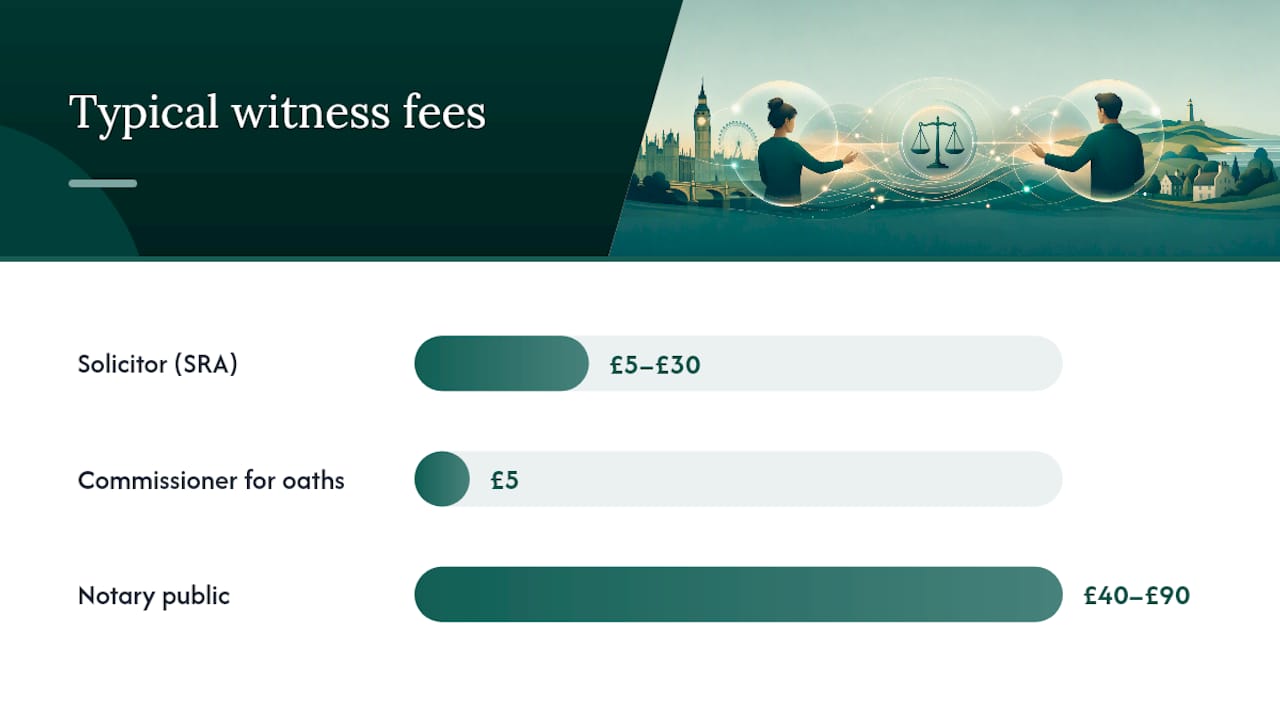
| Witness type | Best suited for | Typical fee range |
|---|---|---|
| Solicitor (SRA-regulated) | General UK use, banks, employers, local councils | £5 to £30 per document |
| Commissioner for oaths | Court-related declarations, some government forms | £5 for the first document |
| Notary public | Documents for use abroad, apostille-bound declarations | £40 to £90 depending on complexity |
| Justice of the Peace | Limited local uses, some community and court matters | Often free or nominal |
Can a statutory declaration be witnessed online in the UK?
The strict wording of the 1835 Act was written for physical presence, but practice has moved a long way since 2020. Many authorised witnesses now conduct the entire signing and attestation process over secure video call, and a growing number of major organisations accept the result without objection, provided an authorised professional carried it out properly.
Several well-known bodies have shown flexibility here. Guidance and practice around organisations such as HM Land Registry, HM Passport Office, and HMRC indicates that video-witnessed statutory declarations are accepted in many cases, particularly when the underlying identity checks are solid. That said, acceptance is not universal, and it's always worth confirming directly with the specific recipient before you commit time and money to the remote route.
What actually happens during a remote session looks a lot like an in-person appointment, just conducted through a screen:
- The witness confirms your identity against a valid photo ID, live on camera.
- You keep the signature blank until instructed to sign in front of the witness.
- The session is recorded or logged to create an audit trail.
- The witness adds their attestation, qualification, and contact details before returning the endorsed copy.
Pro Tip: If your declaration is going to a court or a specialist regulator rather than a standard government body, ask them directly whether they'll accept a remotely witnessed document before you book anything.
How do I get a statutory declaration witnessed online, step by step?
Getting this right the first time saves you the hassle of a second appointment, so the order you do things in actually matters.
- Prepare the draft. Write the declaration using the prescribed statutory wording, number each paragraph clearly, and list any exhibits by letter. Leave the signature and witness sections completely blank.
- Verify your identity documents. Gather a valid passport, driving licence, or biometric residence permit, and scan or photograph any exhibits you plan to reference so they're ready to upload if you're using an online service.
- Book an authorised witness. Choose a solicitor, notary, or commissioner for oaths who offers secure video appointments, and confirm your intended recipient will accept a remote signing before you go further.
- Attend the live session. Join the video call, show your ID clearly on camera, and sign the declaration only when the witness instructs you to. The witness then completes their attestation and issues an endorsed copy.
- Check the aftercare. Review the endorsed copy for accuracy, request an apostille if the document is going abroad, and keep a record of the session and the final version for your own files.
Pro Tip: Ask your witness for a digital copy immediately after the session rather than waiting for post. Most services can send an endorsed PDF within the hour, which matters if you're working to a deadline.
Do I need an apostille for a statutory declaration used abroad?
If your declaration is going to a foreign court, employer, or government body, the receiving country will usually want proof that the document is genuine. That's what an apostille or embassy legalisation provides, and it's a separate step from the witnessing itself.
An apostille confirms the signature and seal on a UK document are authentic, and it's recognised by any country that's party to the Hague Apostille Convention. Countries outside that convention typically require embassy legalisation instead, which is a more involved process handled through the relevant embassy or consulate.
The usual flow runs: witnessing by an authorised professional, then notary endorsement if the receiving country requires it, then the apostille application itself.
- Standard apostille turnaround through official channels can take several working days or longer.
- Using a notary or legalisation service to manage the submission often speeds this up.
- Fees vary depending on urgency and whether you need physical copies couriered internationally.
What mistakes cause statutory declarations to be rejected?
Rejections almost never come down to what you wrote. They come down to how the document was handled procedurally, and practitioners consistently point to the same handful of errors.
- Signing before the witness sees it happen, whether that's in person or on camera, which makes the whole declaration invalid.
- Using someone who isn't an authorised witness, even if they hold another respected professional title.
- Missing or incorrect prescribed wording, particularly on forms like deed poll where a specific version is required.
- Exhibits that aren't clearly labelled or referenced by letter within the numbered paragraphs.
- Submitting without confirming the receiving organisation actually accepts the format you've used.
Run through this list before you send anything. It takes two minutes and it's the difference between a document that's accepted first time and one that bounces back with a delay attached.
What does a UK statutory declaration template actually look like?
A usable template needs the statutory opening, numbered factual paragraphs, and the correct closing wording, with signature and witness fields left open until the live session.
- Opening: "I, [full name], of [address], do solemnly and sincerely declare that..."
- Numbered facts: "1. I am the person named in the attached passport, Exhibit A." "2. I have not previously held any other legal name."
- Closing: "And I make this solemn declaration conscientiously believing the same to be true, and by virtue of the provisions of the Statutory Declarations Act 1835."
A worked example for proof of identity might read: "I confirm that the passport marked Exhibit A was issued to me under my current legal name, and that no other government-issued identity document exists in a different name." Simple, factual, and specific.
Always have your authorised witness review the final draft before the session. Specialised forms, like deed poll or gender recognition declarations, may need to follow a fixed government version rather than your own wording.
How does My Notary handle statutory declaration witnessing?
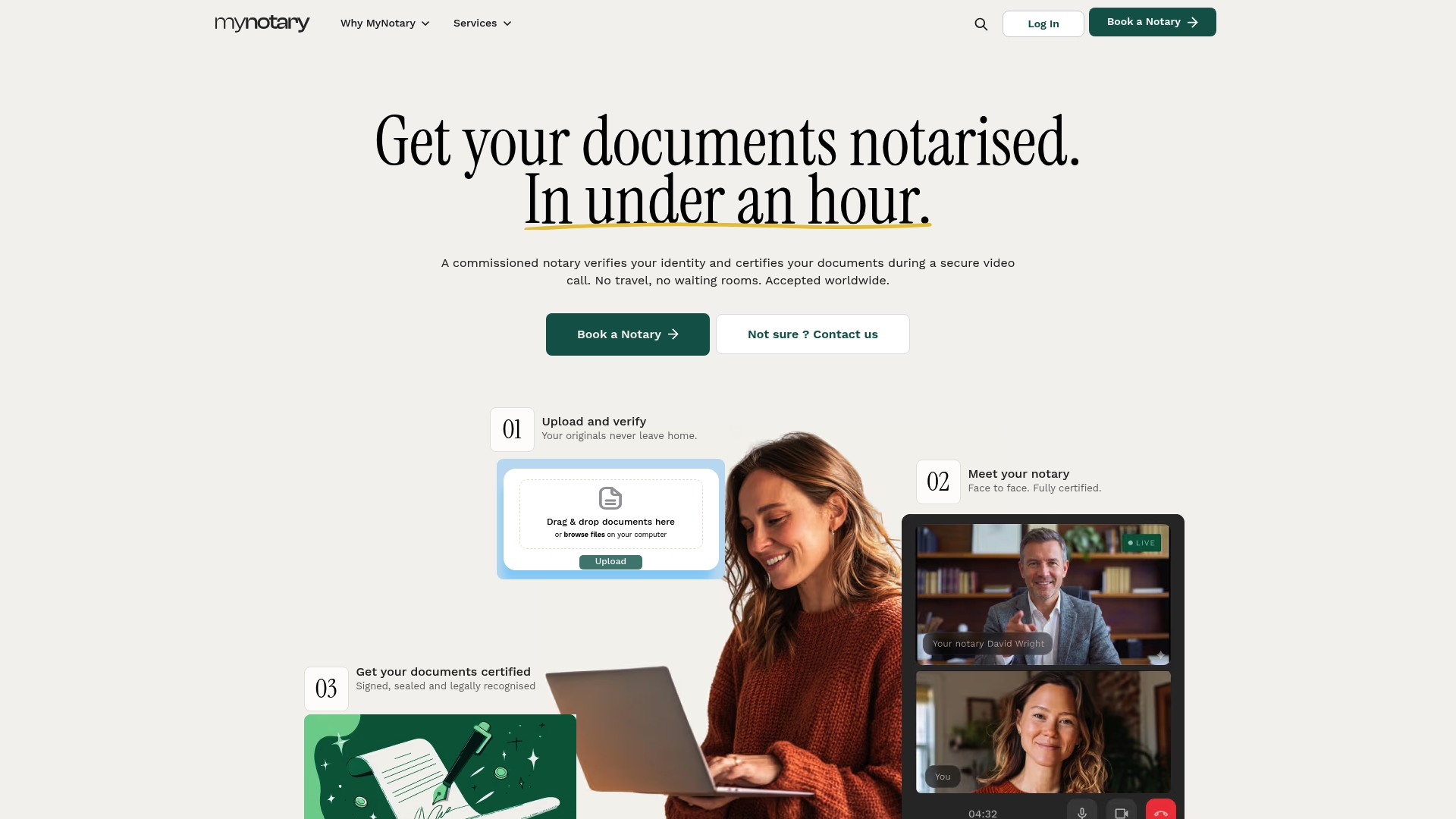
My Notary was built around exactly the workflow described above: draft, verify, witness live, deliver. The platform pairs biometric identity verification with secure video sessions run by a commissioned notary, and documents are typically endorsed and returned within about an hour of the appointment.
- Statutory declaration witnessing for personal, family, and business use.
- Apostille and legalisation support for documents heading abroad.
- Certified copies and Deed Poll witnessing for HMRC records.
Pro Tip: Have your draft and ID ready before you book. Sessions move quickly when the paperwork is already in order, and slowly when it isn't.
Why remote witnessing changes the calculation for most people
Remote witnessing doesn't lower the legal bar, it removes the friction around meeting it. Speed, no travel, and appointments outside standard office hours make a real difference for anyone juggling work, childcare, or simply living somewhere without a convenient solicitor's office nearby.
The one thing worth holding onto is scepticism about edge cases. Specialist courts and certain regulators can still insist on in-person signing, so check before assuming remote is fine everywhere.
Book a statutory declaration witnessing session with My Notary
My Notary runs the exact process this article has described: secure video, biometric ID checks, and an authorised witness who handles the attestation properly the first time. Start on the statutory declaration service page, upload your draft, verify your identity, and book a video slot that suits your schedule.
What you get from a booking is straightforward: a witnessed and endorsed digital copy, with apostille and physical copies available as add-ons if your document is heading abroad. Turnaround is typically same day, and pricing starts at a modest per-document fee rather than a lengthy retainer. If your declaration needs a different but related service, such as certified copies of identity documents or corporate document notarisation, those sit on the same platform. Book your session and have your endorsed declaration back within hours, not weeks.
Sources
FAQ
Can I do a statutory declaration online in the UK?
Yes, provided an authorised witness such as a solicitor or notary conducts the signing over secure video and the organisation receiving the declaration accepts that format.
Can I write my own statutory declaration in the UK?
You can draft the wording yourself using the prescribed statutory format, but specific uses like deed poll or gender recognition require a fixed government version rather than a free-text draft.
How do I get a statutory declaration in the UK?
Draft the declaration with the prescribed wording, leave it unsigned, then book an authorised witness such as a solicitor or notary who can complete the signing and attestation either in person or via secure video, as offered through My Notary's statutory declaration service.
How much does a statutory declaration cost in the UK?
Fees vary by witness type: solicitors and commissioners for oaths often charge between £5 and £30, while notaries typically charge more, often £40 to £90, particularly when the document needs an apostille for overseas use.
Recommended
Got questions? We’re on it.
Most questions are answered here, drawn from what people actually ask before booking. If yours isn’t, our team is in chat.
Yes, provided an authorised witness such as a solicitor or notary conducts the signing over secure video and the organisation receiving the declaration accepts that format.
Last updated: