Proof of address certification: what to prepare and certify
By Jeremy Arhab, Founder · Published 20 August 2026 · Updated 20 August 2026
Discover how to prepare for proof of address certification, ensuring your documents meet all requirements for a smooth process.

A utility bill, council tax bill, bank statement, driving licence, or tenancy or mortgage statement will satisfy most requests for proof of address, provided it is recent enough and shown alongside the original. The certification itself is usually just as simple: a recognised professional writes a short statement on the copy confirming they have seen the original, signs it, dates it, and adds their name, occupation and contact details.
Before you book anyone or photocopy anything, three things determine whether a certified copy gets accepted:
- The certifier's wording confirming the original document was seen
- A signature and date on the copy itself
- The certifier's printed name, occupation and contact details
Pro Tip: Always check the receiving organisation's exact wording requirements before you get a document certified. Some banks, visa processors and government departments specify their own phrasing, and a copy certified to the wrong standard often has to be redone from scratch.
Key Takeaways
Correct proof of address certification depends on choosing an accepted document within its recency window and having it certified with the exact required wording, signature and certifier details.
| Point | Details |
|---|---|
| Choose the right document | Utility bills, council tax bills, bank statements and tenancy or mortgage statements are the most widely accepted. |
| Check recency rules first | Many documents must be within 3 months old, though some bodies allow 6 or 12 months. |
| Use the correct wording | A certified copy needs the "true copy of the original" statement, signature, date, and certifier's name, occupation and contact details. |
| Pick a qualifying certifier | The certifier must not be related to you, live with you, or be in a personal relationship with you. |
| Consider an online notary route | MyNotary offers video-based certification with accepted wording and turnaround often within an hour. |
This article is general information, not a substitute for advice from a qualified lawyer. Consult a qualified legal professional about your own circumstances before acting on anything here.
Table of Contents
- What counts as proof of address certification and which documents qualify
- How to certify a document step by step
- Where can you get proof of address certified?
- Common reasons certified copies get rejected
- When do you need an apostille for overseas use?
- Why getting certification right the first time matters
- Getting your proof of address certified through MyNotary
- Sources
- FAQ
What counts as proof of address certification and which documents qualify
Not every letter with your name on it will pass muster, and recency matters as much as document type. Organisations working from the Department for Business and Trade's approved list commonly accept the following:
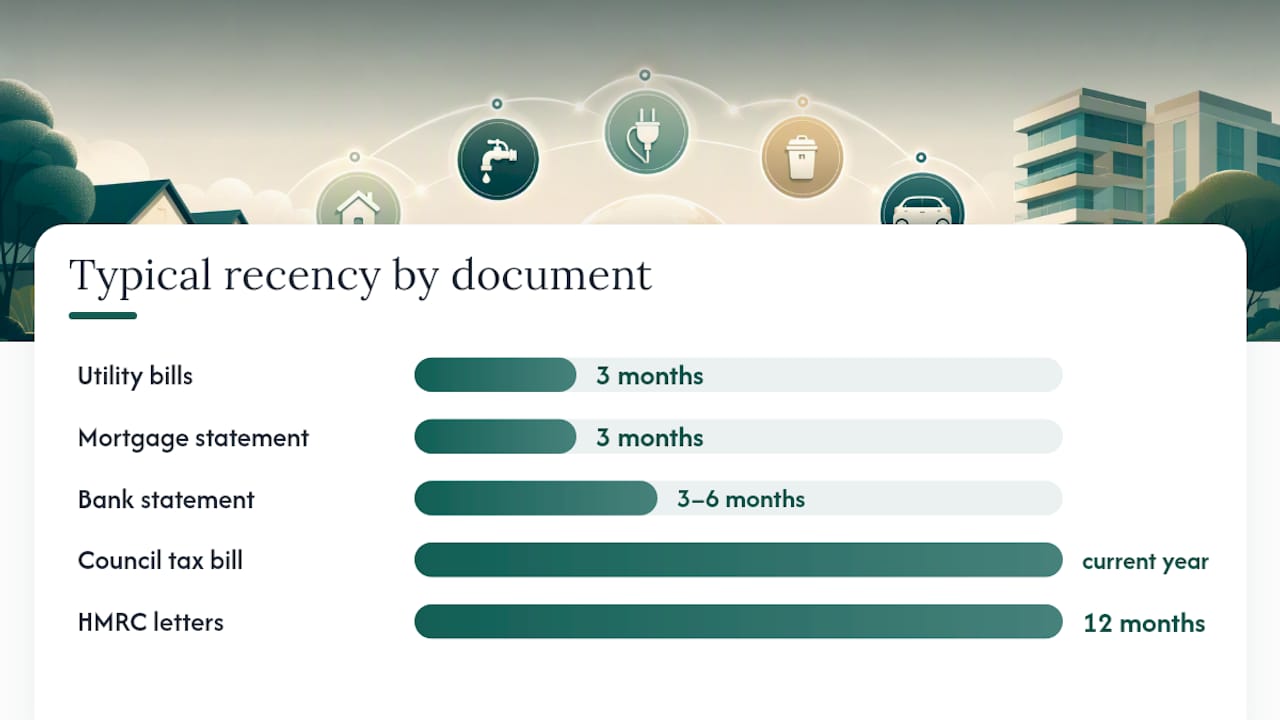
- Utility bills (gas, electricity, water) — usually within the last 3 months
- Council tax bill — typically the current year's statement
- Bank or building society statement — often accepted up to 3 months old, sometimes up to 6
- Mortgage statement — commonly required within the last 3 months
- Tenancy agreement — usually accepted regardless of a fixed recency window, provided it is current
- HMRC or other government department letters — often accepted within 12 months
- Full driving licence — accepted as both address and photo evidence in many contexts
Some items are routinely turned away. Mobile phone bills rarely count, provisional driving licences are usually excluded, and a blurred phone photo or an incomplete scan will get rejected regardless of what the document actually says. One detail catches people out repeatedly: the DBT's guidance explicitly states that several document types must be supplied as a paper copy and not as a downloaded PDF.
Recency rules vary by organisation and by document. Bills and statements are generally required to be recent, with some bodies allowing longer periods for less time-sensitive documents like tenancy agreements, and others accepting tax correspondence from the past year. It is also worth remembering you cannot use a single document to prove both identity and address at once, according to GOV.UK's proof of identity checklist — you will usually need one document for each.
How to certify a document step by step
Getting a certified copy right the first time comes down to following a fixed sequence, not guesswork.
- Prepare the original and a clean copy. Photocopy or photograph the document so every word is legible, with no cropped edges or glare.
- Present both to an acceptable certifier. They need to see the original alongside the copy, not just the copy on its own.
- The certifier writes the required statement on the copy. This confirms they have compared it against the original.
- They sign, date, and add their printed name, occupation and contact details. Missing any one of these is the single most common reason copies bounce back.
The wording itself rarely varies much between certifiers, which makes it worth knowing in advance:
That line, followed by the certifier's signature, date, printed name, occupation, and contact details, satisfies most receiving organisations, according to certified copy guidance from NBB Waldrons Solicitors. If the document includes a photograph, such as a driving licence, the certifier typically needs to add extra wording confirming it is a "true likeness" of the person presenting it.
Not everyone can act as a certifier. GOV.UK is explicit that the person certifying your document must not be related to you, must not live at your address, and must not be in a personal relationship with you. A housemate, partner, or family member is disqualified even if they happen to hold a qualifying profession.
Pro Tip: Ask your chosen certifier to write clearly and use black ink if working on paper. Illegible handwriting on an otherwise correct certification is a surprisingly common cause of rejection.
In-person certification at a solicitor's office generally takes a short appointment, while online commissioned notary sessions can often be completed relatively quickly, including identity verification.
Where can you get proof of address certified?
Several routes exist, and the right one depends on how quickly you need the document and what the receiving organisation expects.
- Solicitors and notaries — reliable for anything with legal weight, including documents destined for overseas use
- Bank or building society officials — often free if you already hold an account with them
- Selected Post Office branches — a paid, walk-in certification service confirming your copy is a true likeness of the original
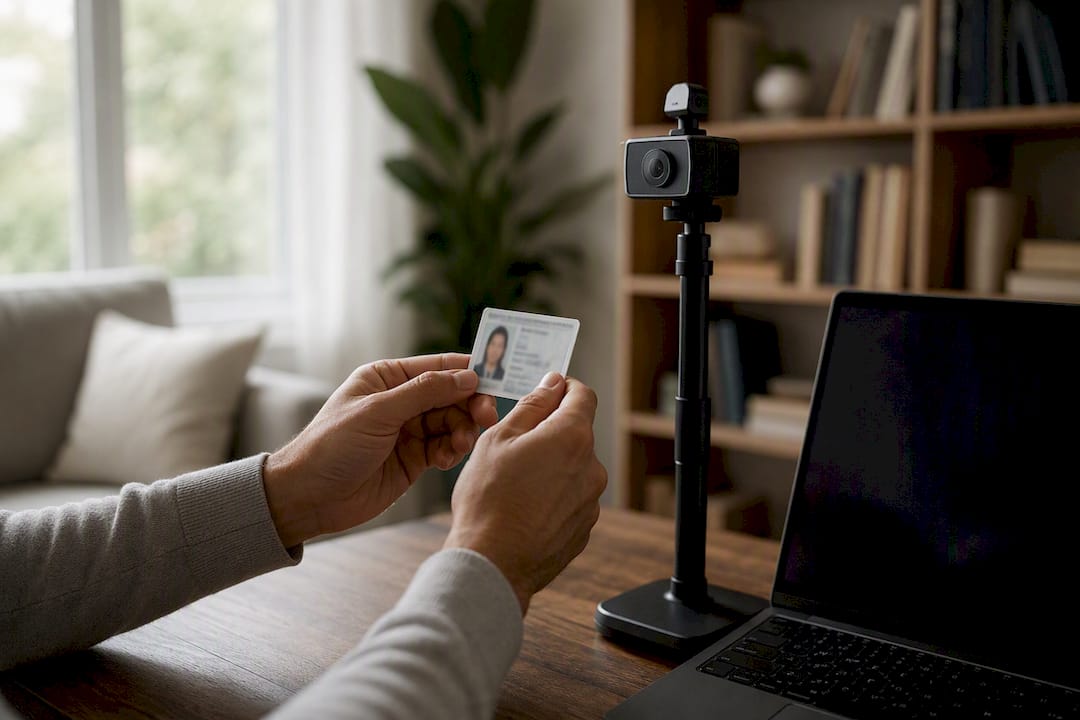
- Online commissioned notary services, such as MyNotary's notarised proof of address service — video-based verification without booking an in-person appointment
Pro Tip: Bring photo ID and the original document, not just a copy, to any certification appointment. Certifiers are required to compare the copy against the original in person or on video, so turning up without it means starting over.
Before committing to any service, ask who exactly will be certifying the document and what qualification they hold. A red flag worth taking seriously: a provider unwilling to name their certifier, give contact details, or explain the wording they will use on your copy.

Common reasons certified copies get rejected
Most rejections trace back to one of five avoidable mistakes.
- Illegible or blurred copies — poor lighting or low scan resolution obscures details the recipient needs to check
- Missing certifier details — no printed name, occupation, or contact information alongside the signature
- Wrong or incomplete wording — a certifier's own phrasing that omits the required confirmation statement
- Out-of-date documents — a bill or statement that falls outside the recipient's recency window, even when everything else is correct
- A disqualified certifier — someone related to you, living with you, or in a personal relationship with you
Pro Tip: Photograph or scan your certified copy immediately after certification, at high resolution, and keep it on file. If a recipient later queries the certification, you can show exactly what was submitted rather than relying on memory.
Keep a note of your certifier's occupation and how to contact them. If a receiving organisation later wants to verify the certification independently, having those details ready avoids a second round trip.
When do you need an apostille for overseas use?
An apostille is typically required when a certified document is heading to an overseas public authority, foreign employer, or overseas institution that will not simply take a UK certification at face value. The Legalisation Office checks the seals and signatures on a document and attaches an apostille confirming it is genuine.
The process generally runs in this order:
- Check exactly what the recipient abroad requires, since rules vary widely by country
- Obtain a properly certified copy first
- Apply for an apostille through the Legalisation Office if the recipient asks for one
- Confirm whether any additional embassy checks apply for that specific country
Build in extra time. Legalisation and return shipping can add days or weeks on top of the certification itself, so leave a buffer if a deadline is approaching. For related overseas paperwork, MyNotary's guide to apostilling a power of attorney walks through a comparable process in more detail.
Why getting certification right the first time matters
A certified copy that gets rejected does not just cost you the certifier's fee. It costs you the appointment, the wait for a new slot, and sometimes a missed deadline on a mortgage completion or visa application. The documents that cause the fewest problems are the ones certified with the exact wording a recipient expects, by someone genuinely entitled to certify them, on the first attempt.
Getting your proof of address certified through MyNotary
If arranging a solicitor's appointment or finding a Post Office branch with certification services feels like more hassle than the task warrants, an online route solves the same problem without the diary juggling. MyNotary lets you upload your document, verify your identity over video with a commissioned notary, and receive a properly worded certified copy, often within the hour.
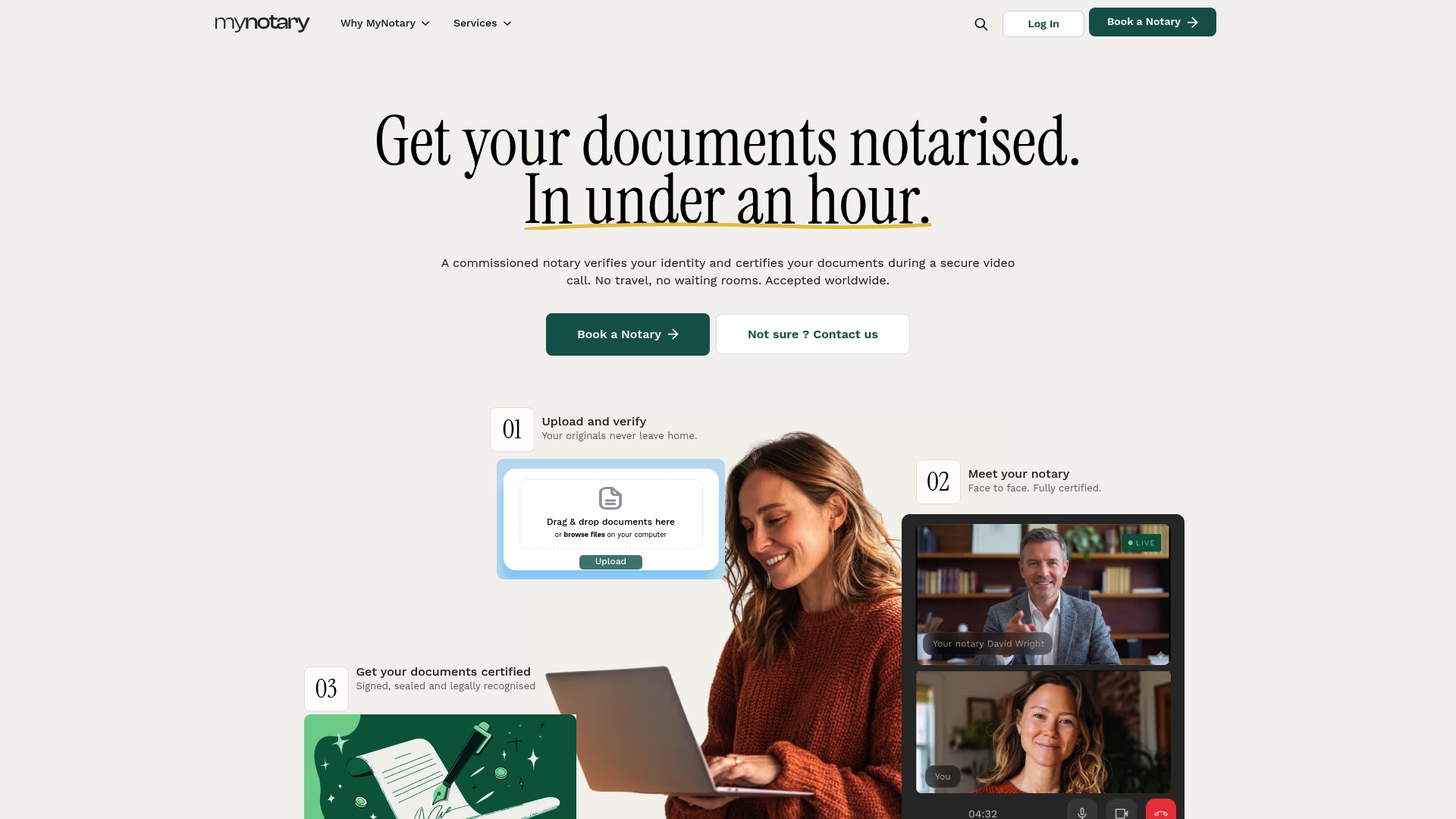
The service is built around the specifics this guide has covered:
- Certified wording that matches what banks, employers and government bodies expect
- Biometric identity verification completed entirely online
- Optional apostille or physical shipping add-ons if the copy is destined for use overseas
If your next step is a mortgage application, a visa, or a new bank account, you can start your notarised proof of address certification from home and skip the appointment search entirely.
Sources
- Gov
- Document Certification Service | Post Office®
- Certified copy requirements in commercial transactions - NBB Waldrons Solicitors
FAQ
What documents can I use as proof of address?
Utility bills, council tax bills, bank or building society statements, mortgage statements, tenancy agreements, HMRC letters and a full driving licence are the most commonly accepted, usually within a recent three to twelve month window depending on the document.
What is the quickest way to get proof of address certified?
An online commissioned notary service, such as MyNotary, is usually the fastest route since it verifies your identity by video and delivers a properly worded certified copy without needing to book an in-person appointment.
How can I prove proof of address certification is valid?
A valid certified copy must state that the original was seen, carry the certifier's signature and date, and include their printed name, occupation and contact details; missing any of these is the most common reason copies are rejected.
What can I do if I have no proof of address?
Third-party letters confirming permission to stay somewhere, or a council tax notice in someone else's name alongside a supporting letter, can sometimes work when you have no conventional documents in your own name, though acceptance varies by organisation.
Recommended
Got questions? We’re on it.
Most questions are answered here, drawn from what people actually ask before booking. If yours isn’t, our team is in chat.
Utility bills, council tax bills, bank or building society statements, mortgage statements, tenancy agreements, HMRC letters and a full driving licence are the most commonly accepted, usually within a recent three to twelve month window depending on the document.
Last updated: