Pass Border Control: UK Child Consent Letter and Online Notary Option
By Jeremy Arhab, Founder · Published 16 September 2026 · Updated 16 September 2026
Template and travel day checklist for a UK child travel consent letter. What to include, documents to carry, and online notarisation.
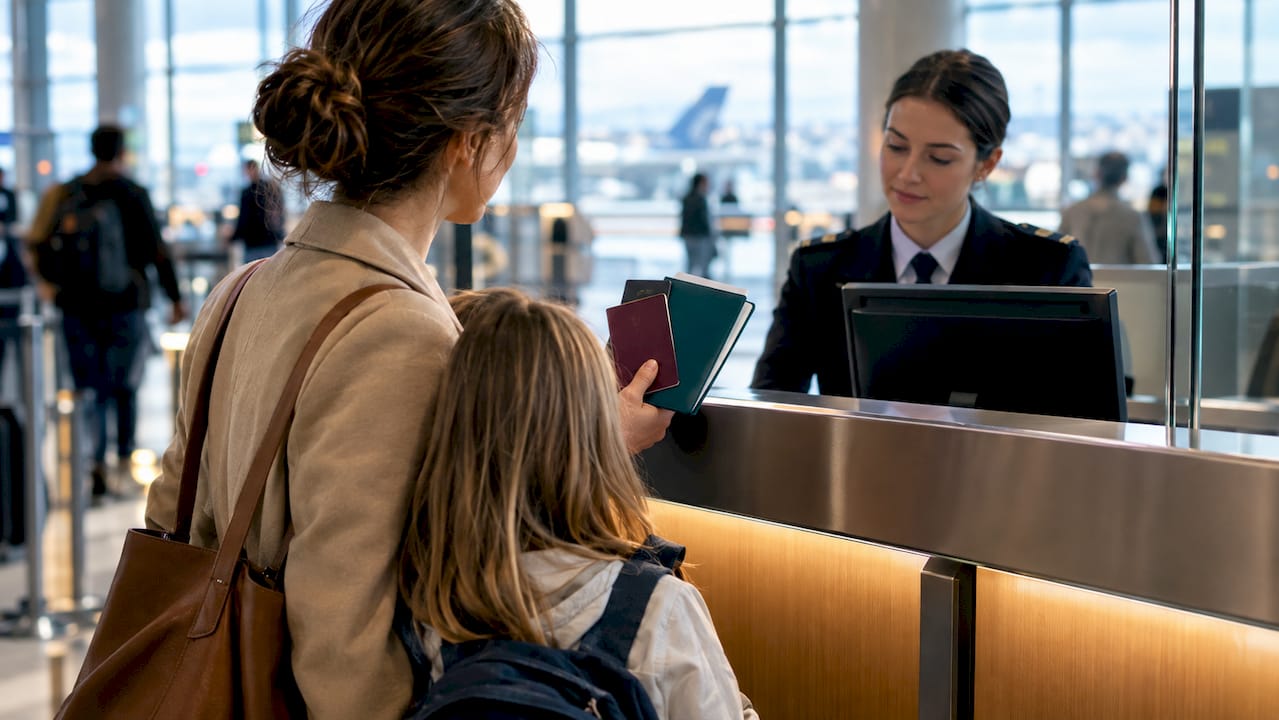
You usually need written permission from everyone with parental responsibility before taking a child abroad, and the practical fix is a clear, signed consent letter backed by supporting documents. Draft the letter now, gather passports and the child's birth certificate, and confirm contact details for anyone who cannot travel with you. If your destination has a reputation for strict checks, notarising the letter can remove a layer of doubt at the border.
***
TL;DR: - Consent letters should include specific trip details, full names, and signatures from all parents with parental responsibility, ideally notarised for added credibility. - Only parents listed on the child's birth certificate or court orders automatically hold parental responsibility; others, like grandparents, do not unless legally designated. - A child arrangements order allows short trips without additional consent only if it explicitly states the child lives with you, limiting the 28-day travel window. - Supporting documents such as passports, birth certificates, and court orders should be kept together in a easy-to-access folder, with translations and apostilles checked in advance if required. - Online notarisation services enable quick, remote certification of consent letters, making it easier to meet country-specific legal and border requirements before travel.
***
Table of Contents
- Who must consent and when the 28-day rule applies
- What to include in the consent letter
- Documents to carry alongside the letter
- Notarisation and apostille: do you need them?
- If you cannot get consent: your options
- Travel-day checklist and passport control tips
- How to check a consent letter will hold up at the border
- Common mistakes that get consent letters rejected
- Adapting the letter for different countries' border rules
- Travelling alone with your child versus travelling with another adult
- Publisher perspective: preparing a consent letter without the guesswork
- Where to check the rules before you fly
- Get your consent letter notarised without leaving home
- Sources
- FAQ
Who must consent and when the 28-day rule applies
Anyone with parental responsibility for a child has a say in whether that child travels abroad. That typically means both parents on the birth certificate, regardless of whether they live together, plus anyone named in a court order granting them the same status. GOV.UK confirms you must get permission from everyone with parental responsibility before you leave, and a signed letter from them is usually enough to demonstrate that permission at the border.
There is one notable exception. If a child arrangements order names you as the parent the child lives with, you can generally take the child abroad for a short period without asking the other parent, unless the order itself says otherwise. That window does not apply to longer trips or relocations, and it does not override a court order that specifically restricts travel.
Skipping consent altogether is not a paperwork technicality. Taking a child out of the UK without appropriate permission can amount to an offence under the Child Abduction Act 1984, even when the person travelling is a parent.
- Both birth parents, married or not, usually hold parental responsibility.
- Step-parents and grandparents do not hold it automatically, even if they help raise the child.
- A special guardian or someone named in a court order may hold it alongside the birth parents.
- The 28-day rule applies only where a child arrangements order exists and says the child lives with you, allowing short trips without further consent.
What to include in the consent letter
There is no official government template for this letter. GOV.UK is clear that what matters is the content: trip details, contact information, and an unambiguous statement of consent. Build the letter around these elements and you cover what border staff and airlines commonly ask to see.
- Child's full details — name as it appears on the passport, date of birth, and passport number.
- Consenting adult's details — full name, relationship to the child, address, and a phone number reachable while you're travelling.
- Accompanying adult's details — name, relationship to the child, and passport number if they're not a parent.
- Trip specifics — outbound and return dates, destination country or countries, and where possible, flight numbers and accommodation address.
- An explicit consent sentence — something like: "I, [full name], parent of [child's name], give my permission for [child's name] to travel to [country] with [accompanying adult] from [date] to [date]."
- A medical authority clause — permission for the accompanying adult to consent to emergency medical treatment if needed.
- Signature and date — every parent with parental responsibility should sign individually, ideally on the same document.
If both parents are travelling separately or one cannot be present to sign, each consenting adult should still sign their own section, dated within a reasonable window of the trip. Some parents ask a witness to sign alongside them; others go further and have the signature notarised for extra weight abroad. A notarised letter format gives you a starting structure if you want the layout right before anyone signs.
Pro Tip: Write the consent sentence in the first person and name the accompanying adult specifically. A vague line like "my child has permission to travel" invites more questions than it answers.
Documents to carry alongside the letter
The letter rarely travels alone. Border officials commonly want to see it alongside proof that ties the child to the adults named in it, and GOV.UK's guidance on children travelling to the UK recommends carrying evidence of the relationship, such as a birth or adoption certificate.
Pack these together, ideally in a single folder you can produce quickly:
- The child's passport and, where relevant, visa documents for the destination.
- The child's birth or adoption certificate, showing parentage.
- A marriage or divorce certificate if surnames differ from the birth certificate.
- Photocopies of both consenting parents' passports.
- A copy of the child arrangements order, if you're relying on it to travel without the other parent's sign off.
For destinations with stricter document rules, check whether a certified translation or an apostille is expected. An apostille under the Hague Convention confirms a document's origin for use in another member country; details sit with the Hague Conference on Private International Law. Keep originals in a document wallet, not loose in hand luggage, and hand over the whole set together rather than one page at a time.
Notarisation and apostille: do you need them?
Notarisation is not a legal requirement for most departures from the UK, but it can strengthen a letter that a foreign border official has no reason to trust on sight. GOV.UK's foreign travel advice notes that some countries and carriers may ask for notarisation or legalisation, so it pays to check before you fly rather than at the gate.
A commissioned notary witnesses the signing of the letter, confirms the identity of the signer, and adds a seal that vouches for the document's authenticity. For countries outside the UK that require formal recognition of that seal, an apostille under the Hague Convention adds a further layer of verification recognised across member states.
- Check the destination embassy's own guidance before assuming notarisation is required.
- Where notarisation and an apostille are both needed, allow several extra days for processing, since the apostille step follows the notarisation.
- Ask whether a translated version needs its own certification alongside the English original.
Online notarisation appointments can typically turn around a document quickly, compared with booking and travelling to a physical office, which matters if your trip is booked at short notice.
Online notarisation services handle this by video call: you show your passport for identity verification, sign in front of a commissioned notary, and the session is recorded for your records. The document itself isn't signed in advance, only during the call, and delivery of the certified copy typically happens quickly.
If you cannot get consent: your options
Sometimes the other parent refuses to consent, cannot be reached, or actively obstructs travel plans. This isn't a dead end, but it does need time you may not have if you've left it until the week before departure.
- Document every attempt to reach them. Messages, emails, and call logs showing you tried and when. This record matters if you later need to justify your actions to a court.
- Consider mediation first. A short mediation session sometimes resolves a standoff faster and more cheaply than court proceedings.
- Apply for a Specific Issue Order if you need the court to authorise travel. This asks a family court to decide a specific disputed question, such as whether a holiday can go ahead.
- Apply for a Prohibited Steps Order if you're on the other side, trying to stop a trip you believe is unsafe or unauthorised. This asks the court to block a specific action.
- Get legal advice as soon as a dispute looks likely. Court timelines vary, and last-minute applications rarely succeed in time for an imminent flight.
Start this process weeks, not days, before travel. Courts do not fast-track family applications simply because flights are booked.
Travel-day checklist and passport control tips
Keep the consent letter and every supporting document together, in hand luggage, not checked bags. If only one parent is travelling with the child, that parent should carry originals rather than copies wherever possible, since some officials are reluctant to accept photocopies as primary evidence.
- Keep the letter on top of the document folder, not buried under boarding passes.
- Answer questions plainly: who you are, your relationship to the child, and where you're travelling.
- Have the birth certificate ready without being asked if the child's surname differs from yours.
- For unaccompanied minors, check the airline's own consent and escort requirements separately, since these sit alongside, not instead of, your own letter.
Border officials commonly ask more questions when a child and accompanying adult share no obvious surname link, and GOV.UK notes that proof of relationship reduces the chance of extra questioning in these cases.
Pro Tip: If you're relying on a child arrangements order rather than a letter from the other parent, attach a short note pointing to the exact clause that says the child lives with you. Officers rarely have time to read a full order, and a two-line pointer saves everyone a delay.
How to check a consent letter will hold up at the border
There's no central register that verifies a child travel consent letter, which means the burden falls on how convincing the document looks on its own. Border officials are trained to spot inconsistency, not to phone a database, so the strongest way to "verify" your letter is to make sure it can't be doubted on sight.
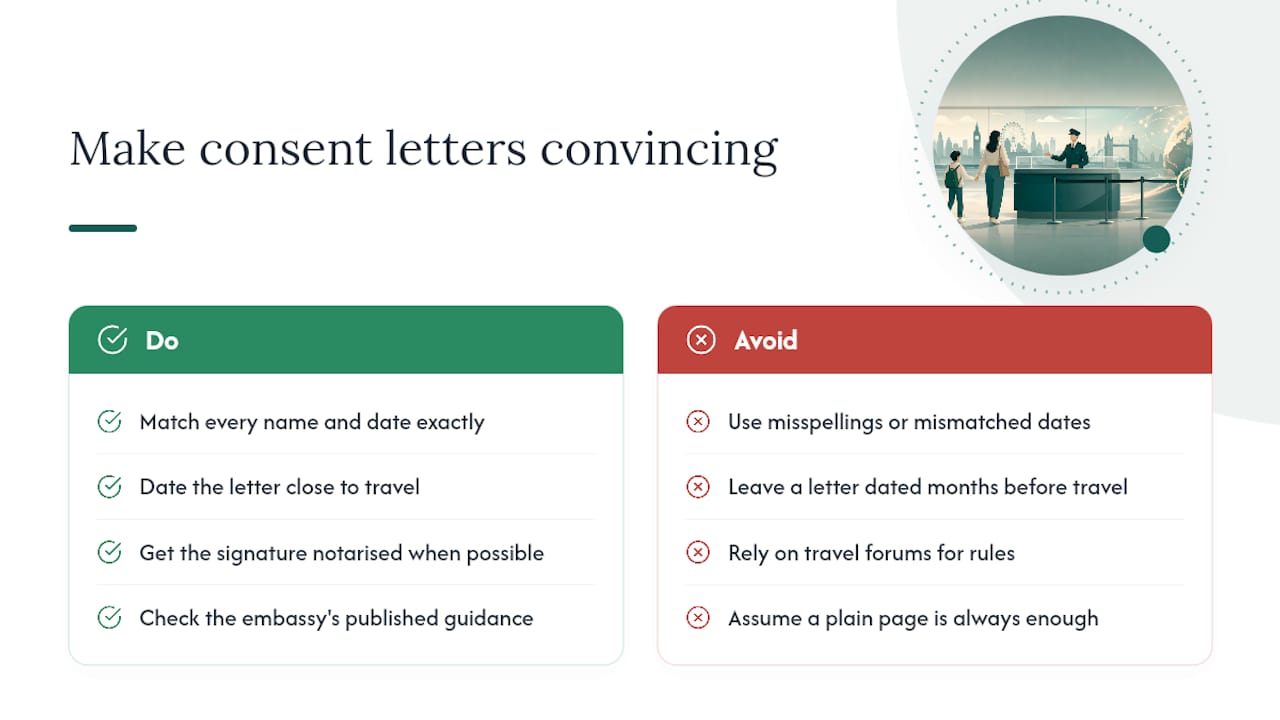
Match every name and date across the letter, the passports, and the birth certificate exactly. A misspelled name or a departure date that doesn't match your flight confirmation is a small error that reads as a red flag to someone scanning quickly. Keep the letter dated close to the travel dates rather than months in advance, since an old letter invites questions about whether circumstances have changed.
A notarised signature adds a layer that's harder to fake casually: a commissioned notary has verified the signer's identity against a passport and recorded the session, which gives border staff a paper trail beyond your word alone. This matters most for countries with a track record of scrutinising informal consent letters, where an apostilled, notarised document tends to move you through faster than a plain printed page.
If you're unsure whether a specific destination expects notarisation, the safest check is the embassy's own published guidance rather than general travel forums, since requirements shift by country and sometimes by airline. When in doubt, treat notarisation as a low-cost way to remove an entire category of questioning, rather than an unnecessary extra step.
Common mistakes that get consent letters rejected
Most problems with consent letters come from vagueness, not dishonesty. A one-line statement such as "my child has permission to travel" gives a border officer nothing to check it against, and vague wording is a common trigger for follow-up questions or delays.
Missing dates are another frequent gap. A letter without a specific travel window looks like a permanent, open-ended authorisation, which some officials treat with more suspicion than a letter tied to a defined trip. Similarly, letters signed by only one parent when two people hold parental responsibility leave an obvious hole, particularly if the other parent's absence isn't explained.
Watch for these specific omissions:
- No accompanying adult named, leaving officials unsure who is legally responsible for the child during the trip.
- No contact number for the consenting parent, which removes the easiest way to confirm the letter quickly.
- A signature that doesn't match the name on the parent's own passport or ID.
- No mention of a medical authority clause, which matters if the child needs treatment abroad and the accompanying adult isn't a parent.
- Reusing an old letter from a previous trip without updating the dates or destination.
The fix for nearly all of these is specificity. Name the destination, name the accompanying adult, date the letter close to travel, and get every relevant signature on the page before you leave home.
Adapting the letter for different countries' border rules
Not every country expects the same format, and assuming a UK-style letter will pass unquestioned everywhere is one of the more common planning mistakes. Some countries have no formal requirement beyond a signed letter; others expect notarisation, an apostille, or a translation into the local language before they'll accept it without extra questions.
Start by checking the GOV.UK foreign travel advice page for your specific destination, since requirements are listed country by country rather than as a single global standard. Spain, for instance, has specific timing rules that catch out travellers unfamiliar with local practice, and general guides like this overview of Spain's 90-day rule are worth a read if your trip involves an extended stay rather than a short holiday.
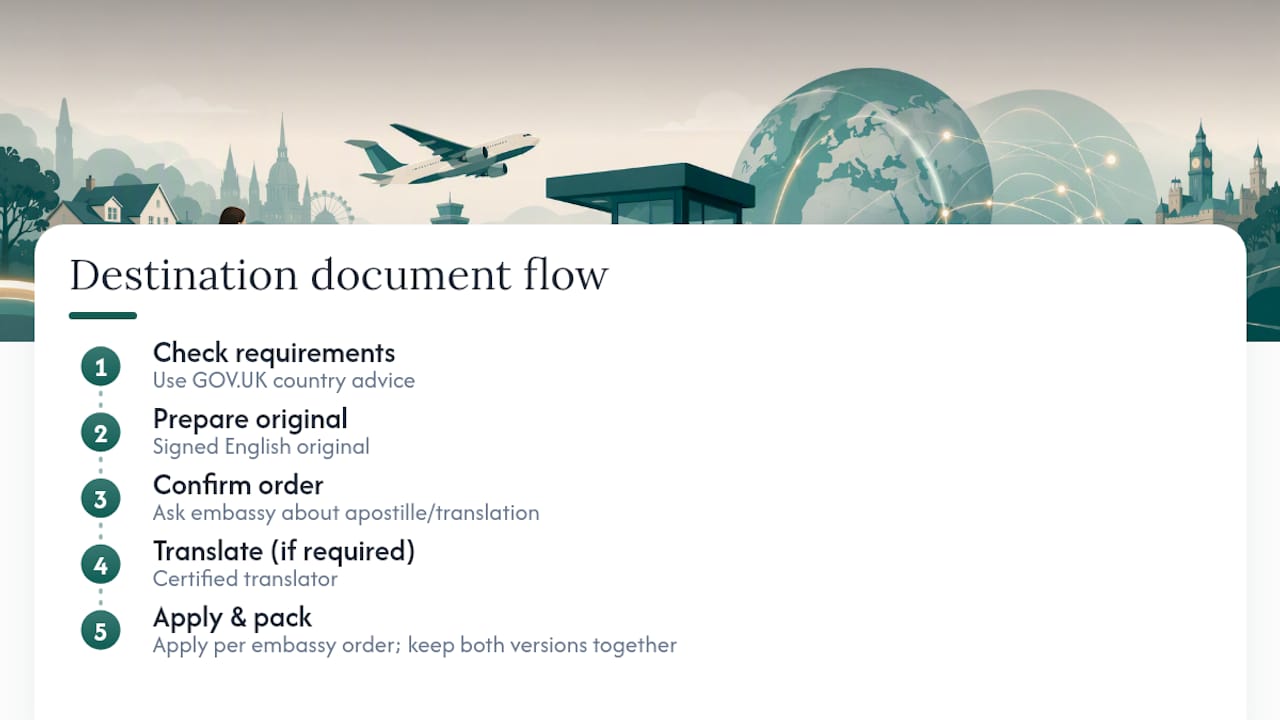
Where a translation is required, use a certified translator rather than a informal bilingual friend, since border staff in non-English-speaking countries may specifically ask for a translation that carries its own certification alongside the English original. Keep both versions together, with the original on top.
If your destination requires an apostille as well as a translation, confirm the order of operations with the embassy first. Some countries expect the apostille applied to the original English document before translation; others want it on the translated version. Getting the sequence wrong can mean redoing the whole process, which is a costly mistake to discover a day before departure.
Travelling alone with your child versus travelling with another adult
The document you need changes depending on who's standing next to your child at the gate. If you're a parent travelling alone with your own child and you share the same surname, you may face fewer questions, though carrying the birth certificate is still worth doing since some officials ask regardless of surname.
If you're travelling with a child who isn't legally yours, such as a grandchild, niece, or a friend's child, the consent letter becomes essential rather than optional. Name yourself specifically as the accompanying adult, include your relationship to the child, and make sure every parent with parental responsibility has signed, not just the one you're closest to.
Two parents travelling together with their own child rarely need a letter at all, since both people with parental responsibility are physically present. The letter becomes necessary the moment one parent is absent, whichever parent that is, or when the accompanying adult isn't a parent at all.
For children travelling without any accompanying adult, airlines run their own unaccompanied minor programmes with separate paperwork and escort arrangements, layered on top of, not instead of, the standard consent letter. A notarisation service built for unaccompanied minors can help when both parents want a formally witnessed document before their child flies alone.
Publisher perspective: preparing a consent letter without the guesswork
The instinct to treat a consent letter as a formality is understandable, but it misreads what the letter is actually for. It isn't proof you'll show once and forget. It's a document designed to survive scrutiny from someone who has never met you, doesn't know your family situation, and has thirty seconds to decide whether your paperwork looks right. Written well, it does that job quietly. Written vaguely, it becomes the reason your family gets pulled aside.
What's underappreciated is how much of the friction at border control has nothing to do with legality and everything to do with presentation. A signed, dated, specific letter with matching names across every document moves faster than a legally sufficient but scruffy one. That's not a legal opinion; it's how scrutiny actually works in practice.
Where notarisation earns its place is not as a legal requirement most UK travellers face, but as a way of removing doubt entirely for the destinations that scrutinise hardest. A notarised child travel consent letter doesn't make a document more legal than a plain signed one. It makes it harder to question.
— Jérémy
Where to check the rules before you fly
Confirm the detail against primary sources rather than relying on secondhand summaries, since requirements can shift between trips.
- Get permission to take a child abroad for the core UK guidance on parental responsibility and consent.
- Child Abduction Act 1984 for the legislation underpinning consent requirements.
- Foreign travel advice for country-specific rules, then cross-check with the destination's own embassy.
Get your consent letter notarised without leaving home
Compared with booking a physical notary appointment around your work schedule, online notarisation services let you get a child travel consent letter witnessed remotely, even shortly before you fly. The process runs entirely by video call: you show your passport for identity verification, sign in front of a commissioned notary, and the session is recorded. There's no document signed in advance and no office visit to schedule around.
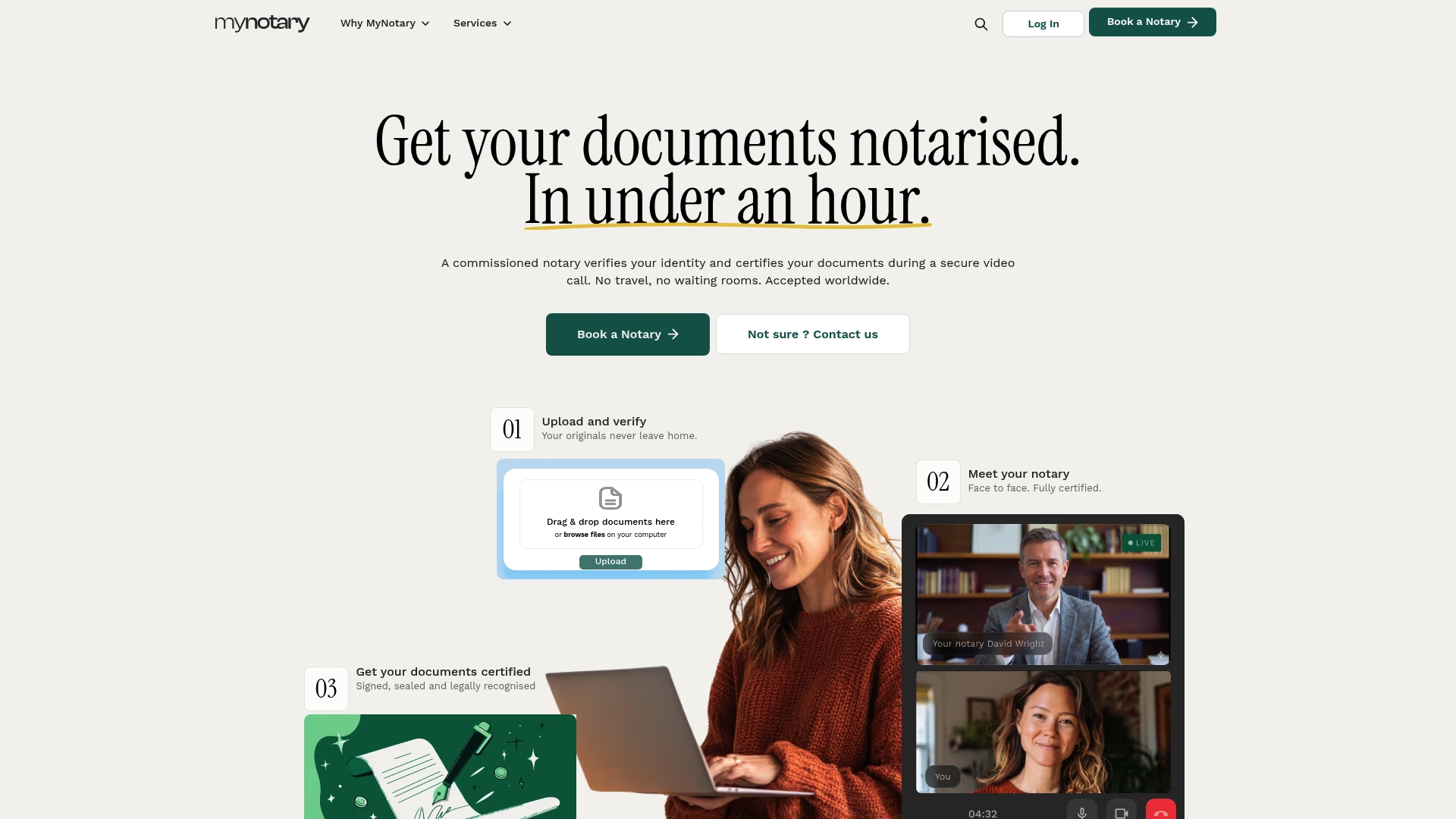
This suits parents heading to destinations known for strict document checks, or anyone who simply wants a consent letter that carries a notary's seal rather than a plain signature. The same platform handles related family paperwork too, including travel consent for a single parent and identity verification where a document needs a verified signatory attached. If your trip also needs other paperwork notarised, from a power of attorney for banking to a certified ID copy, the same video call can often cover it. Start by uploading your consent letter draft and booking a notary session for a same-day certified copy.
This article is general information, not a substitute for advice from a qualified lawyer. Consult a qualified legal professional about your own circumstances before acting on anything here.
Sources
FAQ
How do I write a consent letter for a child to travel?
Include the child's full details, the consenting and accompanying adults' details, exact trip dates and destination, an explicit statement of consent, a medical authority clause, and a signature from everyone with parental responsibility.
Do I need a consent letter to take my child abroad from the UK?
You generally need written permission from everyone with parental responsibility, and GOV.UK confirms a signed letter is usually sufficient to demonstrate that permission at the border.
Do I need the other parent's permission to take our child on holiday?
Yes, if the other parent holds parental responsibility, unless you have a child arrangements order naming you as the parent the child lives with, which allows trips of up to 28 days without further consent.
What documents do I need alongside the consent letter?
Bring both passports, the child's birth or adoption certificate, a marriage or divorce certificate if surnames differ, and a copy of any relevant court order, as GOV.UK's guidance on children travelling documentation recommends.
Does the consent letter need to be notarised?
Notarisation isn't a legal requirement for most UK departures, but some countries and carriers request it, and a service like My Notary can add a notarised signature by video call within an hour if your destination expects one.
Recommended
Got questions? We’re on it.
Most questions are answered here, drawn from what people actually ask before booking. If yours isn’t, our team is in chat.
Include the child's full details, the consenting and accompanying adults' details, exact trip dates and destination, an explicit statement of consent, a medical authority clause, and a signature from everyone with parental responsibility.
Last updated: