Deed poll notarization: when you actually need it
By Jeremy Arhab, Founder · Published 30 September 2026 · Updated 30 September 2026
Find out when a UK deed poll needs notarisation or enrolment, the apostille order for overseas use, and how same day online notarisation with MyNotary...

You do not normally need a notary to change your name in the UK. An unenrolled deed poll is usually enough for everyday purposes, and you only notarise or legalise one when a bank, employer or foreign authority specifically asks for certification. MyNotary offers online notarisation for readers who reach that point, but the first step is always working out whether you need it at all.
***
TL;DR: - Enrolled deed polls are more costly and take longer but are preferred by organizations dealing with older records or international documentation. - Most UK institutions accept unenrolled deed polls for everyday use, but complex or overseas cases often require notarisation and apostille certification. - Notarisation confirms your signature's authenticity and is necessary only when organizations explicitly request independent verification, especially for abroad or legal disputes. - Applying for an apostille involves certifying the notarisation and depends on whether the destination country is part of the Hague Convention, significantly affecting processing times. - Online notarisation services like MyNotary offer same-day digital certification, but always confirm the recipient organization’s exact requirements before proceeding.
***
Table of Contents
- What is a deed poll and how do unenrolled and enrolled versions differ?
- Do you need a solicitor to change your name or get a deed poll accepted?
- Who can witness a deed poll, and what mistakes cause rejections?
- Notarisation versus enrolment: what each one actually does
- When does a deed poll need an apostille or embassy attestation?
- How to prepare, notarise and legalise a deed poll for use abroad
- Timeline, likely costs and what receiving organisations expect
- How MyNotary's online notarisation works for a deed poll
- When notarisation earns its cost, and when it is a waste of money
- Get your deed poll notarised online with MyNotary
- Sources
- FAQ
What is a deed poll and how do unenrolled and enrolled versions differ?
A deed poll is simply a legal document that serves as evidence of a name change. If you are 16 or over you can make one yourself, sign it in front of two witnesses aged 18 or over, and start using it straight away.
An enrolled deed poll goes further. It places your name change on the public record through the courts, using forms LOC020, LOC021 and LOC027. Enrolment is a separate, formal process rather than something you do alongside an unenrolled deed.
- An unenrolled deed poll is free to create and works for most everyday name changes.
- An enrolled deed poll costs a court fee, takes longer, and creates a permanent public record.
- Some organisations, particularly those dealing with older records, passports or overseas paperwork, prefer the enrolled version because it is harder to dispute.
Do you need a solicitor to change your name or get a deed poll accepted?
Most people do not need a solicitor to make an unenrolled deed poll. The document is valid on its own once signed and witnessed correctly, and GOV.UK provides the prescribed wording you can use without paying for legal drafting.
Solicitor or notarial certification becomes useful in specific situations rather than as a default step.
- Banks and some employers sometimes ask for a certified copy rather than the original document.
- Overseas authorities often require notarisation followed by an apostille before they will recognise a UK deed poll.
- Complex cases, such as a name change linked to a legal dispute, benefit from professional input.
The most practical step before spending any money is to ask the receiving organisation exactly what evidence they will accept.
Who can witness a deed poll, and what mistakes cause rejections?
Witness rules are strict enough to catch people out. Both witnesses must be independent adults aged 18 or over, and some organisations refuse to accept close relatives or people who live at the same address as you.
- Choose two witnesses who are not related to you and do not share your address.
- Record each witness's full name, address and occupation on the deed itself.
- Avoid using someone who signed as a witness on a related document, such as a spouse's own deed poll, to prevent claims of insufficient independence.
- If you are abroad or cannot find suitable witnesses, an online notarisation session can provide independent verification instead.
Getting these details wrong is one of the most common reasons an otherwise valid deed poll gets sent back by a bank or government office.
Notarisation versus enrolment: what each one actually does
These two steps get confused constantly, yet they do entirely different jobs. Notarisation is a certificate from a commissioned notary confirming who signed the document and that the signature is genuine. It does not change the document's legal status in the UK; it simply adds independent proof of authenticity that a receiving party, particularly abroad, can trust.
Enrolment is a court process. When you enrol a deed poll, the Deed Poll Office seals it and places your name change on the public record permanently. The forms involved carry their own signing rules: LOC020 is signed before two witnesses, while LOC021 and LOC027 are signed before a solicitor or another authorised witness. An online notarisation session does not replace these court formalities when enrolment is what is required.
- Notarise when a bank, employer or foreign authority wants independent confirmation that you signed the document.
- Enrol when you want your name change permanently recorded and harder to challenge later, or when an organisation specifically asks for an enrolled deed.
- Some situations call for both: enrolment for the domestic public record, then notarisation and an apostille if the enrolled deed also needs to be used overseas.
Knowing which one a specific organisation wants before you start saves both time and money.
When does a deed poll need an apostille or embassy attestation?
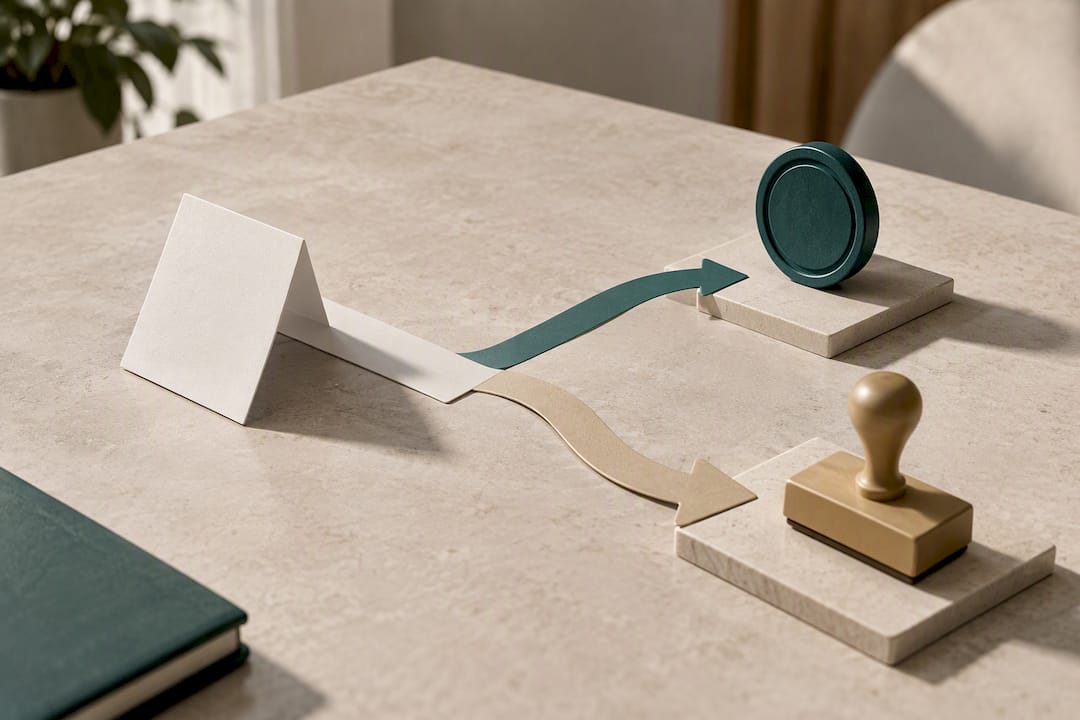
An apostille is a certificate that confirms a signature, seal or stamp on a public document is genuine, so it can be recognised in another country without further legalisation. It sits on top of notarisation rather than replacing it: a notary certifies your signature, then the apostille certifies the notary's own signature and seal.
Whether you need one depends entirely on where the document is going.
- Countries that are party to the Hague Apostille Convention accept a single apostille certificate as sufficient proof.
- Countries outside the Convention typically require embassy or consular attestation instead, which can involve additional steps and longer timescales.
- GOV.UK's legalisation service explains whether your destination country needs an apostille or a different route.
The practical order is straightforward: notarise the deed poll first, apply for the apostille next, and only then arrange any certified translation or embassy attestation the receiving country asks for.
How to prepare, notarise and legalise a deed poll for use abroad
Getting a deed poll ready for overseas use is mostly about sequencing. Missing a step, or doing them in the wrong order, tends to cost more time than the process itself.
- Contact the receiving organisation or foreign authority first and ask precisely what they require: an unenrolled deed, an enrolled deed, a notarised copy, an apostille, or a combination.
- Draft the deed poll using GOV.UK's prescribed wording and sign it before two independent witnesses aged 18 or over.
- Gather supporting identification and any documents the recipient has asked for, such as your current passport or existing name records.
- Book a notarisation session, either in person or online, and have the notary certify the signed deed poll.
- Apply for an apostille through the GOV.UK legalisation service if your destination country is a Hague Convention member.
- Arrange certified translation or embassy attestation afterwards if the receiving country falls outside the Apostille Convention.
Pro Tip: Confirm apostille requirements before you notarise, not after, since some countries expect a specific certification wording that a notary can only include if asked in advance.
Timeline, likely costs and what receiving organisations expect
Timescales vary sharply depending on which route you take. Enrolling a deed poll through the courts currently costs £53.05 and can take several months to process, since it goes through HM Courts & Tribunals Service rather than a same-day service. Notarisation and apostille turnaround times are far more flexible and depend on the provider you choose.
Enrolment fee: £53.05. That figure comes directly from GOV.UK and covers the court process alone, not notarisation or legalisation.
- HM Passport Office accepts a deed poll as evidence but also wants proof you are already using your new name, such as a payslip or council letter.
- Banks and employers often ask for similar supporting evidence alongside the deed poll itself.
- Factor in extra days for courier delivery and certified translation if the document is heading overseas.
How MyNotary's online notarisation works for a deed poll
MyNotary carries out notarisation entirely by video call, which suits deed poll cases where speed and independent witnessing both matter. You upload your unsigned document in advance, your identity is verified against your passport during the session, and the call itself is recorded as part of the process.
- The notary confirms your identity and signature during a live video session rather than a face-to-face meeting.
- Certified documents can be delivered digitally or as a sealed physical copy, with an apostille add-on available where relevant.
- Turnaround for the notarisation itself is typically same day.
MyNotary does not promise that any specific organisation will accept the finished document, so it is worth checking the recipient's exact requirements before you book, whether that is a bank, a university or HMRC.
When notarisation earns its cost, and when it is a waste of money
Notarisation is worth paying for the moment a specific recipient asks for it in writing, not before. Spending money on certification that nobody has actually requested is the single most common mistake people make with deed polls.
The practical rule holds up well: use an unenrolled deed poll for UK-only purposes, and save notarisation and apostille costs for overseas authorities or organisations that explicitly demand independent certification. When time is tight, an online notarisation session paired with an express apostille service can compress weeks into days, but confirming the recipient will actually accept the result still comes first.
— Jérémy
Get your deed poll notarised online with MyNotary
Once you know a deed poll needs certifying, MyNotary lets you complete the whole session from home instead of arranging an in-person appointment. You upload the unsigned document, verify your identity by passport, and sign in front of a commissioned notary during a recorded video call, with certified copies typically ready the same day.
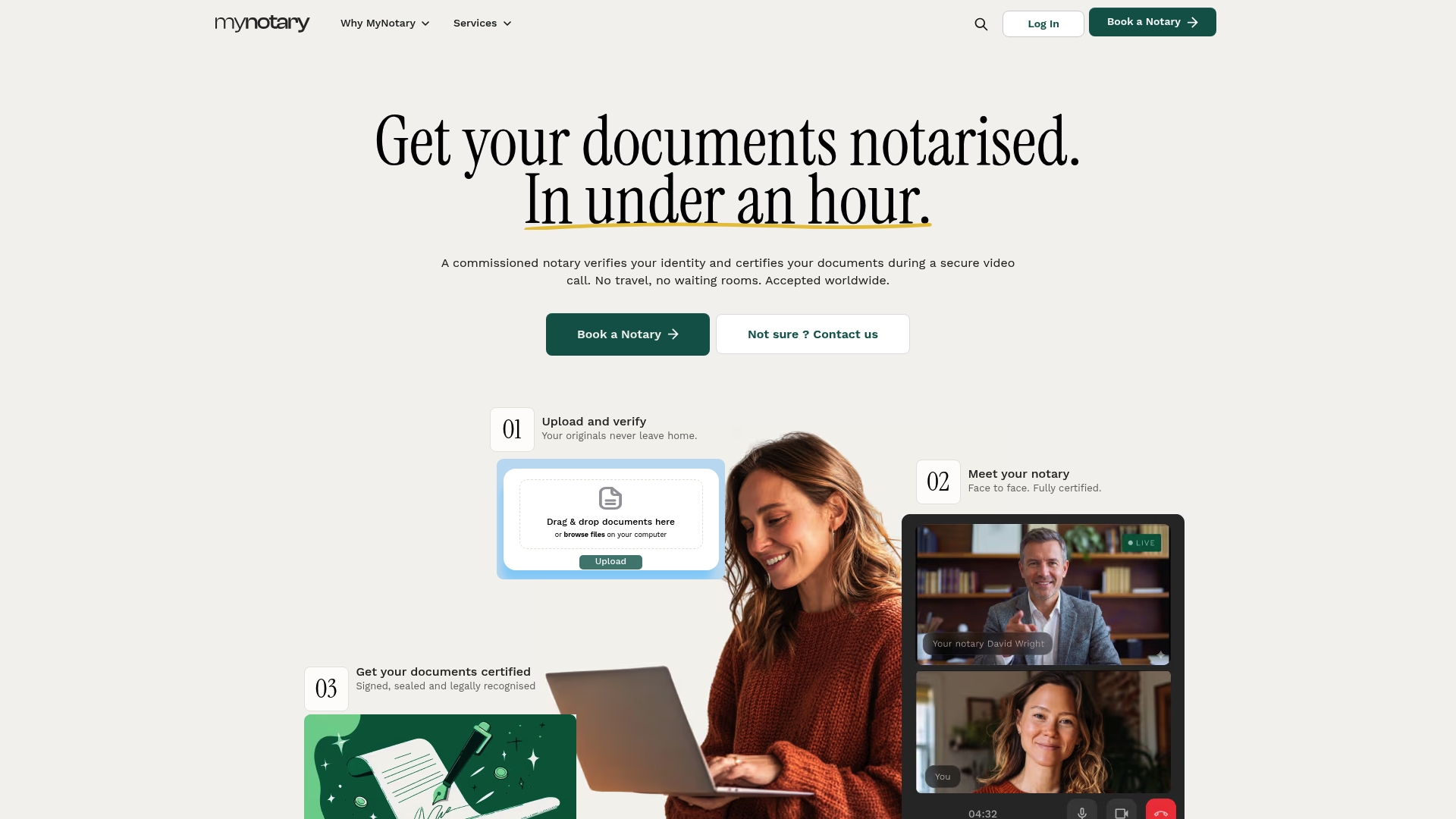
The Deed Poll service covers notarisation for both unenrolled and enrolled deed polls, with an apostille add-on available where your destination requires one.
- Sessions run entirely by video call, with no travel or waiting room involved.
- Identity checks use biometric verification against a passport.
- Certified outputs are available as digital or sealed physical copies, with pricing details on the MyNotary services page.
Check what your bank, employer or foreign authority actually needs before booking, then visit the MyNotary services page to arrange your session.
FAQ
How can I certify a deed poll in the UK?
A deed poll can be certified by a solicitor or a commissioned notary, depending on what the receiving organisation asks for. Notarisation confirms your identity and signature, which is often what banks or overseas authorities want before they accept the document.
How do I get my documents notarised in the UK?
You can book an in-person appointment with a commissioned notary or complete the process online through a service such as MyNotary, which verifies your identity by passport during a video call. The notary certifies your signature and issues a certified copy, typically within the same day.
How much do enrolment fees cost for a deed poll?
Enrolling a deed poll through the courts currently costs £53.05 and can take several months to process. This fee covers enrolment only, not any separate notarisation or apostille costs.
Will HMRC accept an unenrolled deed poll?
Acceptance depends on HMRC's own requirements at the time, so it is worth checking directly or reviewing dedicated guidance on using a deed poll with HMRC records before relying on an unenrolled deed poll alone. Many organisations, including HMRC, will accept one, but some cases call for additional supporting evidence of your new name.
Recommended
Got questions? We’re on it.
Most questions are answered here, drawn from what people actually ask before booking. If yours isn’t, our team is in chat.
A deed poll can be certified by a solicitor or a commissioned notary, depending on what the receiving organisation asks for. Notarisation confirms your identity and signature, which is often what banks or overseas authorities want before they accept the document.
Last updated: